

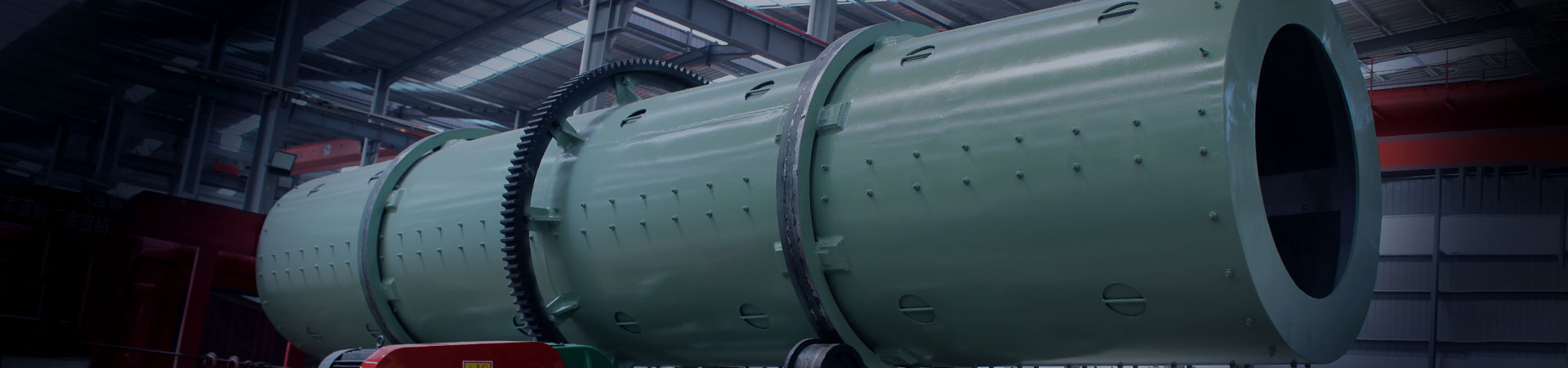
Low-temperature high-volume drying technology is an advanced drying process that achieves efficient dehydration by increasing air volume at lower temperatures. It is widely used in the drying of organic fertilizers, compound fertilizers, and heat-sensitive materials. Its core objective is to maximize the retention of organic matter, microbial activity, and trace elements in the material while removing moisture, avoiding nutrient decomposition and loss caused by high temperatures.
I. Pain Points of Traditional High-Temperature Drying
Traditional drying processes rely on high-temperature hot air (usually above 120℃) to rapidly evaporate moisture. However, high temperatures bring three major problems: First, a large amount of organic matter and beneficial microorganisms are killed, reducing fertilizer activity; second, heat-sensitive components such as urea and ammonium nitrogen decompose, resulting in severe nitrogen loss; third, after rapid surface drying, internal moisture migration is hindered, leading to particles that are dry on the outside but wet on the inside, making them prone to clumping after cooling. For high-moisture organic fertilizers, high-temperature drying can also easily cause sticking and scorching.
II. Core Principle of Low-Temperature High-Volume Drying
The low-temperature high-volume drying technology controls the hot air temperature at 60℃–80℃ while increasing the air volume to 1.5–2 times that of traditional processes. Its principle is: by increasing the air velocity and volume, the convective heat transfer coefficient between the hot air and the material surface is improved, allowing moisture to evaporate rapidly at a lower temperature. With increased air volume, more hot air contacts the material per unit time, resulting in stronger moisture diffusion and achieving efficient dehydration without relying on high temperatures. Simultaneously, the low-temperature environment avoids the decomposition of heat-sensitive components, increasing nutrient retention by 20%–30%.
III. How to Achieve Efficient Dehydration?
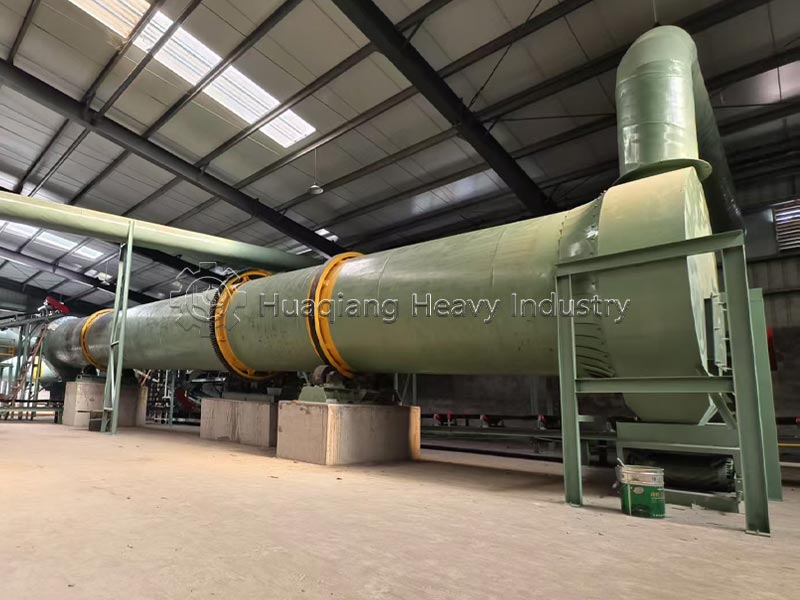
Achieving efficient low-temperature high-volume dehydration requires addressing both equipment and process aspects. For equipment, a rotary dryer combined with a variable frequency fan, or a belt dryer or fluidized bed dryer can be used, employing multi-layered fabric and through-flow airflow to achieve uniform dehydration. In terms of process, three parameters need to be controlled: first, the inlet air temperature must be stabilized at 60℃–80℃; second, the air velocity must be maintained at 8–12 m/s; and third, the material residence time should be adjusted according to the moisture content, typically 15–25 minutes. Furthermore, using a counter-current or mixed-flow airflow design can further improve thermal efficiency.
IV. Mechanism of Nutrient Retention
The key to nutrient retention in low-temperature, high-volume drying technology lies in the “temperature threshold” and “rapid dehydration.” Most beneficial microorganisms in organic fertilizers begin to die off in large numbers above 80℃, while maintaining high activity at 60℃–70℃. The low-temperature environment simultaneously inhibits the hydrolysis of urea and the volatilization of ammonium nitrogen. The large air volume shortens the residence time of the material in the high-temperature zone, reducing heat damage. Practice shows that after adopting this technology, the loss of organic matter content in organic fertilizer can be controlled within 5%, far lower than the 15%–20% of high-temperature drying.
V. Application Scenarios and Selection Recommendations
This technology is particularly suitable for heat-sensitive products such as bio-organic fertilizers, microbial fertilizers, and compound fertilizers containing trace elements. When selecting drying equipment, priority should be given to those with variable frequency speed control, temperature zone control, and automatic airflow adjustment. For small to medium-sized production lines with an annual output of 10,000–50,000 tons, belt dryers can be used; for large production lines, a combination of rotary dryers and fluidized bed dryers is recommended. Simultaneously, cyclone dust collectors and baghouse dust collectors should be installed to ensure that exhaust gas meets emission standards.
VI. Matching Low-Temperature Drying with the Whole Production Line
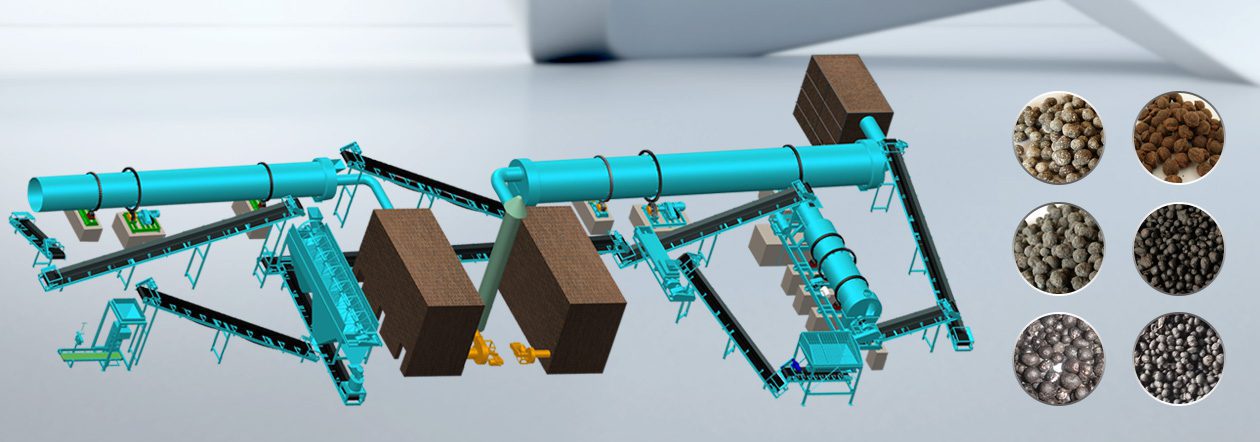
Low-temperature high-volume drying should not be selected as an isolated dryer; it must match the upstream and downstream equipment on a bio organic fertilizer production line. Before drying, an organic fertilizer crusher controls feed fineness, while a disc granulator or another fertilizer granulator machine determines particle size and initial moisture, which directly affect the drying load and residence time. After drying, a fertilizer packing machine completes the final handling, and the moisture content at this stage should be stable to avoid re-moisture absorption during packaging. In this whole-line configuration, low-temperature high-volume drying protects microbial activity and nitrogen, but its efficiency depends on consistent granulation and crushing upstream. Matching dryer air volume and temperature with the granulator and crusher output is therefore the practical way to retain nutrients without sacrificing capacity.
VII. Conclusion
Low-temperature, high-volume drying technology, through its “cooling and airflow increase” strategy, has found the optimal balance between nutrient retention and efficient dehydration. It is not only an upgrade direction for fertilizer drying processes but also a key path for organic fertilizer companies to improve product quality and reduce nitrogen loss. Mastering the coordinated control of temperature, airflow, and residence time can transform the drying process from a “nutrient killer” to a “quality guarantee.”