

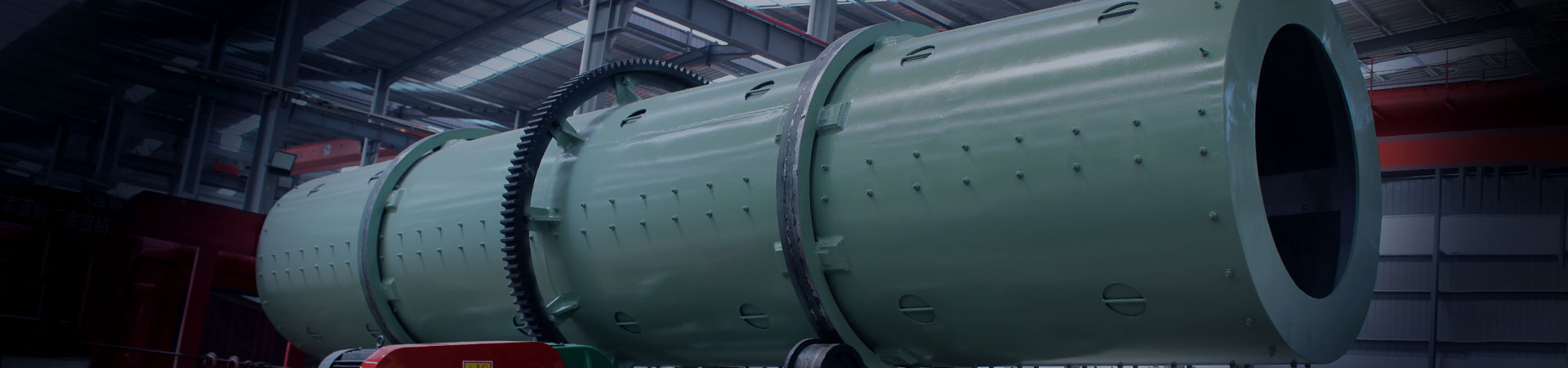
When a windrow composting machine or double-screw compost turning machine exhibits uneven composting, shallow depth, or material only being turned on the surface and not the bottom, the operator’s first reaction is often to adjust the hydraulic pressure and speed. However, in most cases, the problem lies not in the composting machine itself, but in the process before the composting stage: if impurities are not blocked, the cutter rollers will fail.
Upstream of the composting stage: Organic fertilizer crusher and impurity removal determine the fate of the cutter rollers.
The biggest enemy of the composting machine’s cutter rollers is not high-moisture materials, but plastic ropes, wires, woven bag fragments, and long straw. Once these flexible or rigid foreign objects become entangled in the cutter shaft, the load increases sharply, resulting in shallow composting depth at best, and burning out the clutch or damaging the bearings at worst. Source interception relies on two things: sorting and removing large impurities before fermentation, and pre-crushing long-fiber materials with an organic fertilizer crusher, cutting straw, mushroom residue, etc., to 2-5 cm. This reduces entanglement and allows for more thorough contact between the material and air during fermentation. The turning stability of a bio-organic fertilizer production line is largely determined in advance during the crushing and impurity removal stages.
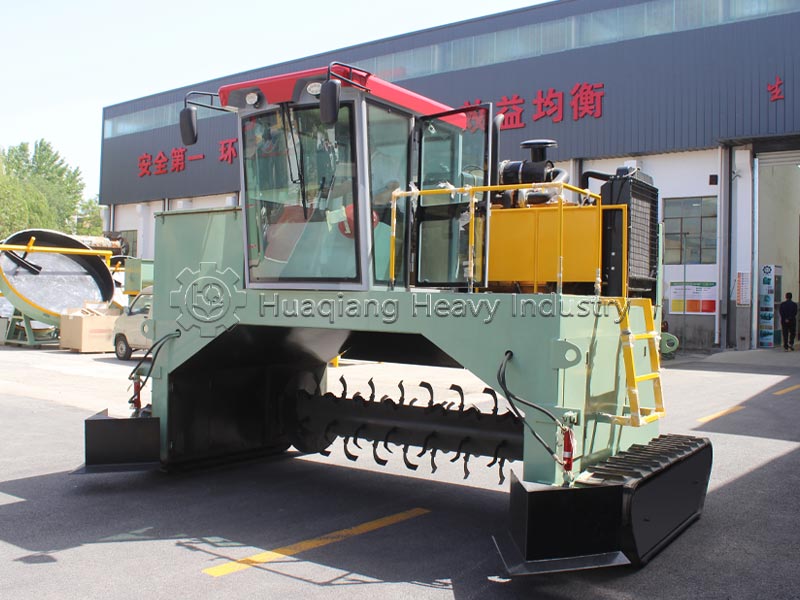
Roller entanglement and blade wear: the first attenuation line for turning depth
The blades are the parts of the compost turner that directly contact the material. When they wear down to 1/3 of their original length, the throwing force becomes significantly insufficient, the material cannot be thrown up, and it only swirls on the surface, preventing the bottom layer from receiving oxygen. The same applies to the spiral blades of a double-spiral compost turner: after the blade edges are thinned, have gaps, or curl, the material carrying capacity decreases, and the bottom material cannot be turned to the surface. The judgment method is straightforward: after stopping the machine, touch the blade edge with your hand. If you do not feel obvious sharp edges but rather smooth arcs, it means that the blades need to be removed or replaced. Replace in groups or pairs to avoid vibration caused by rotor dynamic imbalance.
Trajectory Misalignment and Shallow Tumbling Depth: Don’t Ignore the Track and Hydraulics
Trajectory misalignment of the trough-type compost turner will cause material to be repeatedly turned on one side while the other side is under-discarded. First, use a level to measure the track; if the deviation exceeds 5 mm/10 m, adjustment is needed. Check the wear difference of the traveling wheels on both sides and the adhering substances on the track surface. If the hydraulic lifting is slow or the cutter shaft sinks automatically, it directly reduces the effective tumbling depth. The troubleshooting sequence is: hydraulic oil level and quality, filter element, cylinder seal, and overflow valve. The cutter shaft angle is generally set to 15°–20° (lower at the front and higher at the back). When the left and right sides are not at the same level, the tumbling depth will inevitably be inconsistent.
Quick Check Sequence
When encountering uneven tumbling, follow this sequence, which is faster than blindly adjusting parameters: First, check if the pretreatment impurity removal is ineffective → then check if the wear of the cutter teeth/spiral blades exceeds 1/3 → then measure the track level and the wear of the traveling wheels → finally check the hydraulic lifting pressure and the level of the cutter shaft. The first three points cover most of the real reasons for “insufficient turning depth,” with hydraulic issues being a secondary concern.
Only with a stable turning section can subsequent crushing, screening, and granulation processes have a stable material input. See the product page for turning machine models and cutter roller configurations; see the organic fertilizer crusher product page for pretreatment crushing accessories.