

With the increasing popularity of precision fertilization and soil testing-based fertilizer application, blended fertilizers (BB fertilizers) are becoming an important choice for large-scale planting and specialized fertilizer production due to their outstanding advantages of flexible formulation, high nutrient efficiency, and controllable costs. So, what are the core units that make up a complete BB fertilizer production line? What are the unique aspects of its process flow? This article will provide a detailed analysis of the BB fertilizer production line from its system composition and technical characteristics.
What is a BB Fertilizer Production Line?
A BB fertilizer production line is a fully automated set of equipment used to produce bulk blending fertilizers (Bulk Blending Fertilizer). BB fertilizer is made by dry-mixing two or more granular high-nutrient raw materials (mainly nitrogen, phosphorus, and potassium) using physical methods, without involving chemical reactions during the mixing process. Compared with the granulation process of traditional compound fertilizers, this physical mixing process eliminates the high-temperature chemical reaction step, resulting in lower investment, lower energy consumption, and faster results.
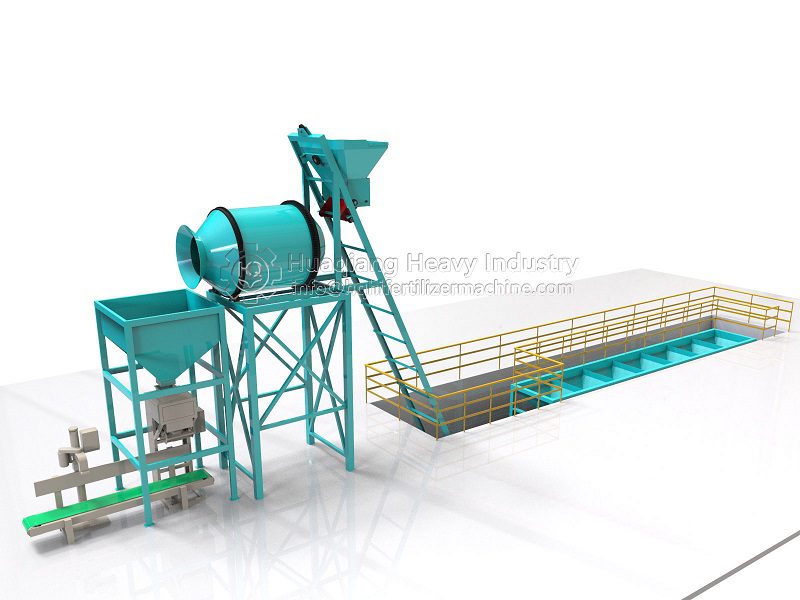
Core Components of the Production Line A complete BB fertilizer production line consists of two main parts: main equipment and auxiliary equipment. The main equipment includes an automatic batching unit, an automatic mixing unit, an automatic packaging unit, and a control system; auxiliary equipment includes conveyors, sewing machines, air pumps, and equipment platforms.
Automatic Batching System – The “Brain” of Production
The batching system is the core control node of the entire production line. It typically includes multiple raw material bins and electronic weighing scales, using microcomputer control to achieve precise batching. The system can support the proportioning management of 4 to 6 raw materials and store up to 20 formulas, facilitating rapid switching of production plans based on different crops and soil conditions. The batching accuracy error can be controlled within 0.2%, with some advanced models even reaching ±0.1%.
Mixing System – The Key to Uniformity
The mixing stage uses a BB fertilizer-specific mixing system. Common types include horizontal ribbon mixers, twin-shaft zero-gravity mixers, and drum mixers. The key technology lies in ensuring that the mixing process does not damage the original particle shape of the materials while preventing segregation in the finished product. Batch intermittent mixing ensures a high level of mixing uniformity.
Packaging System – The Final Link Before Shipment
Automatic quantitative packaging scales and sewing machines work together to measure and seal the finished product. The packaging unit can achieve quantitative packaging of 5 to 50 kg/bag, with measurement accuracy controlled within ±0.1% to ±0.2%. The entire line is centrally managed by a PLC control system, achieving fully automated operation of batching, mixing, and packaging.
Standard Process Flow
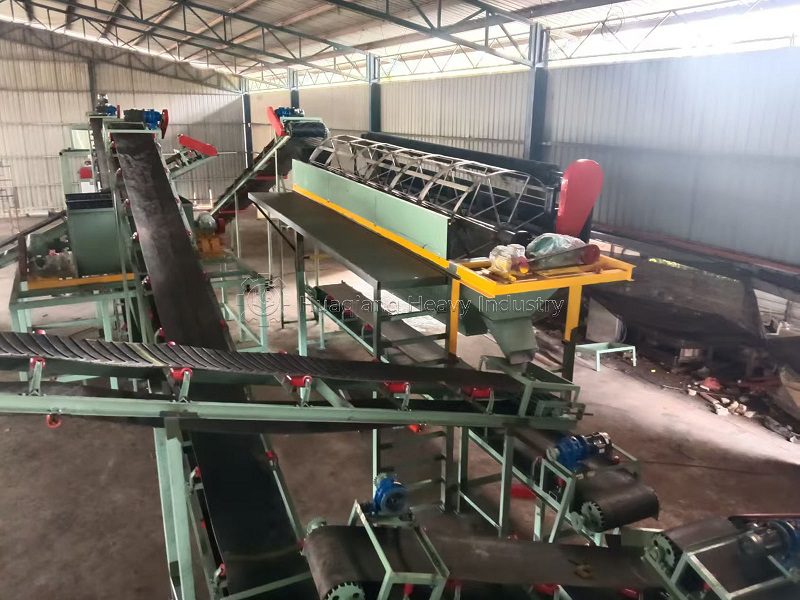
The standard process flow of the BB fertilizer production line is extremely streamlined: Raw materials (nitrogen, phosphate, potassium, and trace elements) → Raw material silo → Batching system → Conveying → Rapid mixing by mixer → Finished product silo → Automatic weighing and packaging → Finished product warehousing. Compared to traditional compound fertilizer production, the BB fertilizer production line eliminates the need for complex granulation, drying, and cooling processes, resulting in a shorter process, fewer equipment, and smaller footprint.
Technical Features and Advantages
Flexible production capacity and strong adaptability. The BB fertilizer production line has an hourly capacity covering a wide range from 8 to 30 tons, with an annual production scale of 10,000 to 100,000 tons, meeting the diverse needs of everything from small fertilizer distributors to large compound fertilizer plants. Fully automated control and high precision. Utilizing computer-controlled automated production, electronic weighing is employed in both the batching and packaging stages, effectively ensuring the nutrient balance of each bag of BB fertilizer.
Damage-free mixing and anti-segregation. The combination of drum mixing and single-bucket lifting protects the integrity of material particles and effectively prevents segregation and stratification caused by differences in material specific gravity after mixing.
Small footprint and strong adaptability. The production line has a compact structure, occupying only 25 to 50 square meters. For the humid climate of southern regions, a compact layout with a bottom-mounted batching system and bucket lifting can be adopted to reduce material contact with air and prevent moisture absorption and re-dampening. Corrosion-resistant models can also be equipped with special anti-corrosion measures to extend the equipment’s service life in humid environments.
Application Scenarios and Development Prospects BB fertilizer production lines are widely used in compound fertilizer plants, formulated fertilizer manufacturers, and fertilizer distributors. Its core value lies in its ability to flexibly adjust nutrient ratios based on crop nutritional needs, local soil fertility levels, and yield targets, effectively compensating for the nutrient deficiencies or excesses caused by the fixed ratios of general-purpose compound fertilizers. With the continued advancement of soil testing and formula fertilization policies, the market demand for BB fertilizer production lines will continue to grow, becoming a crucial link between fertilizer production and precision agriculture.
Conclusion: The BB fertilizer production line, with its core technology of “physical mixing, precise ingredient proportioning, non-destructive stirring, and automated packaging,” significantly reduces investment barriers and operating costs while ensuring product quality. Whether serving regional market-specific fertilizer production or meeting the precision fertilization needs of large-scale planting, the BB fertilizer production line provides an efficient, flexible, and economical solution.
The npk blending fertilizer production line represents a paradigm shift from energy‑intensive chemical granulation to agile, low‑cost physical blending. At its heart lies the npk bulk blending machine and the BB fertilizer blender, which gently tumble granular raw materials without damaging particle integrity, while advanced npk fertilizer formula processing enables real‑time adjustment of N‑P‑K ratios to match specific crop and soil requirements. This flexibility is a cornerstone of modern compound fertilizer production technology, allowing manufacturers to produce customised blends with minimal waste and energy consumption. The entire line — from micro‑computer controlled batching (accuracy ±0.2%) to rapid mixing and automated packaging — operates in a compact footprint, eliminating the need for drying, cooling, and granulation steps. As precision agriculture expands, the BB fertilizer line offers an ideal solution for regional fertiliser distributors and large‑scale farms seeking cost‑effective, tailor‑made nutrition. By combining physical simplicity with digital precision, it bridges the gap between commodity fertilisers and site‑specific agronomy, driving both economic and environmental benefits in modern cropping systems.