


Traditional fertilizers have played a crucial role in the pursuit of high crop yields. However, long-term reliance on chemical nutrients has also led to soil compaction, acidification, and microecological imbalance. The emergence of bio-organic NPK compound fertilizer upgrades the function of fertilizer from “pure nutrient supply” to a comprehensive solution of “nutrients + soil nourishment + disease prevention,” achieving a leap from “curing diseases” to “strengthening the body.”
Soil Ecology: Reviving Compacted Soil Long-term use of traditional fertilizers continuously depletes soil organic matter, destroys soil aggregate structure, and reduces water and fertilizer retention capacity year by year, leading to frequent salinization and acidification problems. The organic matter in bio-organic NPK acts as a “binder” for soil aggregates, effectively loosening the soil and increasing porosity. More importantly, the functional microorganisms (such as Bacillus subtilis) can colonize the rhizosphere, rebuild a healthy microecology, suppress soil-borne diseases, and restore the soil from a “dead” to a “living” state.
Nutrient Utilization: From “Fast and Short” to “Stable and Long-Term” Traditional chemical fertilizers are known for their rapid effects, being released within days after application. Crops are prone to excessive vegetative growth in the early stages and nutrient deficiency in the later stages, with nitrogen utilization rates of only 30%-35%, resulting in significant nutrient loss. Bio-organic NPK achieves a synergistic effect of “rapid effect + long-term effect”: inorganic NPK provides rapid-acting nutrients in the early stages, organic matter slowly mineralizes for continuous energy supply, and microorganisms activate fixed phosphorus and potassium in the soil, increasing nutrient utilization rates to over 50%, and the supply curve is more closely matched to crop needs.
Agricultural Product Quality: A Leap from “High Yield” to “High Quality” Agricultural products using traditional chemical fertilizers are often criticized for “vegetables lacking flavor and fruits lacking sweetness.” The organic matter and microbial metabolites in bio-organic NPK significantly promote crop secondary metabolism, increasing sugar content, vitamins, and aromatic compounds. Simultaneously, the complexation of organic matter reduces heavy metal activity and nitrate residues, allowing agricultural products to regain their authentic flavor, making them greener and safer.
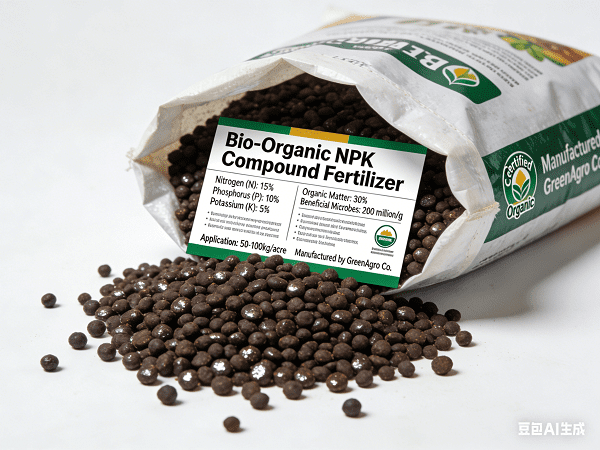
Comprehensive Benefits: Balancing Short-Term Costs with Long-Term Returns
Although the initial investment in bio-organic NPK is slightly higher than that of ordinary chemical fertilizers, its value is reflected in the long-term returns. Soil fertility improves year by year, allowing for a gradual reduction in chemical fertilizer use; crop resistance is enhanced, ensuring stable yields under adverse conditions such as drought and low temperatures; and the premium brought by high-quality agricultural products directly translates into planting profits. After three consecutive years of use, a wheat cooperative in Henan Province saw soil organic matter increase from 1.2% to 1.5%, chemical fertilizer use reduced by 18%, and the average yield per mu (unit of land area) increased by 230 yuan.
From solely pursuing high yields to also considering soil nourishment and efficiency, bio-organic NPK is redefining the value of fertilizers—it not only supplements crops with nutrients but also accumulates soil fertility for sustainable agricultural development. This nourishment to the soil will eventually transform into a continuous harvest and vitality on the land.
The superior field performance of bio-organic NPK is made possible by advanced production technology. A dedicated bio organic fertilizer production line integrates several key pieces of equipment. The process often begins with an npk blending machine or npk bulk blending machine to precisely proportion the organic base with mineral NPK. For producing spherical granules, a disc granulator within a disc granulation production line is a classic choice, offering a gentle tumbling action that preserves microbial viability. After granulation, the product is stabilized in a fertilizer dryer machine and fertilizer cooler machine at low temperatures to protect the beneficial microbes. A rotary drum screening machine classifies the granules, ensuring uniform size. Finally, a fertilizer packing machine seals the product. This integrated system transforms raw materials into a high-value, functional fertilizer that delivers the triple benefits of rapid nutrient supply, long-term soil improvement, and disease suppression. The investment in this specialized bio organic fertilizer production line is an investment in the future of sustainable agriculture, producing a product that not only nourishes crops but also revitalizes the soil.