


What heat sources can be selected for fertilizer dryers?
The heat source of a fertilizer dryer is the “heart” of the entire production line, directly determining drying efficiency, operating costs, and environmental compliance. Common heat source types include: biomass, natural gas, coal, oil, and electric heating. Currently, the industry trend is accelerating towards cleaner and more environmentally friendly heat sources such as natural gas and biomass energy.
Biomass Heat Source – The Mainstream Trend in the Industry
Biomass heat sources use renewable organic materials such as straw, sawdust, mushroom residue, and rice husks as fuel. Its advantages include: moderate fuel costs; the ability to utilize waste materials from organic fertilizer production (such as undersize and brittle material), achieving recycling within the plant area; the carbon dioxide produced during combustion can be absorbed by plant growth, aligning with sustainable development principles; and the ability to meet environmental requirements in most areas with a baghouse dust collector. The disadvantages are relatively high initial equipment investment (60,000–100,000 RMB) and the need for a fuel pelleting machine to compress loose waste into pellets. Suitable Scenarios: Small and medium-sized organic fertilizer plants, especially suitable for plants with raw materials containing a large amount of biomass waste.
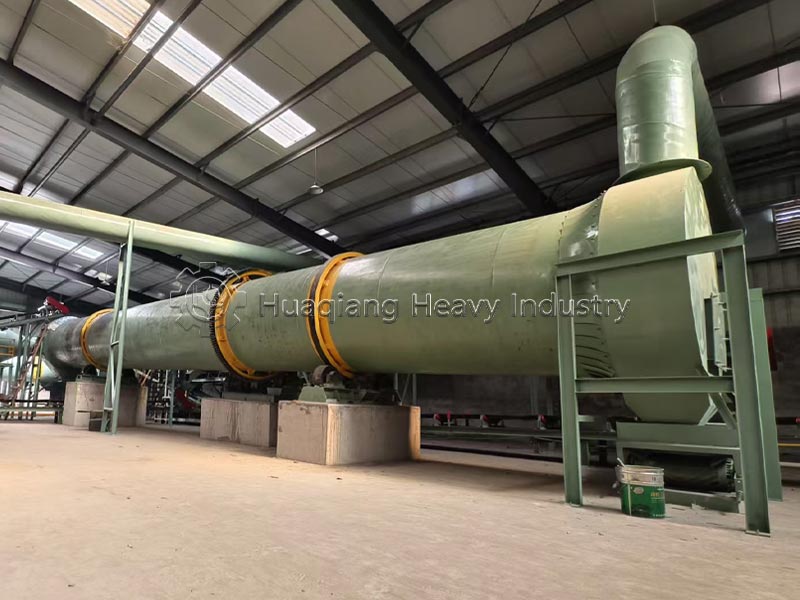
Natural Gas Heat Source – Clean and Efficient Choice: Natural gas combustion is clean and pollution-free, with flue gas mainly composed of CO₂ and water vapor, eliminating the need for complex desulfurization and dust removal equipment. It boasts stable calorific value (8000–9000 kcal/m³), thermal efficiency as high as 85%–92%, and temperature control accuracy up to ±5℃. It also features high automation and convenient start-up and shutdown. The disadvantages are higher operating costs, approximately twice that of coal; and the need for a natural gas pipeline network covering the plant area. Suitable Scenarios: Large and medium-sized organic fertilizer plants, and areas with strict environmental requirements.
Coal Heat Source – Traditional Low-Cost Option: Coal heat sources have relatively low costs, high heating capacity, and stable temperature, with initial equipment investment of only 20,000–50,000 RMB. However, environmental pressure is significant: wet desulfurization and baghouse dust collection systems are required (investment of 50,000–100,000 RMB); coal-fired hot air furnaces are prohibited for new projects in “coal-free zones” in provinces such as Henan, Hebei, and Shandong. Suitable Scenarios: Large-scale organic fertilizer plants located in areas with abundant coal resources and relaxed environmental policies.
Fuel Oil Heat Source – Flexible Backup Solution: Fuel oil heat sources use diesel or heavy oil as fuel, offering high calorific value and rapid heating, suitable for applications requiring high temperature control. Disadvantages include high fuel costs, exhaust gases containing small amounts of sulfides requiring dust removal equipment, and relatively high management costs. Suitable scenarios: Temporary supplemental heating, small organic fertilizer plants, or remote areas without other fuel supplies.
Electric Heating – Dedicated to Precise Temperature Control: Electric heating offers high temperature control precision and fast response, with no pollution. However, it consumes extremely high energy, and prolonged large-scale use can significantly increase production costs. Suitable scenarios: Small drying equipment or laboratories.
Actual selection requires comprehensive consideration of local resource supply, environmental policies, equipment compatibility, and drying process requirements. Current industry trends are clear: natural gas and biomass energy are gradually replacing coal as the mainstream heat source for fertilizer drying production.