

In the challenging frontier of organic waste valorization, few materials test the limits of mechanical equipment quite like the half-wet feedstock. Fresh manure, fermented digestate, dewatered sludge, and moist crop residues occupy a treacherous middle ground—neither dry enough to flow freely nor liquid enough to be pumped. They are sticky, fibrous, clumpy, and utterly uncooperative. Traditional hammer mills choke on their moisture; shredders bind with their fibers; and roller crushers skate over their slippery surfaces.
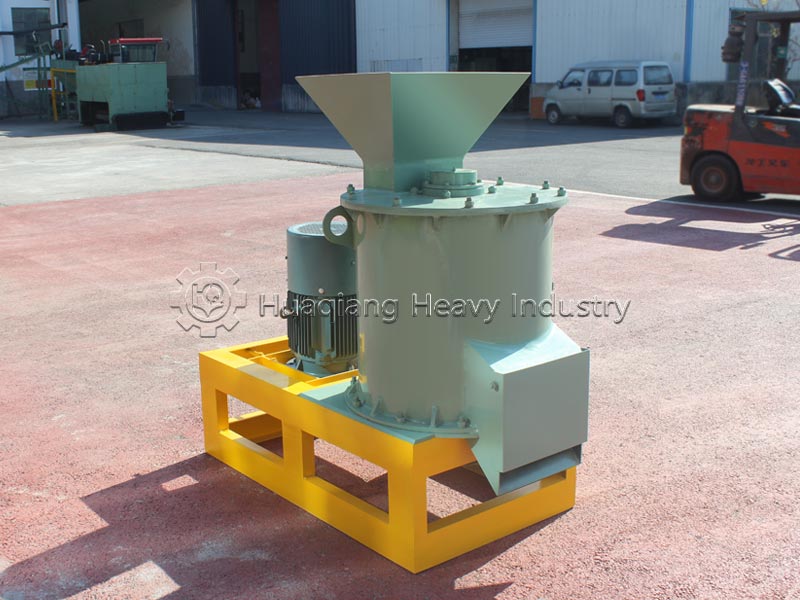
Enter the half-wet material crusher. This specialized machine is not a modified dry crusher. It is a purpose-built deconstruction specialist, engineered from the rotor outward to thrive precisely where conventional equipment fails. It stands as the indispensable gatekeeper at the threshold of every successful organic fertilizer or biogas operation.
Core Advantages: Designed for the Difficult
- Revolutionary Anti-Clogging Architecture
The half-wet crusher’s most defining feature is what it lacks: a discharge screen. Conventional crushers rely on screens to size material, but these become instant choke points when processing moist, adhesive feedstocks. By eliminating the screen entirely, this machine replaces restriction with momentum. A high-inertia rotor, armed with pivoting hammers or staggered blades, hurls material against impact plates and through an open chamber. There is nowhere for to accumulate, no grid to blind, no orifice to plug. The result is continuous, uninterrupted operation that other crushers simply cannot deliver.
- Exceptional Adaptability to Variable Moisture
Half-wet materials are rarely consistent. A single feedstock batch may range from 25% to 55% moisture, with corresponding changes in stickiness, density, and fiber content. The half-wet crusher absorbs this variability without complaint. Its kinetic impact principle is inherently forgiving: moisture does not impede a hammer traveling at 40 meters per second. Whether processing sodden poultry litter or fibrous, partially composted straw, the machine delivers a consistent output of loose, uniformly fragmented particles—the ideal precursor for aerobic fermentation or anaerobic digestion.
- Rugged Durability in Abrasive Environments
Organic wastes often conceal abrasive contaminants: soil, sand, grit, and mineral residues. The half-wet crusher meets this challenge with metallurgical integrity. Rotors are forged from high-tensile alloy steel; hammers are cast in chromium carbide or manganese steel, readily replaceable when worn; and the crushing chamber is armored with bolt-in wear liners. This robust construction ensures that the machine remains operational through thousands of hours of the harshest duty cycles, delivering a low total cost of ownership that justifies its premium engineering.
- High Throughput with Minimal Pre-Processing
By directly accepting material fresh from reception pits or dewatering units, the half-wet crusher eliminates the need for pre-drying—one of the most energy-intensive and capital-consuming steps in organic waste processing. This single advantage can reduce a facility’s thermal energy demand by 60% or more. The machine’s high rotor inertia also allows it to handle occasional large or dense objects without stalling, ensuring reliable production even under imperfect feeding conditions.
Comparative Positioning: Where It Excels
| Criterion | Half-Wet Material Crusher | Chain Crusher |
| Optimal Moisture Range | 25% – 55% | 20% – 45% |
| Screen Requirement | None | None or coarse grate. |
| Output Particle Size | 3–15 mm (adjustable via speed). | 10–50 mm (fibrous). |
| Fiber Handling | Excellent (tearing action). | Excellent (flail action). |
| Energy Consumption | Moderate to high (impact). | Moderate. |
| Primary Application | Pre-fermentation, digestate, sludge, wet manure. | Sticky, fibrous organics. |
The Crusher in Context: A Vital Link in the Process Chain
The half-wet crusher does not work in isolation. Its value is fully realized through precise integration with upstream and downstream equipment.
Receiving the Flow: It is typically fed by a uniform feeder positioned beneath a loader hopper or storage silo. This controlled feeding rate is essential to prevent overloading and to maintain consistent product quality.
Enabling the Heart of the Plant: The uniformly fragmented material discharged by the crusher is the ideal feedstock for composting, anaerobic digestion, or thermal conversion. Its increased surface area accelerates microbial colonization by orders of magnitude, directly translating to shorter retention times and higher biogas yields.
Serving Granulation Lines: For organic fertilizer producers, the crusher is the essential first step toward premium pellet products. When paired with a disc granulator or two-in-one granulator, it ensures that the material entering the pelletizing stage has the correct particle size distribution and moisture content for efficient, uniform granule formation.
Protecting Downstream Assets: By removing oversize lumps and hard contaminants, the crusher acts as a guardian for expensive downstream equipment—pumps, digesters, and pellet mills—preventing blockages and mechanical damage that would otherwise cause costly downtime.