
NPK Fertilizer Line Maintenance and Upgrade Guide
Modular design of fertilizer equipment is becoming an important trend in fertilizer production line maintenance. In traditional NPK fertilizer lines, processes such as granulation, drying, cooling, screening, and packaging are highly coupled. If the fertilizer granulator machine malfunctions, it often requires a complete line shutdown for repair, resulting in long maintenance times and high costs. Modular design breaks the entire line down into independent functional units, each with standardized interfaces and an independent control system, transforming maintenance from “complete line shutdown” to “single-point replacement.”
Rapid Replacement, Reduced Downtime
With modular design, core components of the fertilizer granulator machine, such as pressure rollers, molds, and rotors, can be disassembled and reassembled as a whole, reducing replacement time from several hours to 30-60 minutes. Spare parts modules are plug-and-play, requiring no on-site welding or debugging. For different models such as disc granulators, drum granulators, and double-roller extrusion granulators, modular interfaces allow for rapid switching between different granulation processes on the same production line.
Fault Isolation to Prevent Line-wide Shutdown
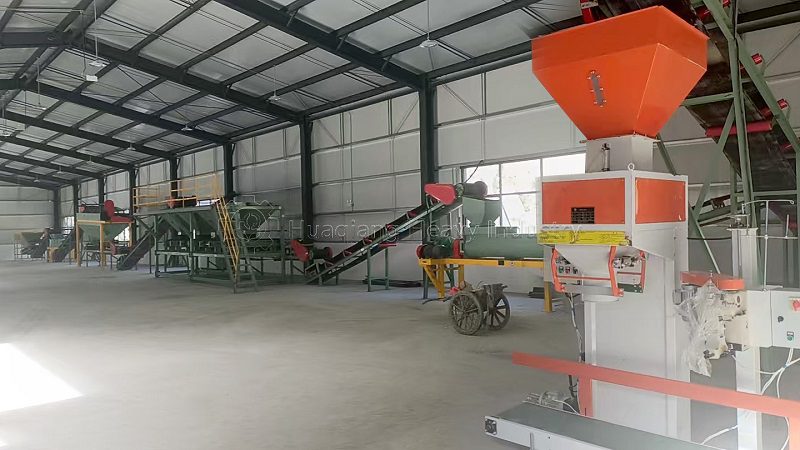
In the NPK fertilizer line, if the screening or cooling module malfunctions, it can be isolated for repair while the remaining modules continue operating or are placed in low-speed standby mode. Modules are connected via flanges and quick-connect fittings, and electrical connections use standard aviation plugs, ensuring that disassembly and assembly do not affect other units. This fault isolation capability can reduce unexpected downtime losses by more than 40%.
Standardized Interfaces to Reduce Spare Parts Inventory
Different models of fertilizer equipment use a unified interface size, increasing the commonality of vulnerable parts. Companies only need to stock a small number of universal modules, reducing capital tied up in inventory. Simultaneously, standardized interfaces allow for a degree of interchangeability between modules from different suppliers, providing greater bargaining power in procurement.
Facilitates Upgrades and Expansion
When it is necessary to increase production capacity or add coating or trace element addition functions, only the corresponding modules need to be added or replaced in the NPK fertilizer line; there is no need to rebuild the entire line. For example, upgrading a disc granulation module to a drum granulation module, or adding an automatic batching module, can be done quickly. This “on-demand expansion” capability is particularly suitable for small and medium-sized fertilizer plants that frequently adjust product formulations.
Lowering Training and Maintenance Barriers
Modular design allows maintenance personnel to master only the independent operation and replacement procedures of each module, shortening the training cycle and reducing the risk of misoperation. Enterprises also do not need to equip each model with a dedicated maintenance team, resulting in a corresponding decrease in labor costs.
Life Cycle Cost Advantages
Industry practice shows that fertilizer equipment with a modular design can reduce its life cycle maintenance costs by 20%–30% compared to traditional welded production lines. Reduced downtime, optimized spare parts inventory, and flexible upgrades and expansions combine to make modularization a priority for modern fertilizer plants.
In summary, modular design shifts fertilizer equipment maintenance from reactive emergency repairs to proactive replacement, significantly improving the uptime and economic efficiency of NPK fertilizer lines. For enterprises building or upgrading fertilizer production lines, prioritizing highly modular fertilizer granulator machines and complete line solutions is an effective way to reduce long-term maintenance costs and enhance market competitiveness.