

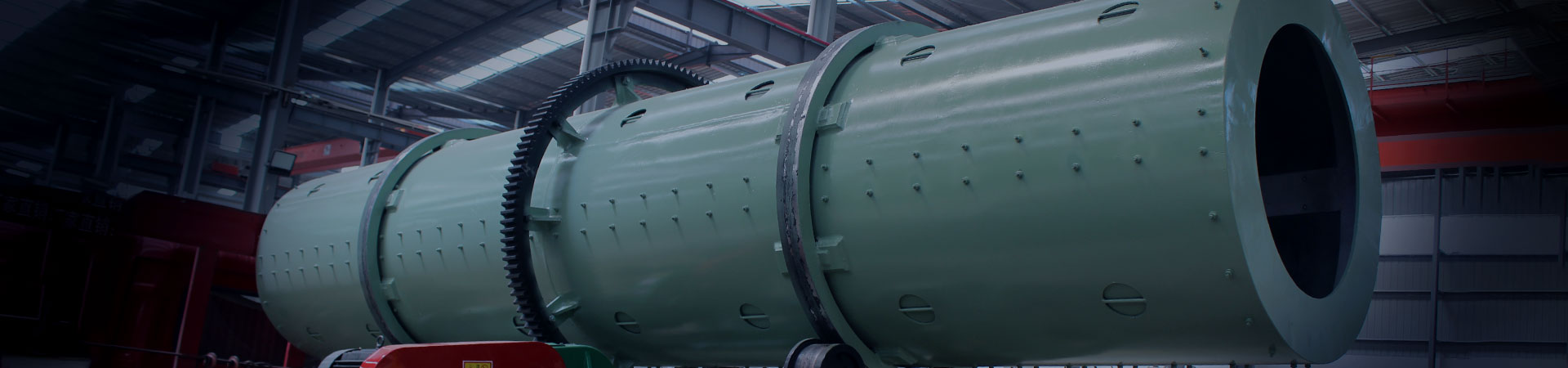
Walk into any modern fertilizer facility, and you’ll hear it before you see it—the steady hum of conveyors, the soft thud of bags dropping onto pallets, the rhythmic whir of spinning mixers. But look closer, and you’ll witness something remarkable: a perfectly choreographed dance of machines, each playing its part in creating one of agriculture’s most essential tools—blended NPK fertilizer.
So what exactly is an NPK blending production line? Think of it as a high precision kitchen where nitrogen, phosphorus, and potassium—the three primary nutrients crops crave—are measured, mixed, and packaged with the accuracy of a master chef following a treasured recipe. Only here, the recipe is tailored to specific soils, specific crops, and specific growing conditions.
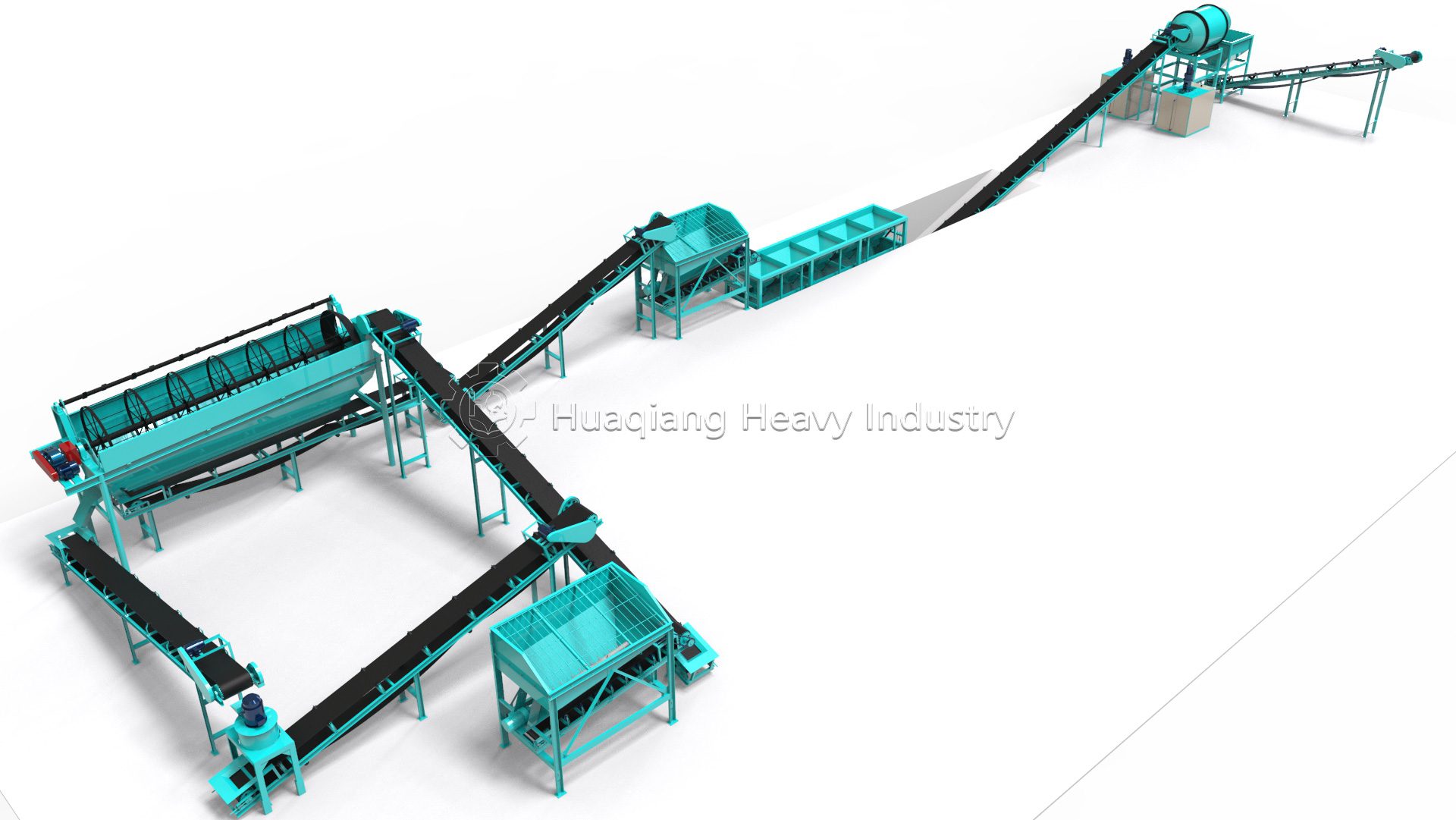
The performance begins with the batching system. This is the conductor of the orchestra, the one who ensures every ingredient appears in exactly the right proportion. Urea from one hopper, diammonium phosphate from another, muriate of potash from a third—each flows into weighing hoppers monitored by load cells so sensitive they can detect a difference of just a few grams. Too much nitrogen and the crop might lodge; too little potassium and yields suffer. The batching system doesn’t guess. It knows.
Once weighed, the ingredients travel—via bucket elevators that lift them skyward, or belt conveyors that carry them smoothly across the floor—to the mixer. And this is where the magic truly happens.
The mixer, often a horizontal ribbon mixer, receives the precise batch and begins its gentle, insistent work. Ribbons of steel rotate, lifting and folding, tumbling the white, gray, and pink granules together until they become inseparable. But here’s the delicate balance: mix too briefly, and nutrients remain segregated, creating hotspots in the field. Mix too aggressively or too long, and the granules abrade, creating dust that compromises uniformity. Modern lines solve this with programmable logic controllers—tiny brains that time each cycle to the second, ensuring a blend so homogeneous you could test any handful and find the same perfect ratio.
From the mixer, the blended material flows—often belt conveyor—into the packaging station. Here, automatic packers work with almost hypnotic efficiency. They fill bags, weigh them with the same precision as the initial batching, seal them against moisture, and stack them onto pallets. Some lines can pack thirty, forty, even fifty tons per hour, each bag a promise of balanced nutrition.
But no great symphony relies on just a few instruments.Crushers wait nearby, ready to break down any lumps that might have formed in storage. Rotary screens sift out impurities, ensuring that only clean, properly sized material enters the mixer. Dust collection systems, often overlooked, work tirelessly to capture stray particles, returning them to the process while keeping the air breathable for the humans who oversee this mechanical ballet. Conveyors snake between stations, linking everything into one continuous, seamless flow.
And perhaps most importantly, there’s the control system—the silent brain that monitors every load cell, every motor, every sensor. It records data, adjusts parameters, and ensures that from the first ingredient to the final bag, the process remains within the tightest tolerances.
So why does all this matter? Because farming is no longer about guesswork. Modern agriculture demands precision—the right nutrients, in the right place, at the right time. An NPK blending line delivers exactly that. It transforms raw materials into a tool that farmers can trust, allowing them to feed a growing world without waste.