

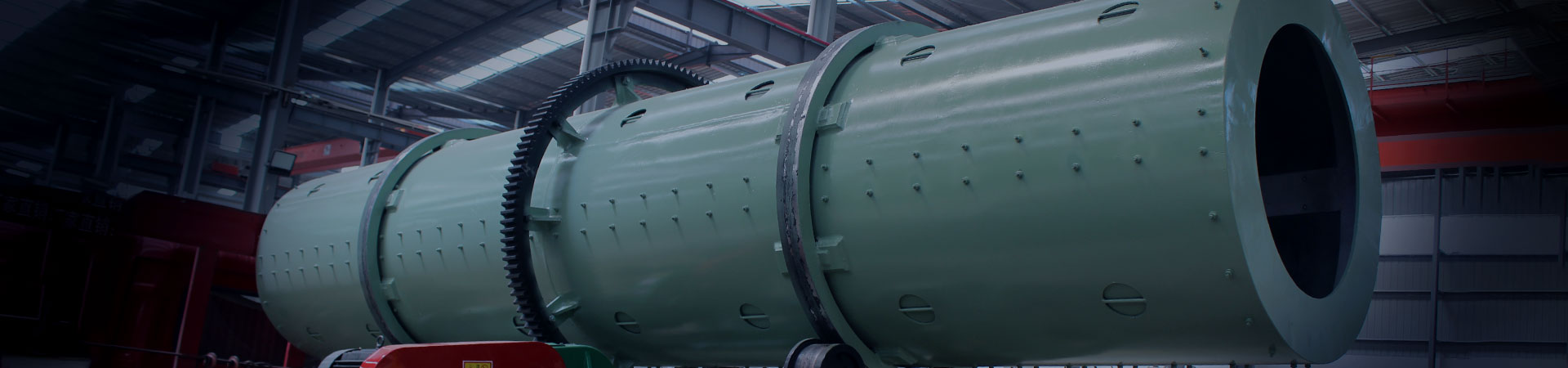
Against the global shift towards sustainable agriculture, the demand for high-quality bio-organic fertilizers is rapidly increasing. At the heart of this production process lies a key technology: fermentation composting turning technology. This technology is far more than a simple mixing tool; it’s a sophisticated engine that transforms untreated organic waste into a stable, nutrient-rich process beneficial to soil improvement.
Traditional composting methods are often static and inefficient. Poor aeration leads to oxygen deficiency in some areas, hindering the decomposition process. This results in lengthy composting cycles (typically 60 to 90 days), the growth of harmful pathogens, and unpleasant odors. Turning technology was developed to solve these problems, meeting the basic needs of aerobic microorganisms (the true “workers” in the fermentation process).
Its core principle is simple yet efficient: mechanical aeration. By periodically lifting and rotating the compost pile, the turner introduces a stable flow of oxygen deep into the compost. This provides energy for the microorganisms, enabling them to decompose organic matter rapidly and exothermically. Simultaneously, this process releases trapped carbon dioxide and excess moisture, thus regulating the internal temperature of the compost pile. This prevents overheating in the compost pile core, avoiding the killing of beneficial bacteria crucial to the quality of the final product.
As the bio-organic fertilizer industry has scaled up, this technology has evolved. It has progressed from simple manual or tractor-driven tools to a highly specialized field of intelligent machinery. Modern compost turners are designed for specific applications. For example, when processing high-moisture materials such as livestock manure, precise control of the turning frequency helps evaporate excess moisture, creating ideal conditions for rapid decomposition. For large-scale operations using the windrow method, large industrial compost turners can efficiently process tens of thousands of tons of material, achieving deep and uniform mixing that was previously impossible.
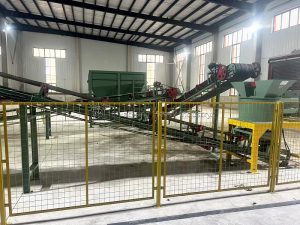
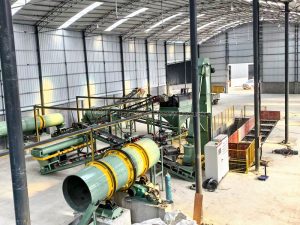
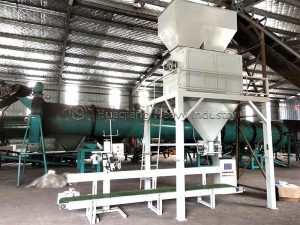
Today, the most significant advancement is the application of intelligent technology. By embedding sensors in the compost pile to monitor temperature, oxygen, and humidity in real time, the turning process can be fully automated. The turner is connected to an intelligent control system, operating on demand and only activating when conditions exceed optimal limits. This precise control not only maximizes microbial activity and accelerates the composting cycle (reducing it to just 20-30 days), but also saves energy and reduces labor costs.
Ultimately, the efficiency of fermentation compost turning technology directly determines the quality of the final product. Well-managed mechanical turning processes produce more uniform and fully decomposed compost material with higher concentrations of beneficial microorganisms. This lays an ideal foundation for producing high-quality organic fertilizers that improve soil health and support global food production, proving that this technology is not just a tool, but an indispensable pillar of modern sustainable agriculture.
The high-quality, well-decomposed compost produced by advanced fermentation turning technology is an ideal feedstock, but it is just one component in a larger industrial ecosystem. To create a complete range of fertilizer products, this mature organic matter can be integrated into a variety of production lines. For a pure organic product, it can be directly shaped into granules using a disc granulation production line or a disc granulator. However, to produce a compound product, the compost becomes a key ingredient in a broader npk fertilizer production line. Here, it is precisely proportioned with mineral nutrients using an npk blending machine before being formed into granules. This could be done via wet agglomeration in a rotary drum granulator or through dry compaction in a double roller press granulator. The resulting granules are then processed through a rotary drum screening machine for classification, followed by a fertilizer dryer machine and fertilizer cooler machine for stabilization. Finally, the consistent, high-quality product is weighed and bagged by a fertilizer packing machine. The integration of efficient composting technology with flexible granulation and finishing equipment allows for the creation of a diverse portfolio of high-value fertilizers, from pure organic soil conditioners to specialized NPK blends, all built on a foundation of sustainable waste conversion.