


Soil compaction, acidification, salinization… these problems plaguing more and more growers are actually closely related to soil health. Why can organic fertilizer “nourish the soil”? How exactly does it make compacted soil loose and fertile again? This article explains it from a scientific perspective.
Organic Matter: The “Skeleton” and “Sponge” of Soil
The core component of organic fertilizer is organic matter. When organic matter enters the soil, it combines with mineral particles in the soil to form a structure called “soil aggregates”—which can be understood as countless tiny “soil clumps.” These aggregates form pores of varying sizes; larger pores are for drainage and aeration, while smaller pores are for water and fertilizer retention.
This is why soil treated with organic fertilizer is looser. With improved soil aggregate structure, crop roots can penetrate more easily, oxygen can reach deeper into the soil layers, aerobic microorganisms become more active, and the soil becomes “alive.” Conversely, soils subjected to long-term, single-use chemical fertilizers suffer from disrupted aggregate structure, resulting in dispersed soil particles that compact upon watering and crack upon drying.
Humic Acid: Soil’s “Buffer” and “Chelating Agent”
The decomposition of organic fertilizers produces a large amount of humic acid. This complex organic colloid plays multiple roles in the soil. It acts as a nutrient buffer—humic acid contains numerous active groups that adsorb and store nutrients such as nitrogen, phosphorus, and potassium, preventing them from being leached by water or fixed in the soil, and then slowly releasing them to crops when needed. It also acts as a “chelating agent” for metal ions—humic acid can chelate trace elements such as iron, zinc, and manganese, protecting them from soil fixation and improving their availability.
For already acidified soils, humic acid can also act as a buffer, reducing the toxicity of metal ions such as aluminum and manganese, creating a more suitable growth environment for roots.
Beneficial Bacteria: Soil “Scavengers” and “Nutritionists”
Fully decomposed organic fertilizer is itself a microbial “seed bank,” carrying a large number of beneficial bacteria into the soil. These beneficial bacteria (such as Bacillus subtilis and actinomycetes) colonize the soil and perform multiple functions.
They are soil “scavengers”—decomposing crop residues and organic waste, accelerating nutrient cycling; they are soil “nutritionists”—phosphate-solubilizing bacteria release fixed phosphorus from the soil, potassium-solubilizing bacteria convert mineral potassium into available potassium, and nitrogen-fixing bacteria fix atmospheric nitrogen, providing natural nutrients for crops; they are also crop “bodyguards”—forming a protective barrier around the root system, inhibiting the reproduction of pathogens, and reducing the occurrence of soil-borne diseases.
Fully Fermented: A Prerequisite for Improved Results
It is important to emphasize that only fully decomposed organic fertilizer can truly improve the soil. Uncomposted organic fertilizer, when applied to the soil, undergoes secondary fermentation, generating high temperatures that burn roots. Harmful bacteria, insect eggs, and weed seeds can contaminate the soil, and organic acids and ammonia can damage the root system.
This is why professional organic fertilizer production requires a rigorous aerobic fermentation process—regularly turning the compost pile with a turner to replenish oxygen, maintaining the pile temperature above 55°C for 7-10 days to thoroughly kill pathogens and insect eggs, and transform organic matter into stable humus. Properly composted organic fertilizer is dark brown in color, odorless, and loose in texture. After being applied to the soil, it quickly integrates and effectively improves soil conditions.
Scientific soil care starts with organic fertilizer. Healthy soil is the foundation for high-yield and high-quality crops. Organic fertilizer provides organic matter, humic acid, and beneficial bacteria, comprehensively improving the soil from physical, chemical, and biological dimensions—loosening compacted soil, revitalizing acidified soil, and restoring fertility to barren soil. For growers pursuing quality agriculture, using organic fertilizer effectively is the most long-term and effective investment in the land.
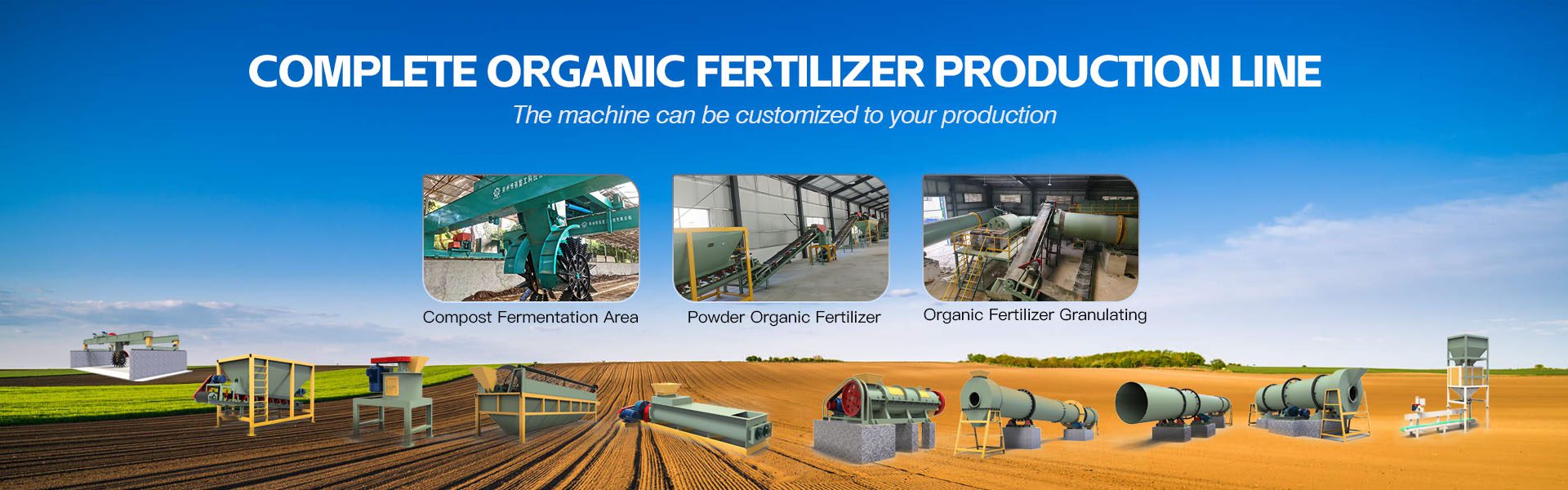
The soil-improving power of organic fertilizer begins with its production. A robust fermentation process, often managed by a double screws compost turning machine, ensures the material is fully decomposed, transforming it into stable humus and eliminating pathogens. The resulting product is then processed through a series of fertilizer raw material processing machinery and equipment to create a marketable product. For pure organic fertilizer, a disc granulator can shape the material into uniform, easy-to-apply granules. For a more complex bio-organic NPK, the organic base is precisely blended with mineral nutrients using an npk blending machine before granulation. The final granules are then stabilized in a fertilizer dryer machine and fertilizer cooler machine. A rotary drum screening machine classifies the product, ensuring only the highest-quality granules are packaged by a fertilizer packing machine. This integrated system, from the initial composting stage to the final packaging, ensures that the final organic fertilizer product is not only nutrient-rich but also stable, safe, and effective. When applied to the soil, its organic matter rebuilds the soil’s aggregate structure, its humic acid buffers pH and chelates nutrients, and its beneficial bacteria colonize the root zone, creating a thriving soil ecosystem. This is how a well-produced organic fertilizer transforms compacted, tired soil back into the living, fertile foundation that supports healthy, high-yielding crops.