


If soil could speak, it would probably say, “I’m tired.” Years of continuous cropping and heavy chemical fertilizer use have left it compacted, exhausted, and lifeless. A bio organic fertilizer production line is trying to answer that silent cry for help.
Inside the workshop, a brand-new bio-organic fertilizer line is being installed. Sunlight pours in through the side windows, falling on a yet-to-start rotary screener machine. Its wire mesh is fine and even, like a shield waiting for inspection. The most eye-catching piece is the twin-shaft mixer—designed to blend fermented organic matter with functional microbial agents. A technician bends over to align the coupling; the click of the wrench sounds like tuning before a “resurrection ceremony.”
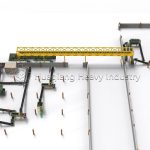
The star of this line isn’t a single machine, but a well-coordinated “restoration team.” Raw materials—manure, straw, soybean meal, mushroom residue—first undergo high-temperature fermentation in a compost turner that rhythmically “breathes,” killing pathogens and weed seeds. Then a crusher breaks them into soft, fine “soil food,” and the batching system precisely adds functional microbes such as Bacillus subtilis, phosphate-solubilizing and potassium-solubilizing bacteria. These invisible “little workers” are the true soul of bio-organic fertilizer.
A disc granulator rolls the mixture into uniform pellets—easy to spread and providing shelter for the microbes. The drying and cooling stages use low-temperature processes to ensure high survival rates of beneficial bacteria—this is the biggest difference between bio-organic fertilizer and ordinary organic fertilizer: it brings “living workers” into the soil. Finally, a screener sends qualified pellets to an automatic packer, while undersized particles return to the line, wasting nothing.
The installation site isn’t noisy, but there’s a controlled tension. A welder crouches in a corner, eyes focused behind a mask; blue sparks flicker on and off like neat stitches sewn into steel. Several workers carry a conveyor frame, footsteps synchronized, shouting short rhythmic chants. An old master pats the side panel of the fermentation tank and says to a young coworker, “This thing heals the soil—better than anything else. The microbes go in, the soil loosens up, and roots can really dig down.”
When all the equipment is finally connected, the entire production line pulses like a switched-on circuit—from fermentation to crushing, from mixing to granulation, from low-temperature drying to screening and packaging—each step neatly interlocking. The moment bio-organic fertilizer drops from the outlet, it carries not just nutrients, but the vitality of hundreds of millions of microorganisms.
So next time you see dark, crumbly soil or smell the fresh scent of earth after rain, take a moment to think: isn’t there a gentle “soil resurrection” hidden inside that production line? Who says the earth can’t get tired? Who says microbes can’t be heroes?