
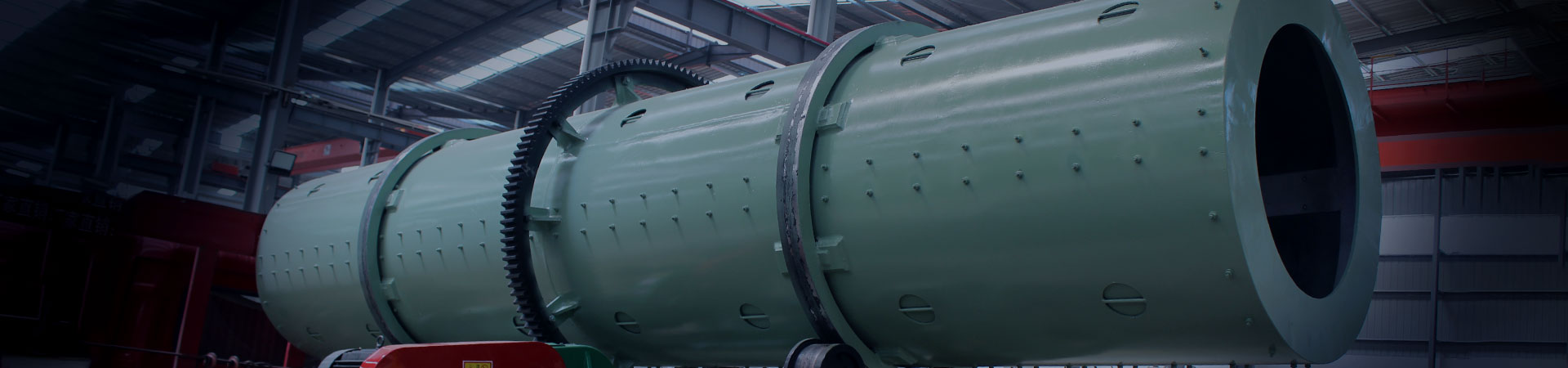
The rotary drum granulator is a standard configuration for large-scale organic fertilizer production lines with capacities exceeding 10,000 tons. It is a continuous drum granulation equipment with core advantages including massive single-machine capacity, stable and durable operation, and strong adaptability to raw materials. It can easily process complex mixtures of materials such as cow manure, sheep manure, sludge, mushroom residue, straw, and furfural residue, making it the preferred main granulator model for large-scale plants.
The rotary drum granulator has a horizontal long cylindrical structure, 3-6 meters in length and 1.2-2.4 meters in diameter. The cylinder is made of thick-walled steel plate and equipped with external rollers, support rollers, and retaining rollers, ensuring smooth and safe operation. The internal structure is divided into two functional areas: a front mixing and granulation area and a rear polishing and granulation area, separated by a retaining ring, achieving “granulation first, polishing later” in one step. Specially angled lifting plates are installed internally, which not only drive the material to tumble evenly but also prevent material from sticking to the walls and clumping.

Detailed workflow of the rotary drum granulator: Material is continuously fed into the rotary drum by a belt conveyor. Under the action of rotation, lifting plates, and micro-atomized water spray, it gradually agglomerates into granules. After entering the polishing zone, the granules are further rolled and polished inside the drum, becoming rounder, denser, and smoother, and finally continuously discharged from the outlet. The entire process is continuous feeding and discharging, without interruption or material blockage. The hourly capacity can reach 5-15 tons, meeting the full-load production needs of large factories.
The biggest advantage of the rotary drum granulator is its versatility in handling raw materials: materials with high organic matter, high fiber, high moisture content, and small amounts of impurities can be stably granulated, with lower requirements for initial crushing precision. The equipment operates with minimal vibration and noise, has a strong load-bearing capacity, can operate 24 hours a day without interruption, has few vulnerable parts, and extremely low maintenance costs.
The disadvantage is that the pelletizing rate is relatively low, generally between 40% and 60%. A complete screening and return system is required to re-crush and re-granulate unqualified granules. However, for a production model with large scale, low cost, and large-volume supply, its ultra-high capacity and stability can fully cover the cost of recycled materials, making it an irreplaceable core equipment for large-scale organic fertilizer projects.