
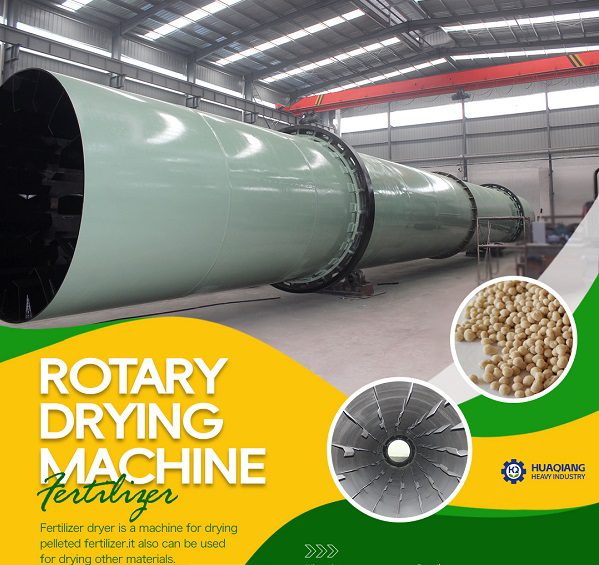
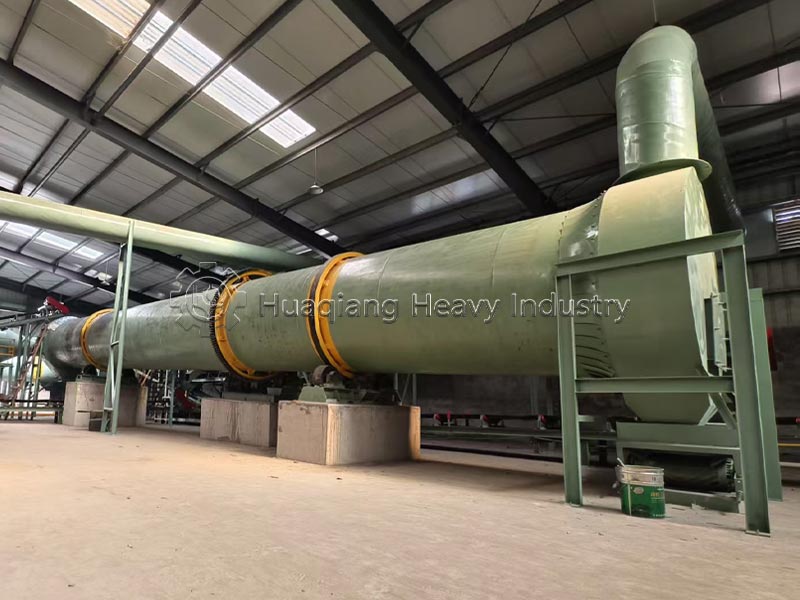
The operational life of a fertilizer rotary dryer is primarily determined by its resistance to thermal fatigue and acid corrosion. By implementing a dual-focus maintenance strategy—combining precision gear alignment with high-temperature anti-corrosive coatings—manufacturers can extend the service life of their drying systems by over 50% while maintaining optimal thermal transfer efficiency.
The Mechanics of Longevity in Thermal Processing
A rotary dryer is often the most significant investment in any fertilizer production process. Due to the constant rotation and high-temperature fluctuations, these machines are prone to structural deformation if not managed with engineering precision.
Critical Maintenance Benchmarks for Maximum Durability:
Precision Trunnion and Roller Alignment:
Even a 1mm misalignment can cause uneven shell stress. Regular laser alignment ensures the load is distributed evenly across the heavy-duty fertilizer machinery foundations, preventing premature cracks in the dryer shell.
Corrosion-Resistant Internal Flighting:
The internal lifting flights are the first to degrade when processing acidic NPK fertilizer production blends. Replacing standard carbon steel flights with specialized heat-resistant alloys can triple the time between overhauls.
Optimized Lubrication for High-Heat Environments:
The girth gear and pinion require high-viscosity, heat-stable lubricants. Failure to maintain a consistent lubrication film leads to “pitting,” which eventually necessitates a full gear replacement.
Thermal Shock Prevention:
Sudden cooling is the enemy of industrial steel. Modern operators utilize automated burners that gradually ramp down temperatures, a standard feature in high-end fertilizer manufacturing equipment, to prevent the metal from becoming brittle.
Dust Accumulation Control:
Excessive dust inside the drum acts as an abrasive, wearing down the shell from the inside. Integrating a high-efficiency cyclone before the exhaust ensures that fine particles are returned to the high-pressure roller press granulator specification rather than damaging the dryer’s interior.
Essential Performance Parameters for 2026
To ensure your dryer remains an asset rather than a liability, follow these specific operational thresholds:
Exhaust Temperature Monitoring: Maintain a consistent 10-15°C above the dew point to prevent condensation and acid rain inside the drum.
Shell Thickness Audits: Conduct ultrasonic thickness testing every 6 months to detect localized corrosion in organic fertilizer production lines.
Vibration Analysis: Any reading exceeding 3mm/s on the main bearings indicates an immediate need for re-balancing.
Dryer Longevity as a System-Wide Advantage
Extending rotary dryer life by 50% is not merely a maintenance victory—it is a production economics multiplier that ripples across the entire plant. In a high-throughput npk fertilizer line, the fertilizer dryer machine sits at the thermal heart of the process: its exhaust temperature directly dictates the efficiency of the downstream fertilizer cooler machine, while its shell integrity determines whether moisture is reduced to ≤20% before granules reach the rotary drum screening machine. For roller press granulator production line operations, where dry compaction eliminates the need for post-granulation drying, the dryer still serves as a critical pre-compaction moisture conditioning stage, ensuring feedstock enters the press at optimal 12-15% moisture. In bio organic fertilizer production line configurations, the dryer must operate below 60°C to preserve microbial viability—a thermal discipline that demands even more precise corrosion management and flight alloy selection. When these thermal systems are maintained with laser-aligned trunnions, heat-resistant alloy flights, and cyclone-protected exhaust, the entire downstream chain—from fertilizer packing machine weight accuracy to storage caking resistance—benefits. Ultimately, treating the dryer as an integrated system component rather than an isolated heat source transforms maintenance strategy from reactive repair into proactive asset management, securing both operational uptime and product quality consistency.
FAQ: Rotary Dryer Asset Management
Q1: How often should the girth gear of a rotary dryer be inspected?
A: A visual inspection for lubrication coverage should be done daily, while a full stroboscopic inspection of the gear teeth profile should be conducted every quarter to catch early signs of wear-related deformation.
Q2: What is the main cause of shell “warping” in fertilizer dryers?
A: Warping is typically caused by “uneven heating” during start-up or shut-down. Always ensure the drum continues to rotate at a slow “inching” speed until the internal temperature drops below 80°C to maintain structural circularity.
Q3: Can I use the same dryer for both organic and chemical fertilizers?
A: While possible, the chemical fertilizer production process is significantly more corrosive. If switching, the dryer must be thoroughly cleaned, and the internal flights must be inspected for “pitting” to prevent cross-contamination and accelerated metal fatigue.