

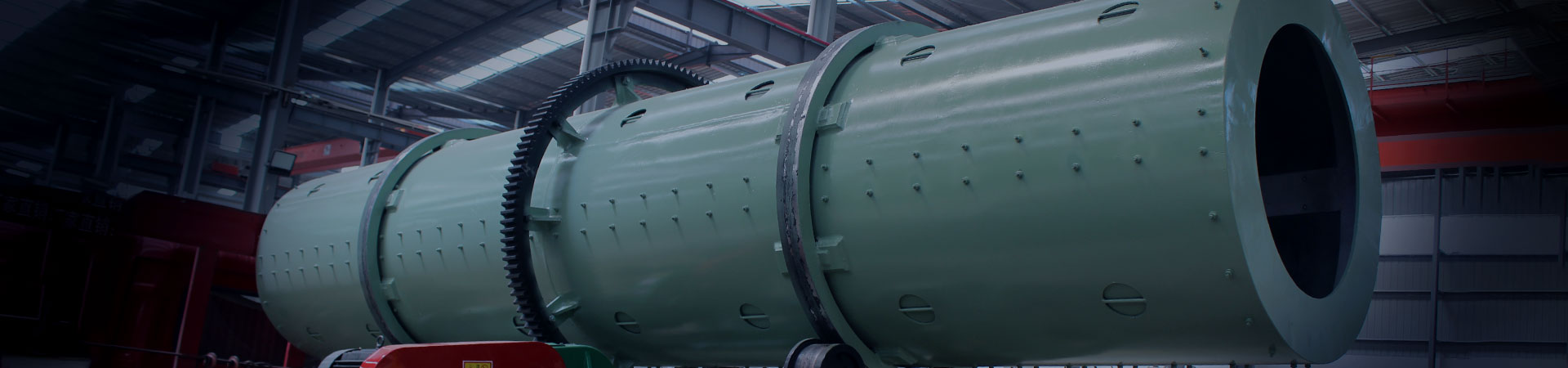
In fertilizer production, mixing uniformity directly determines the consistency of nutrients in the product. Uneven mixing can lead to deviations in nitrogen, phosphorus, and potassium content within the same batch of fertilizer, affecting fertilizer efficacy and potentially causing quality disputes. Horizontal and vertical mixers are currently the two most common types of mixing equipment. This article systematically compares their mixing uniformity performance based on measured data and industry standards.
What are Mixing Uniformity and Coefficient of Variation?
Mixing uniformity refers to the degree of uniformity in the distribution of components in a mixture, usually quantified by the coefficient of variation (CV value). The smaller the CV, the more uniform the mixing. According to GB/T 32536-2016 “Test Methods for Feed Mixers” and general fertilizer industry standards, a CV ≤ 10% is considered acceptable, and a CV ≤ 7% is considered excellent.
Standard Test Method: Add a tracer (e.g., sodium chloride, 0.1%-0.3%) to the material, mix, and take samples at 10 different locations within the equipment. Determine the tracer content in each sample using the chloride ion selective electrode method. Calculate the percentage of standard deviation to mean to obtain the CV value.
Measured Data: Comparison of Uniformity between Horizontal and Vertical Mixers
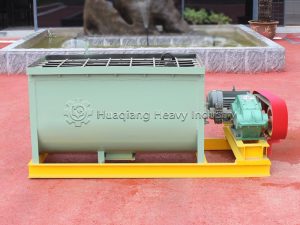
2.1 Horizontal Mixer (Horizontal Shaft Type)
Structure and Principle: A dual-shaft or single-shaft rotating impeller/ribbon is installed inside the cylinder. The material is propelled by the impeller to perform reciprocating shearing and pushing motion in the horizontal direction.
Actual Uniformity Performance: Multiple research data show that the CV value of the horizontal mixer can reach 7.19%, which is excellent in the feed and fertilizer industry.
Mixing Time: Uniformity can be achieved in 1.5-10 minutes.
Mixing Speed: 40-80 rpm (low speed, high efficiency).
Good adaptability to materials with large density differences (such as straw powder and manure in organic fertilizer).
Limitations: High material residue; approximately 5%-8% residue remains inside the machine after unloading, making cleaning difficult.
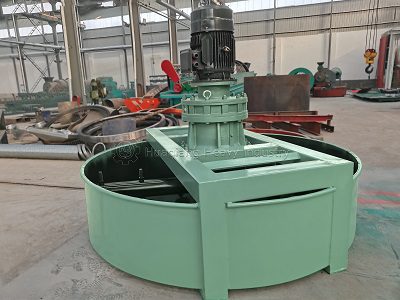
2.2 Vertical Mixer (Vertical Shaft Type)
Structure and Principle: Material is fed from the bottom to the top by a lifting screw, and then evenly spread using centrifugal force, forming a “rising-falling” cyclic mixing.
Actual Uniformity Performance: Field tests show that the CV value of the vertical mixer ranges from 10.30% to 18.05%.
Mixing Time: 15-30 minutes (more than 50% longer than horizontal mixers)
Mixing Speed: 250-500 rpm (high-speed operation)
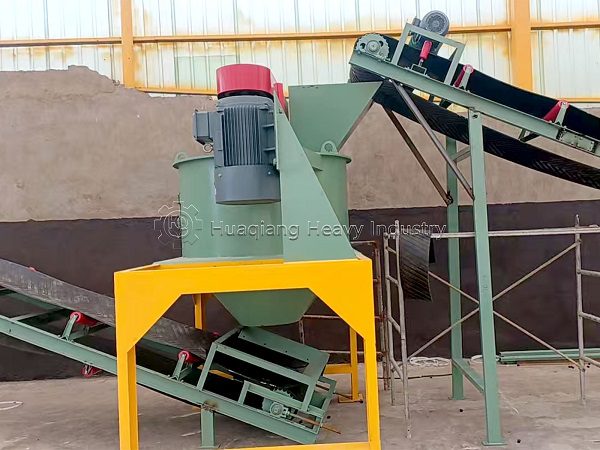
Recent research confirms that the mixing time required for vertical mixers to achieve uniformity is significantly longer than that for horizontal mixers, and the CV value improves with increasing mixing time.
Advantages: Simple structure, low maintenance cost, small footprint, low material residue (1%-3%), and lower price.
III. Core Conclusions of Performance Comparison
| Comparison Dimension | Horizontal Mixer | Vertical Mixer |
| Typical CV Value | 7%-9% | 10%-18% |
| Mixing Time | 1.5-10 minutes | 15-30 minutes |
| Rotation Speed Range | 40-80 rpm | 250-500 rpm |
| Residue Rate | 5%-8% | 1%-3% |
| Maintenance Cost | Higher | Lower |
| Core Conclusion | Superior mixing uniformity | Greater fluctuation in mixing uniformity |
Based on industry equipment parameters, for most organic fertilizer and compound fertilizer production lines, if uniformity is the primary consideration, horizontal mixers are a more reliable choice. Their 7%-9% CV value is far superior to the 10%-18% of vertical mixers, making them particularly suitable for formulas containing trace elements and microbial agents. For scenarios with limited budgets and primarily producing basic fertilizers, vertical mixers can also meet basic requirements. It is recommended to conduct small-scale tests using the actual formula before selecting a product, and use data to guide decision-making.
From Mixing Precision to Line-Wide Performance
Selecting the optimal mixer is not an isolated decision but a critical node within an integrated fertilizer equipment ecosystem. A fertilizer horizontal ribbon mixer delivering CV values of 7%–9% ensures that nutrients are homogenized before entering downstream units, directly enhancing the spheronization efficiency of the fertilizer granulator machine and reducing recycle loads. Upstream, robust fertilizer crusher and mixer preprocessing guarantees feedstock fineness compatible with low-residue blending. Downstream, uniform granules pass through fertilizer dryer and cooler stages with predictable thermal behavior, then reach fertilizer screening equipment with minimal fines generation. When every unit is synchronized, the final product flows seamlessly to the automatic fertilizer packing machine with weight deviations locked within ±100 grams. While industrial fertilizer machine price remains a practical constraint, investing in superior mixing uniformity yields compound returns: lower energy consumption, higher first-pass rates, and reduced customer complaints. Ultimately, data-driven mixer selection transforms a single process variable into a line-wide competitive advantage.