

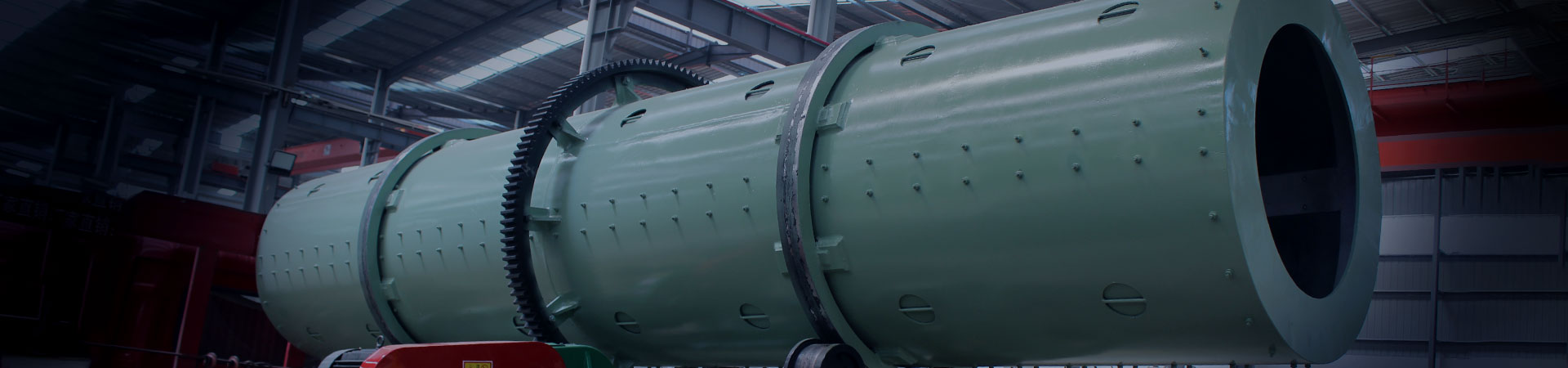
The significant improvement in the ease of storage and application resulting from converting fertilizer from powder to granules stems from the fundamental transformation of the material’s physical properties by granulation equipment. This transformation is not merely a change in shape; rather, through precision mechanical force and process control, the fertilizer acquires entirely new engineering attributes.
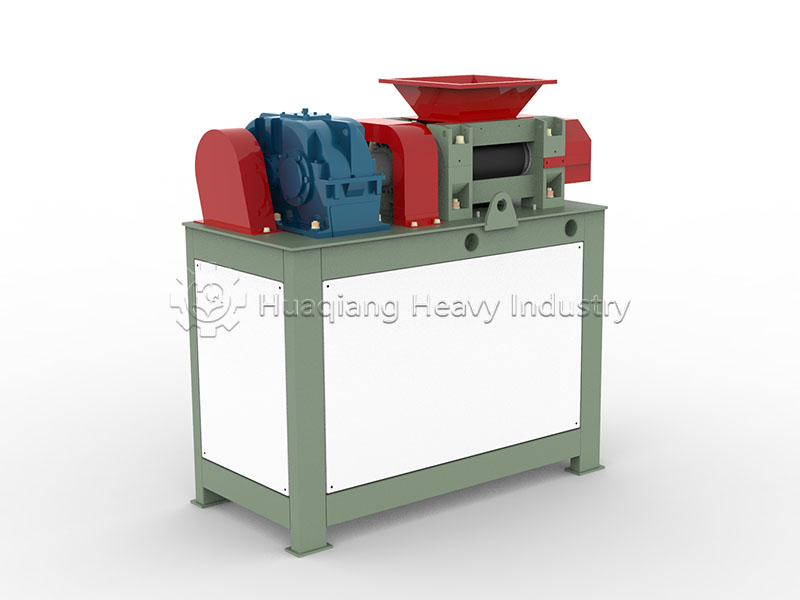
From a storage perspective, the primary contribution of granulation equipment lies in solving the long-standing problem of powdered fertilizers absorbing moisture and caking. Powdered materials possess a vast specific surface area, making them highly prone to absorbing atmospheric moisture. Under storage pressure and temperature fluctuations, salt bridges and capillary forces easily form between particles, causing the entire bag of fertilizer to harden into a solid mass. Modern granulation equipment—such as double-roller extrusion granulators and disc granulators—compresses loose powder into dense granules through high-pressure physical extrusion or rolling agglomeration, thereby drastically reducing specific surface area and hygroscopicity. In extrusion granulation, for instance, the equipment uses powerful roller pressure to expel air from the gaps between particles, resulting in a dense internal structure and a smooth, rounded exterior. Furthermore, advanced granulators equipped with customized molding dies and precision pressure control systems can achieve a forming rate exceeding 97%. The resulting granules are smooth and round, possess high strength, resist breakage, and exhibit excellent flowability. This physical densification directly limits pathways for moisture ingress, while the smooth surface minimizes inter-particle friction and adhesion. Additionally, some equipment integrates coating processes to form a protective film on the granule surface, further sealing out moisture; this ensures the fertilizer remains loose during long-term storage, effectively eliminating issues with caking and deterioration.
Regarding application, granulation equipment provides indispensable technical support for modern agricultural mechanization. Powdered fertilizers are lightweight and prone to drifting; they are difficult to spread manually and incompatible with high-speed, precision mechanical fertilization operations. In contrast, the granules produced by granulation equipment feature uniform, controllable particle sizes (typically 2–10 mm) and possess optimal compressive strength and bulk density. This enables granular fertilizers to flow smoothly and discharge evenly through the metering wheels and pneumatic delivery lines of application machinery, facilitating precise, metered application. Granules produced via high-tower or extrusion granulation processes possess a crush strength several times greater than that of re-granulated powder products. This high structural integrity ensures the granules resist breakage and pulverization during the agitation and spreading processes, thereby preventing equipment clogs caused by dust and avoiding uneven application. The granules’ uniform shape and excellent flowability ensure precise delivery to crop root zones, significantly enhancing both application efficiency and nutrient utilization rates.
A high-performance granulator is far more than a mere tool for converting powder into granules; it is a core piece of equipment that boosts the commercial value of fertilizer and meets the demands of modern agriculture. By resolving storage risks and application bottlenecks associated with powdered fertilizers at the source, it serves as a vital link between fertilizer production and high-efficiency agriculture.