

Morphobia in granular fertilizer after packaging is a major cause of clumping, powdering, and nutrient loss. While the moisture regain problem appears to originate from the storage environment, it is actually rooted in the uncontrolled synergy between the drying and cooling systems during production. The internal temperature and moisture distribution of the granules when they leave the cooler determine their future susceptibility to moisture regain.
The Essence of Moisture Regain: The “Respiratory Effect” Driven by Temperature Difference
The physical mechanism of moisture regain in granular fertilizer after packaging is that residual heat inside the granules drives moisture to migrate outwards, condensing upon cooling inside the packaging bag. When the granule outlet temperature is 8-10°C higher than the ambient temperature, a “hot core-cold shell” temperature difference structure is formed inside the bag. The hot air carries moisture upwards, condensing on the bag walls and surface granules upon cooling, triggering a chain reaction of clumping.
This mechanism reveals a key conclusion: the core defense for moisture regain control lies not in the storage stage, but at the cooling outlet. Only when the granule temperature is close to the ambient temperature and the internal moisture distribution is uniform can stability be maintained after packaging.

Drying and Cooling: Synergistic Connection of Temperature Curves
To control re-moistening, favorable conditions for subsequent cooling must first be created in the drying section. If the dryer outlet temperature is too high (above 65℃) or the temperature difference is too large, the moisture inside the particles cannot diffuse sufficiently, resulting in an uneven state of “dry on the surface and wet on the inside.” When these particles enter the cooler, the surface cools and contracts, while the interior expands due to heat and moisture, creating micro-cracks and increasing the moisture absorption channels.
Synergistic Control Principle: The dryer outlet temperature should be stabilized at 55-65℃ to ensure uniform heating of the particles and sufficient moisture migration to the surface; the cooling section needs to smoothly reduce the particle temperature to 3-5℃ above the ambient temperature. Too low a temperature results in wasted energy, while too high a temperature drastically increases the risk of re-moistening.
III. Sensor Application: Data-Driven Closed-Loop Control
Achieving precise synergistic control relies on the linkage between a sensor network and the automatic control system:
Temperature Sensor Network: Thermocouples are installed at both the dryer outlet and the cooler outlet to monitor the particle temperature in real time. When the cooled discharge temperature exceeds the preset threshold of “ambient temperature + 5℃”, the system automatically adjusts the frequency or airflow of the cooling fan.
Online Moisture Analyzer: Near-infrared moisture analyzers are installed at both the dryer and cooler outlets to ensure the dried product outlet moisture content remains stable at 2%-3% and the cooled product outlet moisture content is ≤2%.
Ambient Temperature and Humidity Sensor: Installed at the cooler air inlet, this sensor monitors real-time changes in the external environment. During rainy seasons or in hot and humid weather, the system automatically increases the cooling airflow or activates the air conditioning unit to compensate for the impact of environmental fluctuations on the cooling effect.
When the discharge temperature is too high, the system prioritizes increasing the cooler ventilation; when the discharge moisture content is too high, it reverses this by adjusting the dryer hot air temperature or feed rate. All sensor data is connected to the PLC or DCS control system, achieving fully automatic closed-loop regulation. Operators only need to set the target value, and the system automatically corrects for deviations.
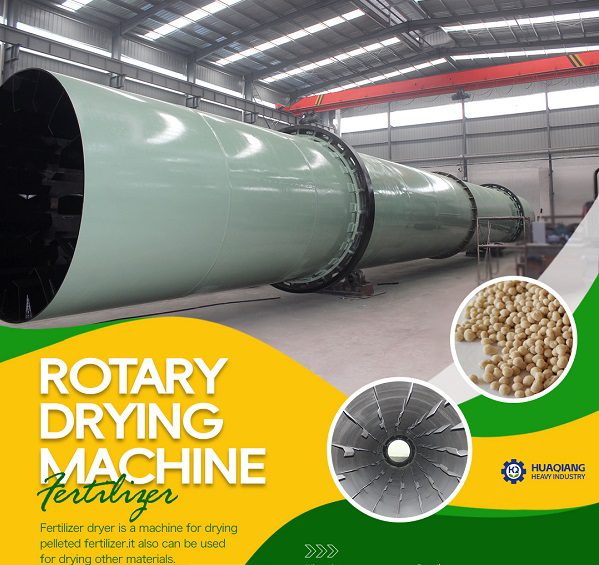
Process Window for Moisture Regain Control Based on comprehensive production practice, the key process parameter windows for controlling moisture regain are: drying discharge temperature 55-65℃, drying discharge moisture 2%-3%, cooling discharge temperature ≤ ambient temperature +5℃, and finished product moisture ≤2%. Strictly adhering to these windows effectively controls surface moisture absorption and internal moisture regain even when stored in environments with humidity exceeding 70%.
Summary: The core of controlling the moisture regain of granular fertilizer lies in providing a uniform heat and humidity state during drying, reducing the granule temperature to a safe range during cooling, and ensuring timely correction of deviations through a sensor network. All three are indispensable, collectively constructing a complete defense line from “hot kiln exit” to “cold storage.”
Controlling moisture regain in granular fertilizer is not an isolated battle fought at the storage warehouse—it is a systemic victory won through the precise synergy of drying and cooling systems, supported by a robust sensor network and closed‑loop automation. This synergy is embedded in every piece of fertilizer equipment along the production train: from the fertilizer crusher and mixer that ensures homogeneous feed, to the organic fertilizer disc granulator or other fertilizer granulator machine that forms uniform granules, and then through the fertilizer dryer and cooler where temperature and moisture are meticulously coordinated to achieve the critical process window (discharge moisture ≤2%, temperature ≤ ambient +5°C). After cooling, fertilizer screening equipment removes off‑size particles, and the final product is accurately weighed and sealed by an automatic fertilizer packing machine, ensuring that the low‑moisture, low‑temperature state is preserved from the moment the bag is closed. While the industrial fertilizer machine price for a fully integrated line with advanced sensors and automation may be higher, the long‑term savings from reduced caking, fewer customer complaints, and lower reprocessing costs far outweigh the initial investment. Ultimately, the drying‑cooling synergy is not just about energy efficiency—it is the key to delivering a free‑flowing, stable product that maintains its quality from factory to field, reinforcing brand reputation and ensuring that every granule performs as intended.