

Stepping into the installation site of an organic fertilizer disc granulator, you might feel as if you’ve wandered into a “rotating theater” still under construction. The main character hasn’t appeared yet, but the stage is already set—layout lines mark the floor, the crane arm swings slowly overhead, and blue flames from welding torches trace patterns across the steel. Everyone is waiting for the disc to take its seat.
The base frame of the disc granulator is already in place. Three sets of support wheels sit quietly on the embedded anchor bolts like loyal servants. Workers are using feeler gauges to measure the tilt angle of each support wheel—a precision measured in fractions of a degree, for even a single degree off will cause material to spill when the disc rotates. An old master bends over, pressing a level against the wheel surface, his eyes narrowed to slits. “Two millimeters higher to the east,” he says quietly. The crane operator hears him clearly; the hook moves slightly, and the entire base settles without a tremor.
The real showpiece is the disc itself, several meters in diameter. It lies flat in the assembly area, its body reinforced with ribs, the edge already fitted with mounting points for scrapers. Four workers stand at four corners, tightening the connecting bolts simultaneously. The rhythmic squeak of their wrenches rises and falls like an improvised work song. When the crane slowly lifts the disc into a vertical position, sunlight strikes its surface, casting a blue-gray gleam on the unpainted steel—like a moon cut in half.
Nearby, the chain fertilizer crusher already stands tall, its blades waiting motionless inside the housing. Workers are installing a maintenance platform around it; welding arcs flash on and off, stretching shadows long across the floor. Opposite the crusher sits the horizontal mixer, its two shafts lying at the bottom of the trough, the wear-resistant coating on the paddles glinting under the lights. A young worker crouches beside the motor, measuring circuits with a multimeter, muttering under his breath about making sure the phase sequence is correct.
The busiest scene unfolds around the belt conveyor installation. Strips of green conveyor belt spread out like rivers, idlers lined up in neat rows. Workers bend low, adjusting the level of each idler. “If the belt runs off-center, the material spills everywhere,” the foreman says, standing at the tail end with a chalk line in hand, sighting down the entire length of the conveyor. When the last set of idlers is locked in place, the whole line lies taut as a guitar string, waiting to be played.
By dusk, the main motor of the disc granulator is finally connected to power. The moment it turns for the test run, the disc rotates slowly, without a single unusual sound. Workers gather around—some watching the ammeter, others leaning close to check the smoothness of the rotation. After three full revolutions, the foreman pats the disc frame and smiles. “Good,” he says. “Tomorrow, we’ll feed you.”
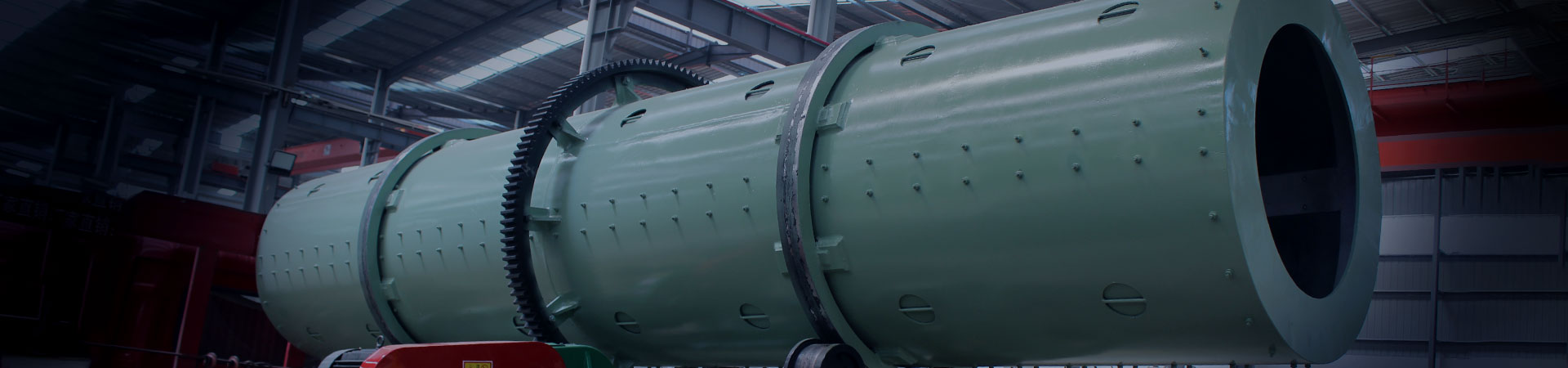
The air smells of oil and welding fumes. The scattered equipment—crusher, mixer, granulator disc, dryer, cooler, screener—has finally taken its place on this concrete foundation. In a few days, they will be linked into a complete production line, transforming fermented organic materials into round, uniform fertilizer pellets.
The disc continues to spin slowly, idling as if rehearsing for the performance to come. When those brown powders finally fall onto it, how will it make them “roll” out, one by one?