

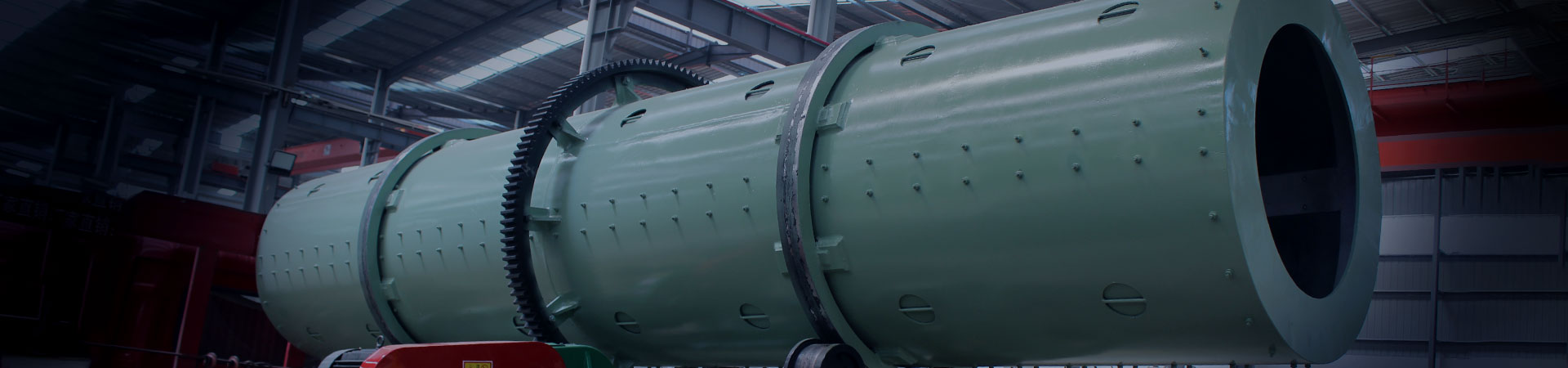
In today’s flourishing organic agriculture, high-quality organic fertilizers have become the “secret weapon” for increasing crop yields and improving quality. But have you ever wondered how those uniform, round organic fertilizer pellets are created? Behind the scenes, there is a sophisticated set of equipment, with the most eye-catching protagonist being the organic fertilizer disc granulator. However, a single granulator cannot complete this “performance”; it has many dedicated “partners” working silently.
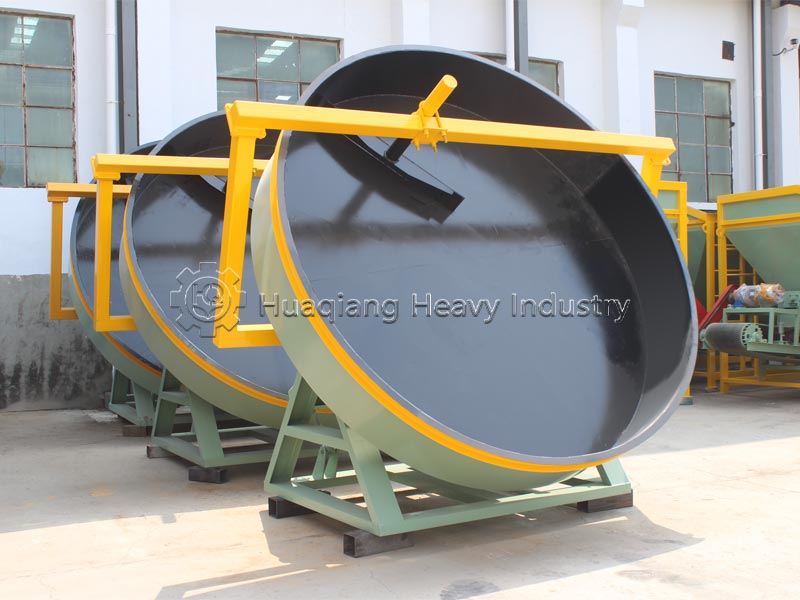
The disc granulator features an inclined, speed-adjustable rotating disc as its core component. When pulverized organic materials (such as fermented livestock manure or straw powder) are fed onto the disc and sprayed with an appropriate amount of water or steam, the fine particles roll like snowballs. Under the combined action of centrifugal force, friction, and gravity, they roll upward along the disc bottom, continuously adhering and layering, gradually growing into round pellets. This process resembles an elegant “waltz”—materials accumulate layer upon layer on the disc and eventually overflow from the edge, completing the granulation. Its advantages are clear: high pelletizing rate, uniform particles, intuitive operation, low energy consumption, and it is particularly suitable for organic fertilizer production where pellet appearance is critical.
However, obtaining a bag of commercial organic fertilizer requires much more than just granulation. Before granulation, raw materials must be crushed to a certain fineness—here, half-wet material crushers or chain crushers come into play. Then, different ingredients need to be precisely mixed according to the formula; horizontal mixers or double-shaft paddle mixers ensure every shovel of material is uniform. The wet pellets after granulation have high moisture content and must be sent to a rotary drum dryer to remove excess water, followed by rapid cooling in a cooler to prevent moisture reabsorption and caking. Next, a vibratinon screener machine classifies the pellets; qualified products proceed to an automatic packaging machine, while unqualified fines are returned for re-granulation. This series of equipment is interconnected and indispensable.
Although the disc granulator holds a core position, its efficiency highly depends on the coordination of upstream and downstream processes. For instance, the particle size after crushing directly affects pelletizing speed and strength; drying temperature and time impact the storage stability of pellets. Therefore, professional equipment suppliers not only provide individual machines but also offer complete process design and automated control to ensure the entire production line is efficient, stable, and energy-saving.
For large-scale farmers or those planning to enter the fertilizer industry, a disc granulator production line offers moderate investment, simple operation, and quick returns. It can handle both pure organic materials and organic-inorganic compound fertilizers, offering wide applicability. In recent years, with the integration of material science and automatic control technology, the wear resistance of the disc surface has been greatly improved, and automatic speed regulation and spraying systems have been added, making production more hassle-free.
In summary, the disc granulator is the lead dancer in this “pelletizing waltz,” but equipment such as crushers, mixers, dryers, and screens are equally indispensable accompaniments. It is their collaboration that transforms loose powders into grains of “black gold,” infusing vitality into the soil. So next time you hold a handful of uniform, plump organic fertilizer pellets, remember the rotating disc and its partners—the unsung heroes on the stage of modern agriculture.