


Answer: The law of diminishing returns is an economic and ecological principle widely applicable in agricultural production and resource input. In the field of fertilizer application, this principle can be stated as follows: Under the premise that other technical conditions (such as variety, irrigation, and cultivation management) remain constant, as the amount of fertilizer applied increases, the yield increase per unit of fertilizer (i.e., marginal yield) gradually decreases; when the amount of fertilizer applied exceeds a certain critical value, the total yield may even stop increasing or decrease absolutely. Its core mechanism and production guidance significance are as follows:
The “Asynchronous Growth” Relationship between Nutrient Supply and Crop Demand
The crop’s ability to absorb nutrients is constrained by its genetic characteristics and growth and development stage. When nutrients are extremely scarce, a small amount of fertilizer can eliminate the limiting factor, significantly increasing yield; at this point, marginal yield is highest. As the amount of fertilizer applied increases, the crop’s absorption of nutrients tends to saturate. Even if the fertilizer supply is further increased, the crop’s photosynthetic capacity and material conversion efficiency cannot increase synchronously, resulting in diminishing marginal yield. When fertilizer application exceeds the crop’s maximum carrying capacity, excessively high nutrient concentrations can cause increased soil solution osmotic pressure, ion antagonism, or root burn, leading to an absolute decrease in total yield. At this point, further increasing fertilizer application will result in “increased yield without increased income, increased fertilizer without increased grain production.”

The Parabolic Change in Fertilizer Utilization Rate
If the relationship between fertilizer application and yield is plotted as a curve, it forms a parabola that first rises and then falls:
First Interval: Fertilizer application is very low; yield increases almost linearly with increasing fertilizer application, and fertilizer utilization rate is high.
Second Interval: As fertilizer application continues to increase, the yield increase gradually narrows, and fertilizer utilization rate begins to decline—this is the main area where the law of diminishing returns manifests.
Third Interval: After fertilizer application exceeds the crop’s inflection point, total yield stops growing or even declines; fertilizer utilization rate drops sharply, and nutrient leaching and environmental risks also exist.
III. Synergistic Constraints with the Law of Minimum Nutrients The law of diminishing returns is closely related to the law of minimum nutrient nutrients: when the scarcest nutrient in the soil (the minimum nutrient) is replenished, yield increases significantly, reaching its highest marginal yield. However, with continued application of this nutrient, it ceases to be the limiting factor. At this point, if other nutrients (such as micronutrients) remain deficient, further application of this nutrient will exacerbate the nutrient imbalance.

Production Recommendations: How to Delay the Inflection Point of Diminishing Returns Through Process Technology?
As a fertilizer production equipment manufacturer, we recommend the following measures in fertilizer production and formulation design to effectively delay and postpone the arrival of the inflection point of diminishing returns: Soil testing and precise application: Utilize a PLC automatic application system to accurately determine the optimal fertilizer application rate based on measured nutrient data of the target soil and the nutrient requirements of the target crop—controlling it near the “economically optimal point” where marginal yield equals marginal cost, rather than blindly pursuing high concentrations or high application rates.
Controlled-release coating technology: A coating machine is used to coat granular fertilizers, synchronizing the nutrient release rate with the crop’s absorption curve. This avoids excessively high local concentrations and subsequent nutrient deficiency caused by concentrated release, resulting in higher utilization efficiency with the same total application rate.
Organic-inorganic blending: A twin-shaft paddle mixer uniformly mixes well-rotted organic materials with inorganic nutrients. Utilizing the adsorption and buffering capacity of organic matter, the release and leaching rate of inorganic nutrients is slowed, resulting in a smoother and more sustained nutrient supply curve throughout the growth cycle.
Precise application of water-soluble and liquid fertilizers: Combining fertigation technology, water-soluble fertilizers are applied in small, frequent, on-demand amounts, ensuring that fertilizer supply precisely matches the crop’s stage-specific needs. This effectively raises the marginal yield plateau and delays the inflection point of diminishing returns.
Micronutrient balance: Appropriate amounts of chelated micronutrients are added to the formula to eliminate the minimum nutrient limiting factor, ensuring that the effects of increased macronutrient application are not offset by micronutrient deficiencies.
The law of diminishing returns reveals an important principle: a reasonable fertilizer application rate is not necessarily the higher the better, but rather the pursuit of a balance between marginal yield and marginal cost. Scientific fertilizer management involves controlling the application rate within the “optimal economic range” before marginal yield begins to decline sharply.
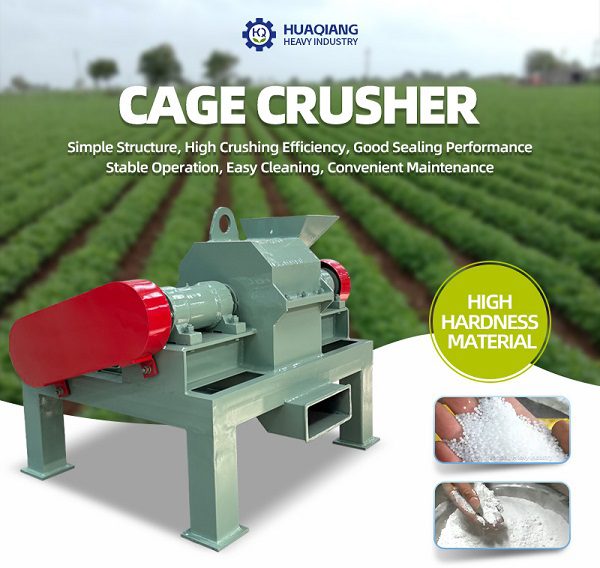
Understanding the law of diminishing returns is not just an academic exercise—it is a practical guide for designing fertilizers that deliver maximum economic and agronomic value. The principles of soil‑test‑based precision application, controlled‑release coating, organic‑inorganic blending, and chelated micronutrients all point to the same goal: delaying the inflection point where additional fertilizer input ceases to yield proportional returns. Achieving this requires more than just knowledge; it demands the right fertilizer equipment to produce high‑quality, uniform granules that perform consistently in the field. A reliable fertilizer granulator machine (whether drum, disc, or extrusion) forms the core of the production line, while upstream fertilizer crusher and mixer ensure homogeneous feedstock, and downstream fertilizer dryer and cooler lock in moisture and strength. After granulation, fertilizer screening equipment removes off‑size particles, and an automatic fertilizer packing machine delivers precise, dust‑free bagging. While the industrial fertilizer machine price for a complete line may seem substantial, the investment pays off through higher nutrient efficiency, reduced waste, and improved crop response—all of which shift the diminishing‑returns curve in the producer’s favor. In short, the law of diminishing returns does not diminish the value of quality equipment; rather, it underscores the importance of producing fertilizers that are balanced, consistent, and tailored to crop needs—maximizing every kilogram of nutrient applied.
If you still have any questions about fertilizer production equipment or would like to learn more about customized solutions, please contact us immediately. Whether it’s equipment selection and quotation, installation, commissioning and operation training, or after-sales maintenance and process upgrades, we can provide you with professional and timely answers and support to help your project be implemented efficiently.