
A quiet green revolution is underway across the vast fields. Cow manure, once a headache for livestock farmers, is now proven to be a “golden resource” for improving soil and enhancing crop quality. Whether it’s the loose, oily black soil in the hands of tobacco farmers or the abundant fruit hanging from the branches in orchards, it all relies on the nourishment of well-rotted cow manure. Converting cow manure into commercial organic fertilizer is not only a response to environmental pressures but also a value chain with a considerable input-output ratio. This article will detail a complete solution from raw material processing to finished product delivery, distinguishing between powder and granular product forms, helping you build a simple, durable, and efficient production line to generate wealth, tailored to your own scale.
Step 1: Raw Material Pre-treatment – The Key to a Solid Foundation
Cow manure has unique advantages: compared to chicken manure, its moisture content is moderate, but its fiber content is high. To make fermentation more efficient, the raw materials first need to be processed. The core equipment is a cow manure-specific dryer and a straw crusher.
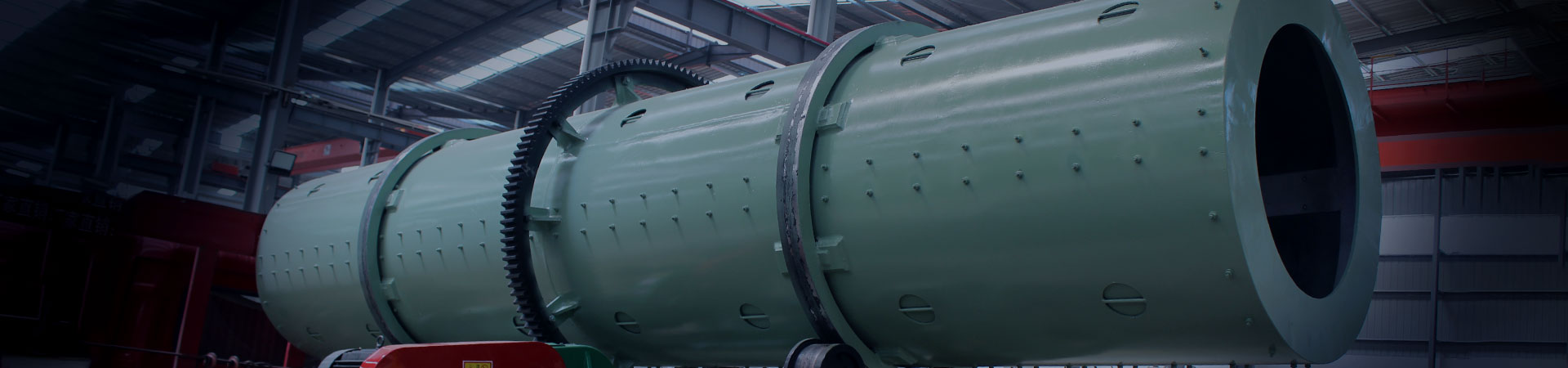
The choice of dryer should be tailored to local conditions. Hot air drum dryers are suitable for humid climates and areas requiring rapid rainfall, utilizing high-temperature airflow to quickly evaporate moisture. In drier, sunny regions, simpler drum dryers, utilizing natural wind or low-temperature heat, offer lower operating costs.
Meanwhile, since cow manure often has a low carbon-to-nitrogen ratio, it needs to be combined with carbon-rich additives. Chopping crop straw into small pieces or powder using a straw crusher and mixing it with cow manure not only effectively adjusts the carbon-to-nitrogen ratio to the ideal range (approximately 25:1) but also increases the permeability of the compost pile, creating optimal conditions for aerobic fermentation.
Step Two: Determine the Process Route Based on Product Form
After processing the raw materials, the production line setup will follow two paths depending on your target product: a powdered fertilizer production line focusing on extreme simplicity, or a granular fertilizer production line with higher added value.
Option A: Powdered Organic Fertilizer Production Line – Rapid Production with 3 Units
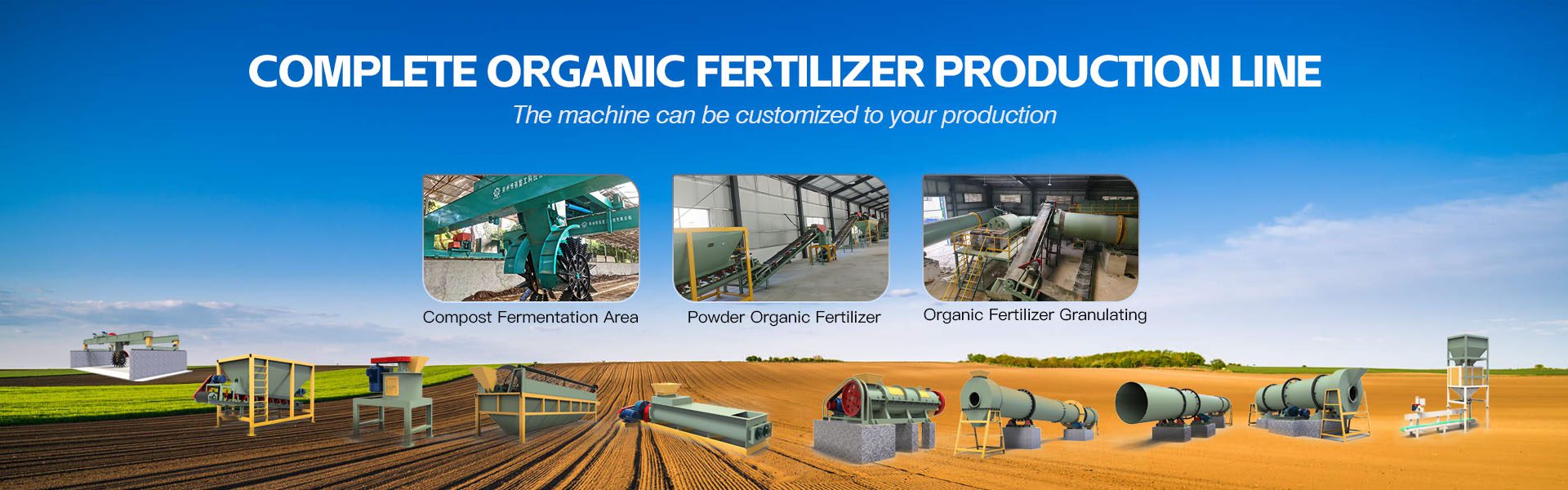
If you want to quickly enter the market with minimal investment, powdered fertilizer is the most direct choice. The logic of this line is “fermentation is the product.” The core equipment requires only three machines: a turning machine to regularly supply oxygen during the fermentation cycle, ensuring uniform material decomposition; a semi-wet material crusher to break up the hardened cow manure clumps after fermentation, ensuring fineness; and finally, automatic packaging for final packaging and shipment. This solution requires fewer machines and has a shorter process, making it particularly suitable for small farms with limited funds or self-sufficient planting bases.
Solution B: Granular Organic Fertilizer Production Line – An Upgrade from “Local Specialty” to “Commodity” Granular fertilizer is easy to spread by machinery, convenient to store and transport, and commands a higher market price. To produce granules, several additional steps need to be added to the powder production line.
The decomposed and crushed raw materials first enter a mixing mixer, where functional beneficial bacteria or other trace elements can be added according to the formula. Subsequently, the material is fed into the core equipment – a disc granulator. This equipment is highly favored due to its unparalleled granulation performance. By adjusting the tilt angle and rotation speed of the disc, the material continuously rolls and adheres to each other within the disc, ultimately forming smooth, round granules. Its biggest advantage lies in its ability to granulate using the inherent viscosity of the material, achieving a molding rate of over 95%. The particle diameter can be flexibly adjusted within the range of 2-8 mm according to requirements, eliminating the need for additional clay binders and ensuring the product’s “pure” organic properties.
The granules fresh from the disc have a high moisture content and need to be dried and cooled in a rotary dryer and cooler to prevent mold growth during storage. Finally, after screening, qualified large granules enter the packaging line, while fine powder is returned to the granulation stage, achieving zero-waste production.
Practical Case: A Composite Production Line with a Daily Processing Capacity of 20 Tons
Taking a medium-sized farm or professional fertilizer plant as an example, building a granulation production line with a daily processing capacity of 20 tons of cow manure can create the following virtuous cycle: In the pretreatment stage, a straw crusher converts waste from surrounding farmland into auxiliary materials, reducing raw material costs; the fermentation zone is equipped with a trough-type turning machine to ensure the material completes harmless decomposition within 15-20 days; the deep processing workshop consists of a disc granulator and a drying and cooling system as its core. This system not only fully utilizes the manure produced by the farm, solving environmental problems, but also produces thousands of tons of commercial organic fertilizer annually, supplying surrounding orchards, vegetable bases, and tobacco fields. Based on current market prices, the equipment investment can typically be recouped within 1-2 years through the sale of finished fertilizer, after which stable net profits will follow.
Whether it’s a minimalist model with just 3 machines or a complete production line encompassing granulation and drying, the core of cow manure resource utilization lies in “adapting to local conditions and matching processes.” For small workshops, we recommend starting with durable and simple equipment; for large-scale factories, we emphasize a combination of automation and high capacity. When you begin applying your own produced organic fertilizer to your land and see the soil become soft again and your crops grow stronger, you will understand: this is not only a business success, but also the deepest nourishment for the land.
The granules emerging from the disc granulator, while perfectly formed, require essential post-processing to become a stable, market-ready product. This stage mirrors the finishing steps in a sophisticated npk fertilizer line. First, the high-moisture granules enter a fertilizer drying machine, where precisely controlled warm air (typically 120-150°C) reduces the moisture content from 25-35% to the safe storage level of 10-15%. The dried granules are then gently transported by a bucket elevator, minimizing breakage and dust. Next, a rotary drum screening machine classifies the granules: oversized particles are crushed and returned, undersized fines are recycled back to the granulator, and the perfectly sized 2-5mm product proceeds. Finally, the uniform, cooled granules are fed into an automatic packing machine, which accurately weighs and seals them into bags (±0.2kg precision). This integrated finishing system transforms the output of the granulator into a consistent, high-value commercial organic fertilizer, ready for distribution.