


In the wave of green agricultural development, a new type of fertilizer that integrates the long-lasting effects of organic fertilizer, the rapid effects of chemical fertilizer, and the synergistic effects of microorganisms is gaining widespread attention—this is bio-organic NPK compound fertilizer. It’s not simply a mixture of three components, but rather a scientifically formulated blend that achieves a synergistic effect of “1+1+1>3”.
Definition: A Three-in-One Functional Fertilizer
Bio-organic NPK compound fertilizer refers to a multifunctional fertilizer made by combining organic matter (such as well-rotted manure, straw, humic acid), inorganic nitrogen, phosphorus, and potassium nutrients (such as urea, ammonium phosphate, and potassium salts) with functional microorganisms (such as Bacillus subtilis and phosphorus- and potassium-solubilizing bacteria) in a specific ratio. It contains both fast-acting nutrients and the sustained effects of improving soil, activating nutrients, and enhancing stress resistance. In summary, bio-organic NPK compound fertilizer is a new type of fertilizer based on organic-inorganic compound fertilizer, with the addition of specific functional microorganisms. It combines the triple effects of “rapid-release inorganic nutrients, soil-improving organic matter, and disease-resistant microbial growth.”
Organic matter acts as the “sponge” of the soil. Derived from fermented and decomposed livestock manure, straw, mushroom residue, etc., it significantly improves soil aggregate structure and enhances water and fertilizer retention capacity after being applied to the soil. Simultaneously, organic matter serves as “food” for microorganisms, providing a carbon source for the reproduction of beneficial soil bacteria.
Inorganic NPK acts as the “energy package” for crops. Precisely proportioned nitrogen, phosphorus, and potassium according to crop needs provide rapid-release nutrients to meet the vigorous demands of crops during their critical growth stages. Unlike ordinary compound fertilizers, the inorganic nutrients here are “encased” by organic matter and microorganisms, resulting in more stable nutrient release and higher utilization rates.
Beneficial microorganisms are the “engineers” of the soil. Bacillus subtilis secretes antibacterial substances to suppress soil-borne diseases; phosphorus- and potassium-solubilizing bacteria can convert fixed phosphorus and potassium in the soil into available forms, improving fertilizer utilization. After these functional bacteria colonize the crop rhizosphere, they continuously exert growth-promoting and stress-resistance effects.
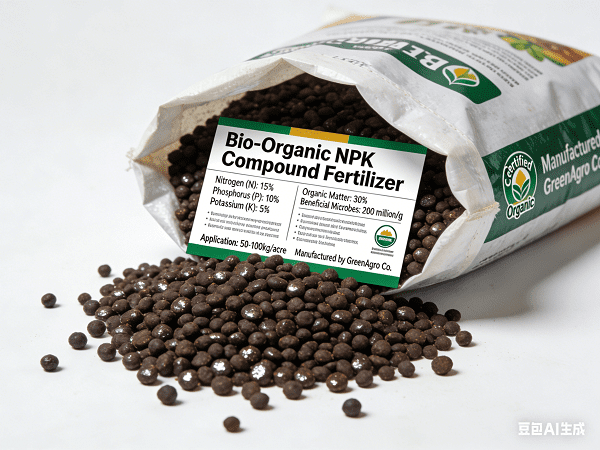
Ordinary compound fertilizers only provide readily available nitrogen, phosphorus, and potassium; long-term use can easily lead to soil compaction and decreased microbial activity. Organic fertilizers primarily improve soil, but their nutrient content is low and their effects are slow. Bio-organic NPK achieves a quadruple breakthrough: “quick effect + long-lasting effect + soil nourishment + disease resistance”—it can quickly replenish nutrients like compound fertilizers, improve soil like organic fertilizers, and, due to the addition of microorganisms, possesses additional functions such as disease prevention and growth promotion.
For growers, the direct benefits of bio-organic NPK compound fertilizer are: maintaining high yields while reducing chemical fertilizer use by 10%-20%, more developed crop root systems, and a significant reduction in the incidence of soil-borne diseases. With long-term use, soil organic matter content steadily increases, and fertilizer utilization rate improves by over 30%, truly achieving a balance between land use and soil nourishment.
This fertilizer is widely applicable to fruits and vegetables (tomatoes, peppers, watermelons), field crops (rice, corn, wheat), and cash crops (tea, medicinal herbs, flowers). It is especially suitable for facility agriculture, high-standard farmland, and organic planting bases that prioritize quality.
Bio-Organic NPK Compound Fertilizer
The production of bio-organic NPK compound fertilizer, with its triple benefits, relies on advanced manufacturing processes. The blend of organic matter, inorganic NPK, and beneficial microorganisms is transformed into a stable, marketable product through a complete npk fertilizer production line. After the ingredients are uniformly mixed and shaped into granules, the product must be carefully processed to preserve the activity of the beneficial microorganisms. The granules are first stabilized in a fertilizer dryer machine operating at low temperatures to remove excess moisture without harming the microbes. They are then cooled in a fertilizer cooler machine to ambient temperature, preventing heat-induced damage during storage. A rotary drum screening machine classifies the granules, ensuring only the highest-quality product moves forward. Finally, the consistent, high-quality granules are precisely weighed and hermetically sealed by a fertilizer packing machine. This integrated npk fertilizer line ensures that the final product delivers on its promise of rapid nutrient availability, soil improvement, and enhanced disease resistance, all while maintaining the viability of its crucial microbial component.
From single fertilization to comprehensive soil nourishment, bio-organic NPK compound fertilizer is redefining the input standards for efficient agriculture. For both growers and fertilizer producers, understanding the essence and value of this product is a crucial step towards green agriculture.