

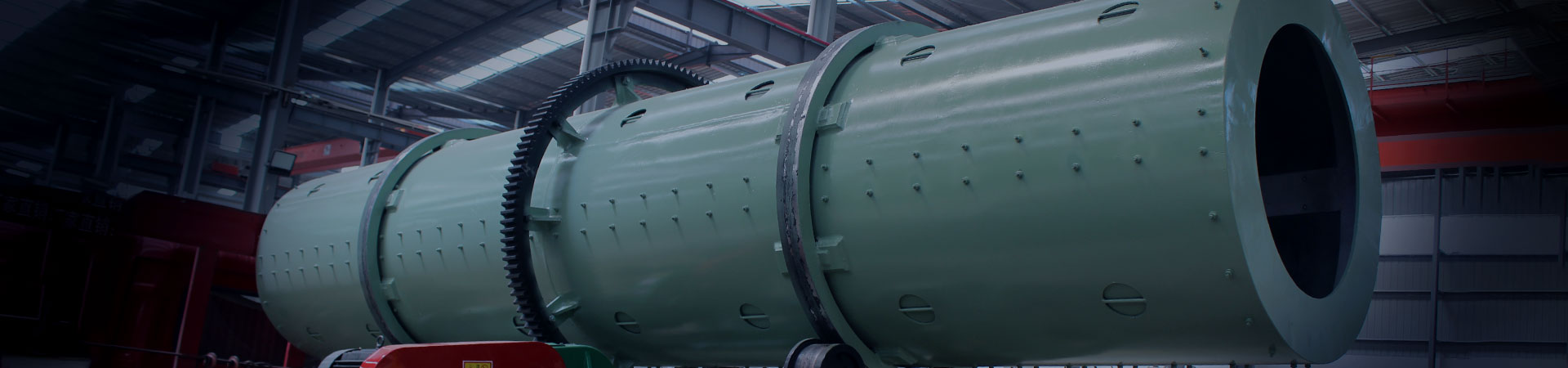
Answer: Turning and aeration are key control parameters in aerobic fermentation; they directly influence changes in pile temperature, moisture evaporation, the rate of organic matter decomposition, and nitrogen retention. Scientific management requires dynamic adjustments based on the material’s carbon-to-nitrogen (C/N) ratio, moisture content, and the physical structure of the pile:
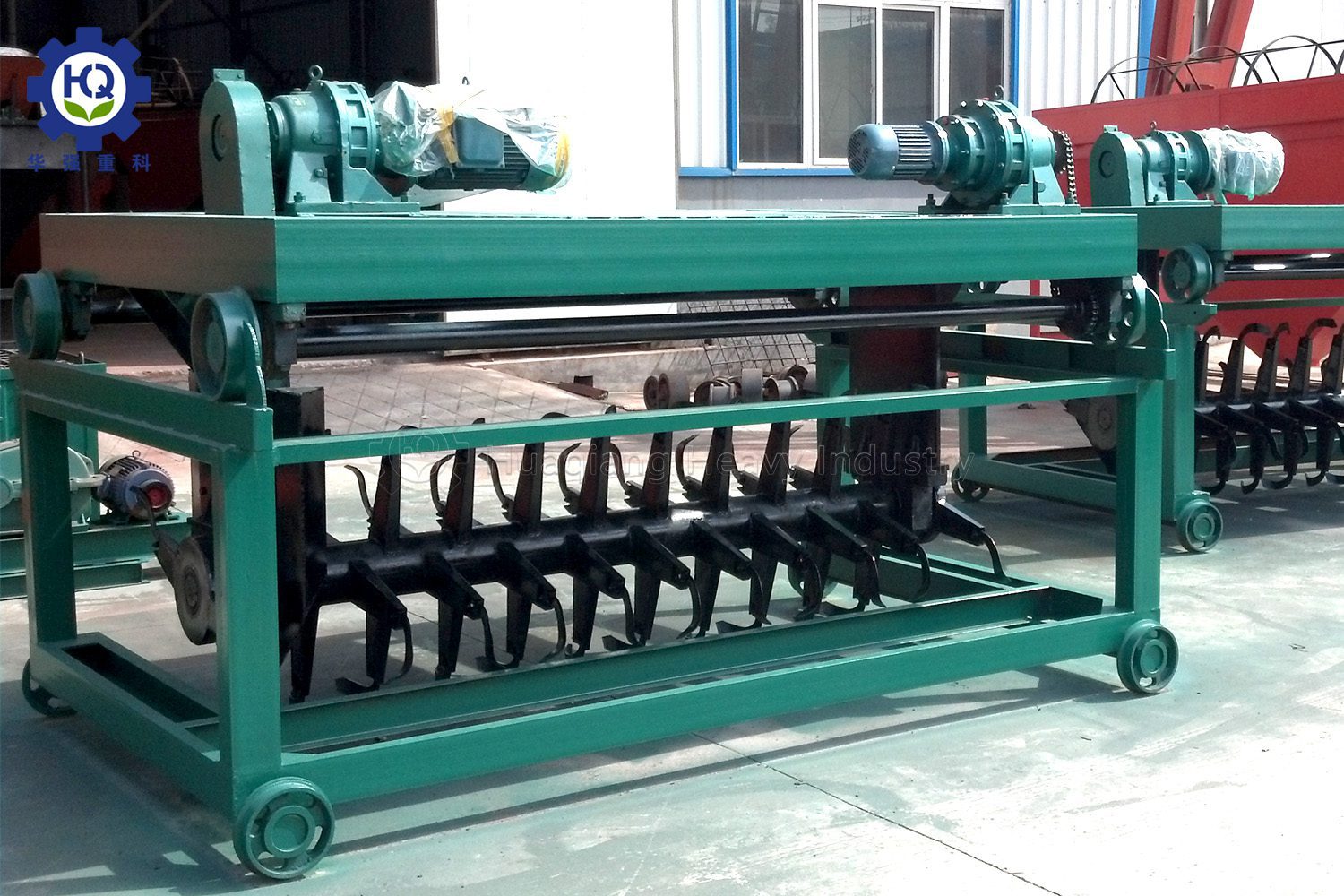
1.Initial Stage (Heating-up Phase, Days 1–3): Microorganisms become active during this stage, and oxygen demand rises rapidly. It is recommended to perform the first turning 24–36 hours after piling, once the temperature at the pile’s core reaches 45–55°C. The purpose of turning is to mix the inner and outer materials and replenish oxygen. If using a trough-type turner, the travel speed should be set at 0.5–1 m/min to ensure thorough turning of the material; for windrow composting, turning 2–3 times per week is recommended. The aeration rate should be controlled at 0.05–0.2 m³/(min·m³) (cubic meters of air per cubic meter of material per minute) to avoid excessive aeration, which could prevent the pile temperature from rising sufficiently.
2.High-Temperature Stage (Days 4–12): The pile temperature can reach 60–70°C, effectively killing pathogens and insect eggs. Oxygen consumption is intense during this stage; the turning frequency should be increased to once every two days. During each turn, material from the edges should be moved to the center to ensure uniform high temperatures. Simultaneously, the aeration rate can be increased to 0.3–0.5 m³/(min·m³) using forced-air ducts or a bottom aeration system. However, care must be taken to prevent the temperature from exceeding 75°C, as this would reduce the activity of thermophilic bacteria; appropriate moisture replenishment (maintaining moisture content at 50%–60%) can be carried out during turning.
3.Maturation Stage (Days 13–25): The temperature gradually drops below 40°C, and oxygen demand decreases. The turning frequency can be reduced to once a week, with the aeration rate lowered to 0.05–0.1 m³/(min·m³), primarily to dissipate excess moisture. During this stage, turning frequency should be minimized to avoid exposing incompletely decomposed material to the surface, which could adversely affect secondary fermentation.
Furthermore, the choice of turner should match the dimensions of the compost pile: crawler-type turners are suitable for windrows 2–4 meters wide, offering a turning depth of 1.5–2 meters; for channel-type fermentation, chain-plate or screw-type turners are preferred to ensure a material turnover rate exceeding 95%. Finally, by monitoring pile temperature fluctuations and oxygen concentration (maintaining levels above 5%), the turning cycle can be precisely controlled, enabling the organic fertilizer to reach maturity standards—specifically a C/N ratio below 20 and a seed germination index exceeding 80%—within 20–25 days, while keeping nitrogen loss under 15%.