
Fertilizer and water integration is transitioning from an “optional technology” to a standard feature of farmland irrigation. In this process, liquid fertilizers, with their advantages of being ready to use, precise, and easy to transport, are seen by the industry as the next growth driver after solid fertilizers. To truly achieve seamless integration of liquid fertilizers with irrigation systems, three key aspects are indispensable: dissolving tanks, filtration systems, and storage and transportation.
Dissolving Tanks: The “First Stop” from Raw Materials to a Homogeneous Solution
Whether using macro-element water-soluble fertilizers as raw materials or formulating with industrial-grade single-component products such as urea and potassium nitrate, the first step in liquid fertilizer production is completed in the dissolving tank. Unlike simple stirring, agricultural automation requires dissolving tanks to possess three capabilities:
Rapid Dispersion: Employing double-layer impellers or vortex agitators to prevent raw materials from settling and clumping.
Temperature Control: Since some raw materials absorb or release heat during dissolution, the jacketed design maintains an optimal dissolution range of 20-35℃.
Online Concentration Feedback: In automatic irrigation systems, dissolving tanks often integrate conductivity sensors to adjust water or feed additions in real time, ensuring a constant output concentration.
Advanced dissolving tanks can also be linked with fertilizer mixing software—by inputting the target nitrogen, phosphorus, and potassium ratio, the system automatically calculates the dosage of each raw material, achieving “one-click liquid mixing.” This completely changes the inefficient mode of manual weighing and batch dissolution.
Filtration System: The “Gatekeeper” Protecting Drip Irrigation Pipes
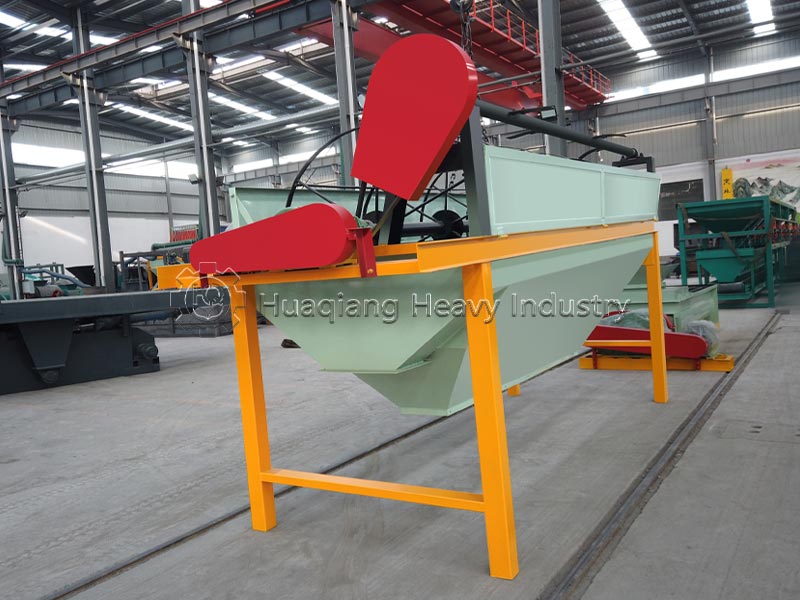
If undissolved particles, impurities, or crystals remain in the liquid fertilizer, they will directly clog the drippers or nozzles, causing the entire irrigation area to fail. Therefore, the filtration system is the core barrier to ensure the safe entry of liquid fertilizer into the irrigation network.
A typical farmland-grade filtration system uses three stages of filtration:
Stage 1: Coarse Filtration (30-50 mesh): Intercepts raw material packaging debris and large insoluble particles.
Stage 2: Self-cleaning Mesh Filtration (80-120 mesh): Removes suspended impurities and has a differential pressure backwashing function, eliminating the need for system shutdown.
Three-stage disc or sand/gravel filtration (150-200 mesh): Designed for high-precision drip irrigation, ensuring clear effluent.
For liquid fertilizer production lines, it is recommended to install a pipeline filter directly at the dissolving tank outlet and another precision filter at the storage tank outlet. Practice shows that a complete filtration system can extend the life of drip irrigation tape by 2-3 years and reduce maintenance costs by 70%.
III. Storage and Transportation: The “Rear Support” for Ensuring Fertilizer Efficiency and Supply
Once liquid fertilizer is prepared, sedimentation, stratification, microbial growth, and temperature runaway must be avoided.
Storage Tanks: Made of PE or fiberglass, equipped with slow stirring (running for 5 minutes every 4-6 hours) to prevent solid flocculation. The tank exterior is fitted with a sun-protective and heat-insulating layer or an underground design to prevent ammonia volatilization or algae growth caused by high summer temperatures.
Transportation: Small farms can use 500-1000 liter IBC tanks with a hand pump; large-scale farms use tank trucks to directly inject the solution into field storage tanks. In the automated system, the liquid level sensor is linked to the valve. When the liquid level in the storage tank falls below the set value, the dissolving tank is automatically activated to replenish the liquid, forming a closed loop of “production-storage-irrigation”.
Synergizing Liquid Automation with Solid Fertilizer Infrastructure
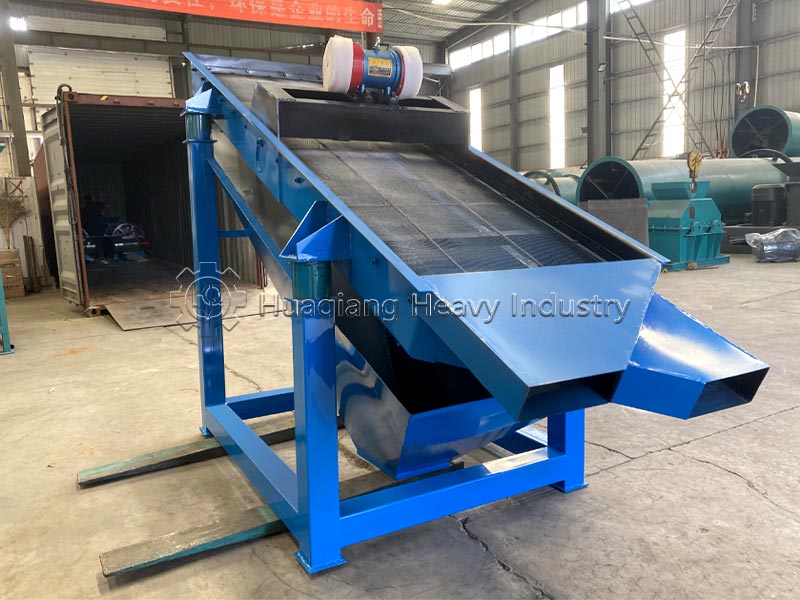
While liquid fertilizer systems revolutionize irrigation automation through precision dissolution and filtration, their long-term commercial viability depends on seamless integration with upstream solid fertilizer equipment manufacturing capabilities. For producers supplying both solid and liquid formulations, a versatile fertilizer granulator machine—particularly an organic fertilizer disc granulator—enables the production of high-purity, fully water-soluble granules that serve as premium raw materials for downstream dissolving tanks, eliminating filtration bottlenecks caused by insoluble carriers. Upstream, a precision fertilizer crusher and mixer ensures raw materials achieve the ultra-fine particle size and homogeneous blending essential for rapid dissolution kinetics, directly impacting the efficiency of automated mixing systems. Post-granulation, an optimized fertilizer dryer and cooler preserves the solubility characteristics of water-soluble compounds while preventing caking during storage, and rigorous fertilizer screening equipment segregates off-size particles that could compromise dissolution uniformity. When evaluating industrial fertilizer machine price, forward-looking enterprises should prioritize modular architectures that accommodate both solid granulation and liquid formulation lines, maximizing asset utilization across seasonal demand fluctuations. Finally, an automatic fertilizer packing machine with multi-format flexibility—handling everything from 25kg water-soluble powder bags to IBC tanker loading—ensures that finished products reach diverse agricultural markets with consistent quality and regulatory compliance, cementing the manufacturer’s position as a comprehensive plant nutrition solution provider in the era of intelligent water-fertilizer integration.
Conclusion: Liquid fertilizer is not simply “fertilizer plus water,” but a comprehensive system engineering project centered around uniform dissolution, precise filtration, and stable storage and transportation. Only when these three modules are deeply integrated with intelligent irrigation controllers can agriculture truly achieve on-demand, timely, and quantitative fertilizer supply. This is not only the next big trend, but also the inevitable direction of integrated water and fertilizer management.