

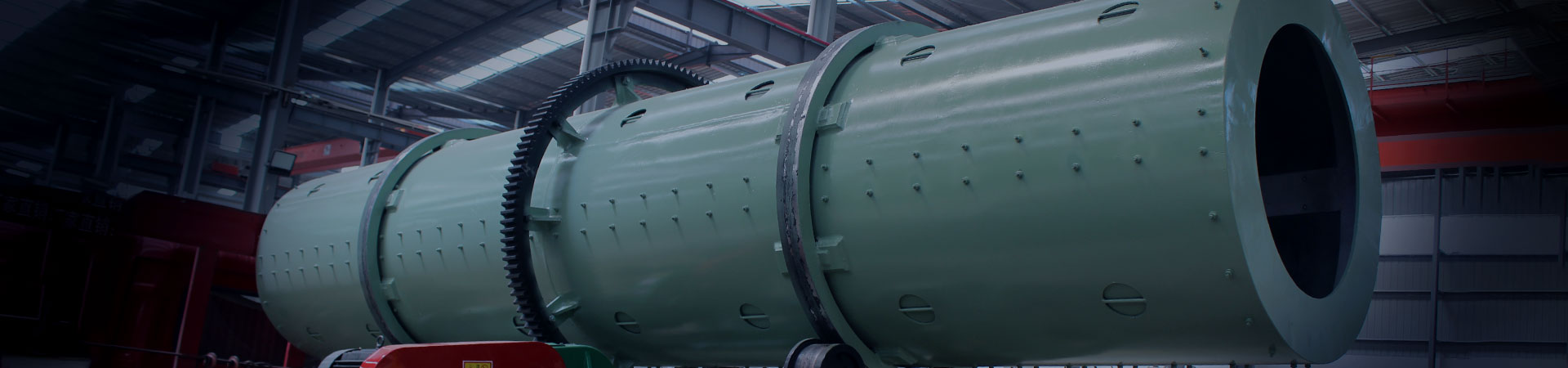
Livestock and poultry manure serves as a high-quality, low-cost raw material for bio-fertilizer production. Rich in crude protein, crude fiber, nitrogen, phosphorus, potassium, and various secondary and trace elements, it is inexpensive to source and ideal for on-site resource recovery by individual farmers and small-scale livestock farms. A complete small-scale bio-fertilizer production line is the core equipment for the harmless disposal of manure and the standardized production of compliant bio-organic fertilizer; it is also a key component for reducing costs and increasing efficiency in small-scale fertilizer manufacturing.
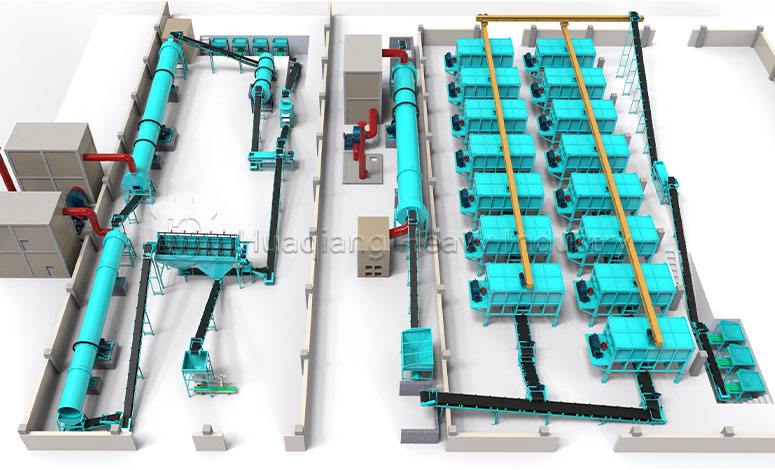
Designed for standardized small-scale production, the bio-fertilizer production line features a modular, all-in-one configuration suitable for batch production—whether for self-use or commercial sale—by small-to-medium farms and agricultural cooperatives. The standard unit comprises seven core pieces of equipment: a solid-liquid manure separator, a horizontal crusher, a fully automatic mixer, a small-scale trough-type compost turner, a drum screen, a microbial coating machine, and an automatic quantitative packaging machine. The equipment is lightweight and easy to assemble, requiring only a simple, rain-proof facility of approximately 100 square meters to begin operations. It features low individual motor power and minimal overall energy consumption, allowing a single operator to manage the entire interconnected system. No large-scale civil engineering or long-term staffing by specialized technicians is required, and the initial investment is far lower than that of large-scale production lines. The system offers a comprehensive process flow that creates a closed-loop manure treatment cycle, yielding finished products that meet relevant organic fertilizer standards.
The production line employs a complete, closed-loop process that fully complies with national standards for bio-organic fertilizer composting and fermentation, ensuring a scientifically sound and reliable production method. First, crushing and screening equipment removes impurities such as plastic and gravel from the manure. Mixing equipment is then used to incorporate additives like crop straw, adjusting the carbon-to-nitrogen (C/N) ratio to the standard range of 25:1–35:1 and the moisture content to 55%–65%, while simultaneously blending in functional beneficial microbial agents. Next, a small-scale trough-type compost turner facilitates aerobic fermentation, maintaining the compost pile at a high temperature of 55–65°C for at least 10 days; this effectively eliminates insect eggs, weed seeds, and pathogenic microorganisms, ensuring the material is safely composted and stabilized. The equipment automatically turns the compost pile at scheduled intervals to supply oxygen, ensuring stable regulation of oxygen levels and temperature; this avoids common production issues associated with open-air natural fermentation, such as oxygen supply imbalances, localized overheating that kills beneficial bacteria, and incomplete decomposition.
Once the material has fully decomposed and cooled to the required standards, it undergoes further processing—including screening, coating, and automated packaging. Screening ensures uniform particle size, while a low-speed coating process maximizes the viability of functional live bacteria, guaranteeing that the finished bio-fertilizer meets specifications for live bacterial counts. In contrast, simple open-air composting makes it difficult to control temperature and humidity, often leading to the loss of bacterial viability and nutrient volatilization, as well as generating odors and secondary pollution. The integrated production line offers full process control, resulting in a finished product with superior nutrient and live-bacteria stability, suitable for a wide range of applications including field crops, fruits and vegetables, and landscaping nursery stock.
This compact bio-fertilizer production line enables small-to-medium-sized livestock farms and individual growers to process their own livestock manure on-site, eliminating the costs associated with off-site transport and disposal. By combining standardized equipment with proven processing techniques, it allows for the compliant, low-cost, and large-scale production of bio-organic fertilizer. This solution simultaneously addresses the environmental challenges of manure management and transforms livestock waste into a value-added resource; it is ideally suited for small-scale rural integrated crop-livestock farming models, offering a low barrier to entry and ensuring high regulatory compliance.