


| Characteristic | Organic Fertilizer | Bio-organic Fertilizer |
| Definition | Fertilizer made from animal & plant residues, animal excreta and other raw materials after composting and harmless treatment. | Compound fertilizer based on organic fertilizer, with specific functional microbial agents added (such as Bacillus, Trichoderma, etc.). |
| Microbe Status | Native bacteria generated during natural fermentation; the quantity and activity are unstable. | Live bacteria with defined strains and quantity, meeting clear biological activity standards. |
| Core Functions | Supply organic matter, improve soil physical & chemical properties, and supplement basic nutrients. | Retain all functions of organic fertilizer; additionally, microbes fix nitrogen, decompose phosphorus & potassium, resist crop diseases and produce growth-promoting substances. |
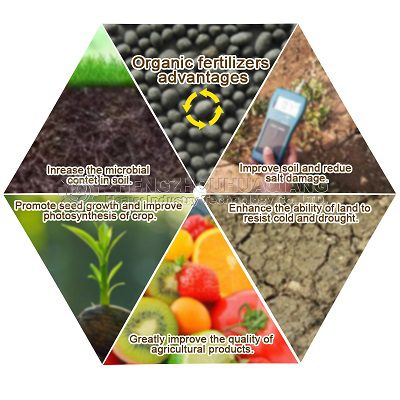
The essential difference between organic fertilizer and bio-organic fertilizer lies in whether they possess “living activity.” Organic fertilizer is essentially animal and plant residues or livestock manure processed through industrial fermentation. Its core value lies in providing soil organic matter, improving soil aggregate structure, and supplementing basic nutrients. Its mechanism of action focuses on the physical and chemical restoration of soil at the material level, forming the foundation for sustainable fertilization of farmland. In contrast, bio-organic fertilizer is based on fully decomposed organic substrate, with the addition of high concentrations of beneficial microorganisms with specific functions (such as Bacillus subtilis and Bacillus mucilaginosus) through inoculation technology. This product constitutes a “living” micro-ecosystem, with its core advantage being “bio-empowerment”: after the microorganisms colonize the soil, they produce nitrogen-fixing, phosphorus-solubilizing, and potassium-solubilizing effects through metabolic secretions, and can effectively inhibit soil-borne pathogens. This improves nutrient utilization while building a healthy rhizosphere micro-ecology, enabling crops to shift from “nutrient supply” to “ecological health.”
At the industrial production level, the main differences between the two lie in the technological barriers of “inoculation process” and “thermal protection”. Ordinary organic fertilizer production lines focus on achieving harmlessness through high-temperature aerobic fermentation, and their drying process allows for relatively high operating temperatures. However, bio-organic fertilizer production lines must be built on a “low-temperature logic”: to ensure the survival rate of functional bacteria, secondary bacterial agent spraying and mixing must be carried out after the fermentation material temperature drops to room temperature (usually below 40℃). Furthermore, the subsequent granulation and cooling processes must strictly control heat, even employing low-temperature extrusion or rounding techniques. High-temperature drying is strictly prohibited, otherwise it will lead to a large number of bacterial deaths, causing the product to lose its “biological” properties. In addition, their market evaluation logic differs: organic fertilizer mainly focuses on organic matter content and decomposition indicators, while bio-organic fertilizer, in addition to the above basics, focuses more on the “effective viable bacteria count” and its survival rate during storage and distribution. This means that producing bio-organic fertilizer requires not only equipment upgrades but also meticulous control over the entire process, including the microbial survival chain, the cleanliness of the production environment, and the moisture-proof and light-proof storage of the product.