


In practical industrial screening decisions, selecting between vibrating screens and drum screens is never a simple either-or question. Essentially, it’s a precise match between the “method of kinetic energy delivery” and the “gravity-driven logic.” Vibrating screens rely on vibrators to generate high-frequency vibrations of 2,000 to 3,000 times per minute, driving the material to jump forward on the screen surface; while drum screens rotate at a low speed of only 3 to 15 revolutions per minute, allowing the material to tumble and pass through the screen by gravity in the inclined drum. The former trades kinetic energy for precision, while the latter leverages gravity for adaptability—the primary step in selection is weighing the costs and benefits of these respective energy dynamics.
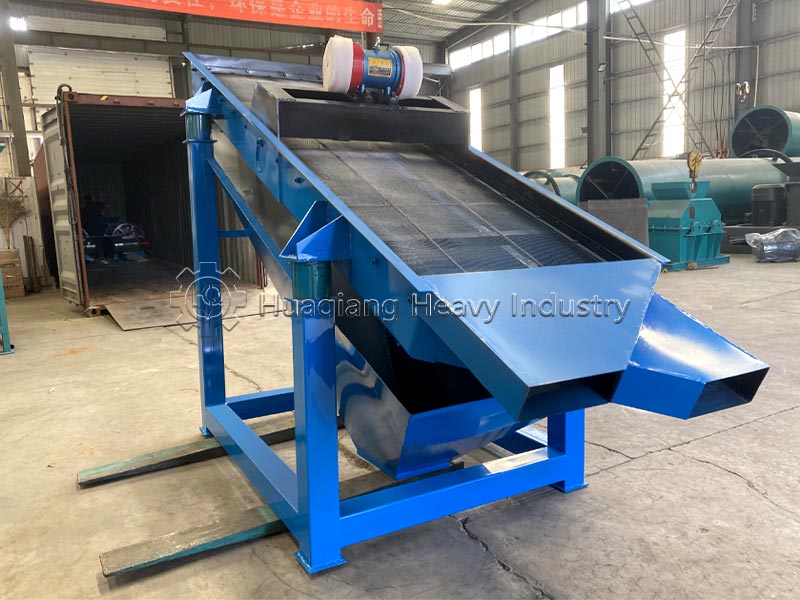
The core advantage of vibrating screens lies in their screening precision and efficiency. For dry, fine-grained materials (0.074 to 5 mm), they achieve screening efficiencies of 85% to 95%, making them virtually irreplaceable for fine classification. However, this precision comes at a cost: if moisture content exceeds 10% to 12%, wet, sticky particles easily clog the screen mesh, causing efficiency to plummet. In contrast, the drum screen is known for its “non-clogging” properties—the tumbling and rolling of the material inside the drum naturally ejects particles stuck in the screen holes, making it adept at handling materials with high moisture content and high mud content. Yet, trommel screens typically offer only 70% to 85% screening precision, making them unsuitable for fine classification tasks. This tension between precision and adaptability constitutes the primary dilemma in equipment selection.
A scientific approach to selection follows a three-tiered logic: prioritizing material characteristics, considering process requirements, and accounting for operational constraints. For wet, sticky materials or noise-sensitive environments, the trommel screen is the safer choice; conversely, dry materials and high-precision requirements point toward the vibrating screen. It is crucial to guard against “rules of thumb” that disregard specific material characteristics and operating conditions, as these can easily lead equipment selection astray. Factors such as moisture content, particle size distribution, silt content, site constraints, and environmental standards are all variables that could fundamentally alter the decision-making process. Only by returning to the fundamental physical principles of screening can one identify the single correct choice between two pieces of equipment.