
In fertilizer granulator procurement decisions, capacity figures and price quotes often mask five hidden risks: material matching, return material ratio and energy consumption, material corrosion resistance, steam system compatibility, and parts supply chain issues. A single misjudgment of a parameter can lead to an additional 150,000-200,000 RMB in operating costs annually for a 50,000-ton production line, or even trigger unplanned downtime.
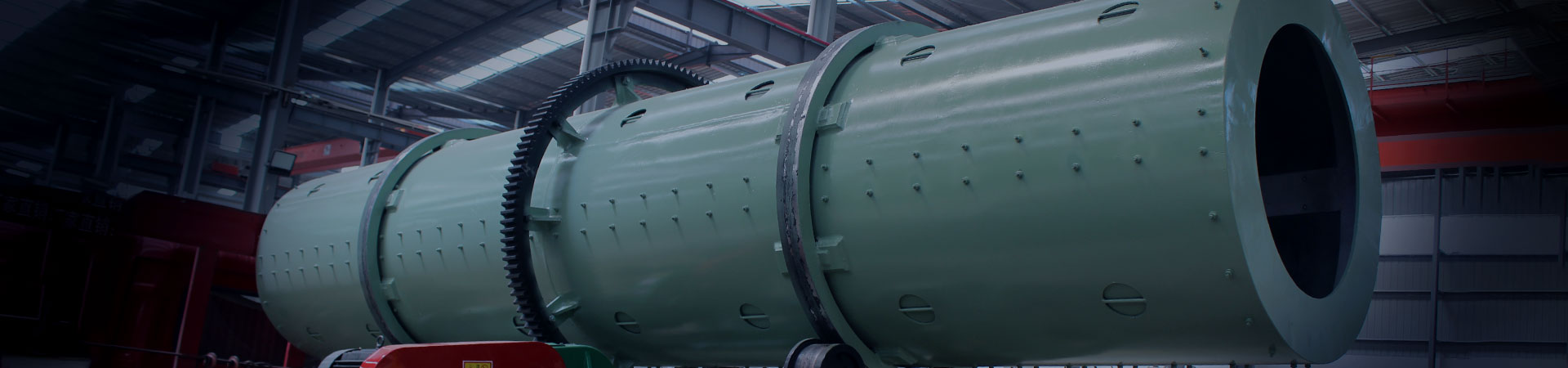
What is a Fertilizer Granulator? A fertilizer granulator (Fertilizer Granulator) is a core process equipment that transforms powdered or slurry raw materials into granular fertilizer with specific particle sizes (usually 2-4mm), strength, and flowability through mechanical force, liquid-phase binding, or thermal agglomeration. The quality of its selection directly determines three key economic indicators: pelletizing rate, return material ratio, and energy consumption per ton of product.
Pitfall 1: Focusing Only on Capacity Figures, Ignoring Material Characteristics
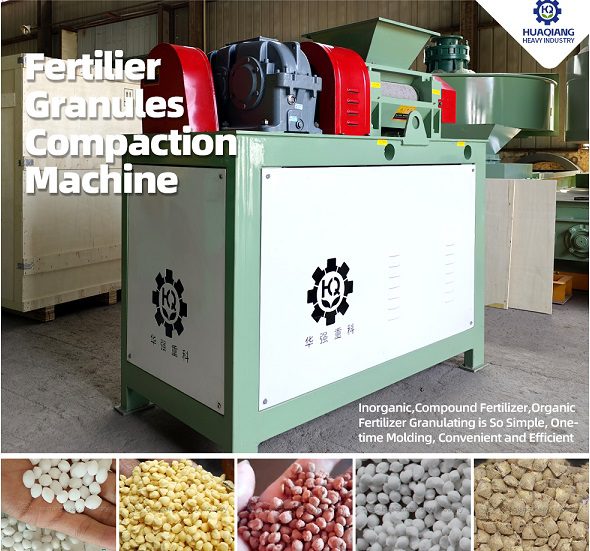
Purchasers often fall into the trap of comparing only “hourly output,” failing to realize that material characteristics are the primary principle for granulator selection. NPK compound fertilizer (urea-ammonium phosphate-potassium chloride system) is suitable for use with double-roller extrusion granulators or drum granulators due to its low raw material moisture content (3%-5%) and high hardness. However, livestock and poultry manure organic fertilizer has a high moisture content (60%-70%) and high fiber content. If a drum granulator is used forcibly, the pelleting rate will plummet from the expected 85% to below 40%, and severe adhesion will occur on the drum wall.
The NPK production line configuration guide on npkfertilizerproduction.com clearly distinguishes the applicable boundaries between dry extrusion and wet agglomeration: when the raw material moisture content exceeds 10%, the pelleting rate of the double-roller granulator decreases exponentially. In this case, a drum granulator should be used with a steam addition system.
Key parameter anchor point: For every 1% increase in material moisture content beyond the equipment’s design limit, the pelleting rate decreases by approximately 8%-12%, and the return material circulation load increases by 15%.
Pitfall Two: Ignoring the Hidden Costs of Pelletizing Rate and Recycle Ratio
A reduction in the pelletizing rate from 90% to 80%, seemingly a mere 10 percentage point difference, translates to an additional 5,000 tons of recycled material annually for a 50,000-ton-per-year production line. This recycled material must undergo the entire process of crushing, mixing, granulating, and drying again, increasing electricity consumption per ton of product by 18%-22% and raising annual operating costs by approximately 120,000-150,000 yuan.
In the granulation process chain described on fertilizerproductionprocess.com, the recycle ratio is defined as a core indicator for measuring the economics of the production line. A high-quality pelletizer should control the recycle ratio within the range of 8%-15%, while production lines with improper equipment selection or unoptimized parameters often have recycle ratios as high as 25%-35%.
Key Parameter Anchor: For every 5 percentage point reduction in the recycle ratio, a 50,000-ton-per-year production line can save approximately 18,000 m³ of natural gas consumption, equivalent to approximately 60,000-80,000 yuan per year in electricity and fuel costs.
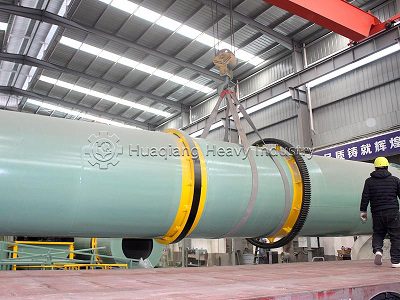
Third pitfall: Incorrect material selection leads to halved lifespan. The material selection for the granulator cylinder and liner must be based on an assessment of the raw material’s corrosivity. Chlorine-containing raw materials (such as potassium chloride and potassium sulfate) can cause intergranular corrosion in stress concentration areas under high temperature and humidity environments. If ordinary carbon steel (Q235B) is used for the cylinder, the design life in a chlorine-containing environment is reduced from 10 years to 3 years; while using 304 stainless steel or a high-chromium cast iron liner (Cr15Mo3, hardness HRC 58-62) can achieve a wear resistance life 6-8 times that of carbon steel.
According to the wear-resistant component specifications provided by thefertilizerequipment.com, the weld overlay thickness of the drum granulator liner should be controlled between 8-12mm. Too thin (<<6mm) will wear through within 3 months, while too thick (>15mm) increases the cylinder’s weight and drive load, increasing motor power requirements by 10%-15%.
Key parameter anchor point: The wear rate of high-chromium cast iron liners under diammonium phosphate conditions is 0.02 mm/thousand tons, while that of Q235B carbon steel is 0.18 mm/thousand tons. This material difference results in a 9-fold difference in lifespan.
Pitfall Four: Compatibility Blind Spot Between Steam Systems and Binder Processes
Drum granulators typically rely on low-pressure steam (0.3-0.5 MPa) to provide the granulation liquid phase, with the steam temperature controlled at 120-150℃ to adjust the material viscosity. However, if the steam pressure stability of the existing boiler system is not verified during procurement, insufficient material liquid phase occurs when the pressure is below 0.25 MPa, resulting in a 20%-30% decrease in pelletizing rate. If the steam temperature is too high (>180℃), it causes partial melting of urea, forming hard rings on the cylinder wall, extending the downtime for cleaning from the usual 2 hours to 8 hours.
Regarding organic fertilizer granulation, organicfertilizerproduction.com points out that organic fertilizer systems typically do not use steam granulation, but instead rely on binders (such as 2%-3% bentonite or 5% humic acid) and mechanical extrusion. If NPK wet granulation equipment is directly transplanted to an organic fertilizer production line, the steam system will become an idle asset, while the binder addition device requires additional investment.
Key parameter anchor point: The steam addition amount should be controlled at 4%-6% of the material weight. Excessive steam will lead to excessive granule moisture content and a surge in drying load; insufficient steam will prevent the formation of granulation cores.
Pitfall Five: Vacuum Zone in Parts Supply Chain and After-Sales Service The rollers, screens, and lifting plates of the granulator are all non-standard, easily worn parts. Some suppliers provide equipment with non-standard bearing seats or non-standard bolt specifications. When parts wear out, the procurement cycle can be as long as 45-60 days, leading to unplanned downtime of the production line. In the heavy equipment maintenance case studies on zztchi.com, suppliers with localized spare parts warehouses and remote diagnostic capabilities can reduce the delivery cycle of critical components to 24-48 hours, minimizing downtime losses by 85%.
Key parameter anchor points: For granulator main bearings (e.g., 22328CC/W33) and reducers (e.g., ZSY280), prioritize national standard or ISO standard parts, avoiding customized non-standard specifications.
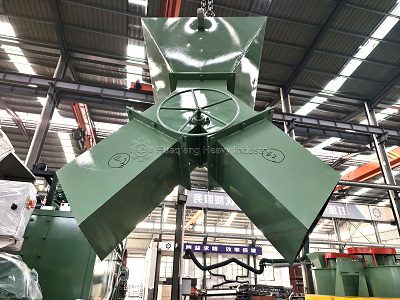
Avoiding the five procurement pitfalls—material mismatch, hidden recycle costs, corrosion blindness, steam incompatibility, and parts vacuum—transforms granulator selection from a transactional purchase into a strategic investment decision. In a modern npk fertilizer line, specifying the correct granulator chemistry and steam architecture ensures that the fertilizer dryer machine, fertilizer cooler machine, and rotary drum screening machine downstream operate at design efficiency rather than compensating for upstream granulation defects. For roller press granulator production line operations, verifying that raw material moisture remains ≤5% before extrusion eliminates the exponential pelleting rate collapse that moisture mismatch triggers, while 304 stainless steel or high-chromium liners extend cylinder life from 3 to 10 years in chloride-rich environments. In a bio organic fertilizer production line, recognizing that steam granulation is incompatible with organic substrates saves the capital waste of idle boiler assets, redirecting investment toward binder systems and mechanical extrusion that align with organic process logic. Whether selecting a disc granulator for small-batch flexibility or a high-capacity drum for BB-grade spherical output, the manufacturers that dominate 2026 are those that validate every parameter—material, energy, corrosion, steam, and supply chain—before signing the purchase order, treating procurement discipline as the competitive shield that protects margin and uptime across the entire production lifecycle.
FAQ (Frequently Asked Questions)
Q1: Which type of granulator is most suitable for a small organic fertilizer plant with an annual production capacity of 3000 tons?
We recommend a disc granulator or a new type of organic fertilizer-specific granulator. Disc granulators have low investment (20,000-30,000 RMB) and flexible operation, suitable for multi-variety, small-batch production; new organic fertilizer granulators have a high pelletizing rate (>90%), but require an investment of approximately 80,000-120,000 RMB, suitable for manufacturers planning to expand to over 10,000 tons.
Q2: Does increasing the pelletizing rate from 80% to 95% require replacing the entire machine?
Not necessarily. First, diagnose the cause: If the steam pressure is insufficient, add a pressure stabilizing device; if the material fineness is insufficient (>60 mesh), adding a chain crusher upstream can improve it; if the cylinder speed is mismatched, adjust it to 11-13 r/min using frequency converter. Replacement is only necessary when the equipment structure (such as cylinder diameter) is severely mismatched with the production capacity.
Q3: Is a stainless steel granulator always better than a carbon steel one?
Not necessarily. For non-corrosive raw materials (such as urea-ammonium bicarbonate systems), carbon steel with an epoxy resin coating can meet a 10-year lifespan, costing only 40% of 304 stainless steel. Stainless steel is irreplaceable only in environments containing chlorine, sulfur, or high humidity and high salt. Over-configuration will increase procurement costs by 30%-50%.