

Fermentation is the most critical and problematic step in organic fertilizer production. Have you encountered issues like incomplete fermentation, foul odors, slow temperature rise, and seedling burn? This article will address common problems in fermentation, breaking down the causes and providing solutions.
Problem 1: Slow or No Temperature Rise in the Pile The inability to raise the pile temperature is the most typical sign of fermentation initiation failure. There are three main reasons: First, the raw material moisture content is too high or too low—above 65% will clog pores and lead to oxygen deficiency, while below 40% will inhibit microbial activity; second, the carbon-nitrogen ratio is imbalanced—a high carbon-nitrogen ratio (>35:1) leads to nitrogen deficiency and slow microbial reproduction, while a low ratio (<20:1) results in ammonia volatilization and nutrient loss; third, there is a lack of fermentation inoculants or insufficient inoculant activity.
Solution: Adjust the moisture content to 50%-60% (the standard is that it can be formed into a clump when squeezed in the hand, but crumbles easily when dropped), and adjust the carbon-to-nitrogen ratio to 25:1-30:1 (straw can be added to increase the carbon-to-nitrogen ratio, or manure can be added to decrease it). Simultaneously, use a highly active commercial fermentation agent. The temperature should rise above 50℃ within 2-3 days after piling. If the temperature does not rise, the pile can be turned over again and the agent replenished.
Problem 2: Severe Odor During Fermentation
The odor not only affects the surrounding environment but also indicates nutrient loss. The foul odor mainly comes from ammonia and hydrogen sulfide—when the pile is oxygen-deficient, anaerobic bacteria decompose organic matter, producing a foul odor; when the carbon-to-nitrogen ratio is too low, nitrogen is volatilized in large quantities as ammonia.
Solution: The core measures are forced oxygen supply and turning. Regular turning replenishes the pile with fresh air, inhibiting anaerobic bacterial activity. If using a trough fermentation system, an aeration system can be configured to continuously supply oxygen during the turning intervals. Simultaneously adjust the carbon-to-nitrogen ratio and add carbon-rich raw materials such as straw to absorb excess nitrogen and reduce ammonia volatilization. Adding 5%-10% superphosphate or humic acid to the raw materials can react with ammonia to fix ammonium nitrogen, providing both deodorization and nitrogen retention effects.
Problem 3: Long Fermentation Cycle and Slow Completion Fermentation exceeding 40 days without completion will occupy space and increase costs. Common causes include insufficient turning frequency or excessively large piles—untimely turning leads to uneven fermentation between inner and outer layers, while excessively large piles (over 2 meters in height) result in oxygen deficiency in the center and slow fermentation.
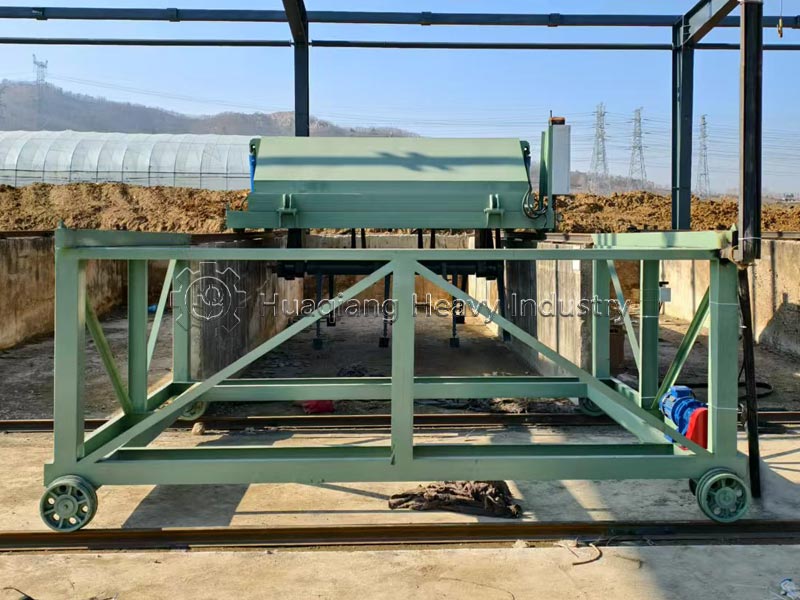
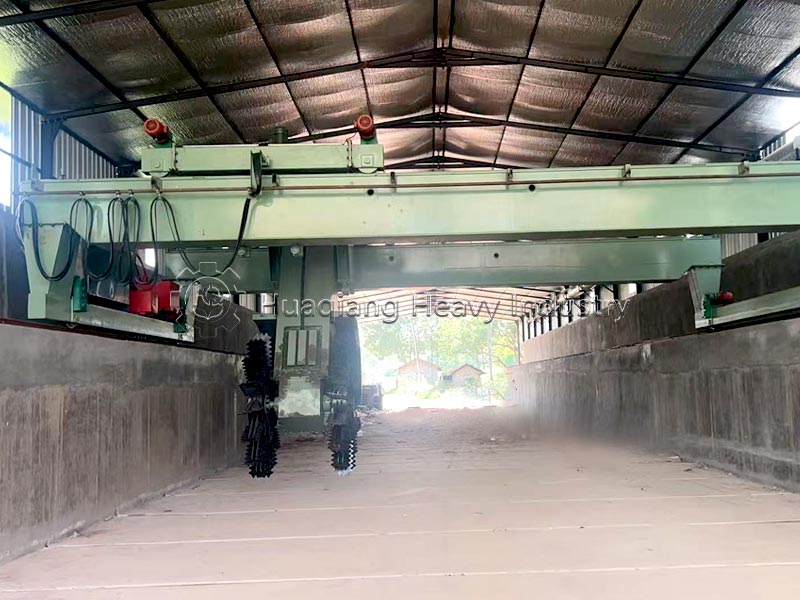
Solution: Determine the turning time based on temperature changes—turn every 2-3 days during high-temperature periods and every 5-7 days during cooling periods. Control the pile height to 1.5-2 meters and the width to 2-3 meters to ensure oxygen can penetrate to the center of the pile. In winter, when temperatures are low, the pile volume can be appropriately increased or an insulating film can be added to the fermentation tank to reduce heat loss. Use wheeled or hydraulic compost turners to ensure the turning depth covers the entire pile, preventing insufficient fermentation of the bottom material.
Problem 4: Insect eggs or weed seeds still present after fermentation. The presence of live insect eggs or weed seeds in the fermented product indicates incomplete harmless treatment. The problem lies in insufficient temperature or duration during the high-temperature period—the core temperature of the pile did not reach above 55℃, or the temperature above 55℃ was maintained for less than 7 days, failing to effectively kill insect eggs and weed seeds.
Solution: Strictly control the temperature and duration of the high-temperature period. Closely monitor the temperature after pile construction. If the temperature fails to reach 55℃, check the moisture content and carbon-to-nitrogen ratio. During turning, ensure sufficient exchange between the outer and inner layers of material to avoid localized temperature drops. It is recommended to measure temperature at multiple points at different depths within the pile to ensure uniform temperature throughout. If conditions permit, extend the high-temperature period to 10-12 days to thoroughly kill pathogens, insect eggs, and weed seeds.
Problem 5: Burning Roots and Seedlings After Application
Root and seedling burn is the most serious quality problem, stemming from insufficient fermentation and incomplete decomposition of the material. Uncomposted organic fertilizer applied to the soil will undergo secondary fermentation, producing high temperatures and organic acids that directly damage crop roots.
Solution: Determine the degree of decomposition using three methods: sight, smell, and touch. Sight—Well-composted material is dark brown or blackish-brown, and the original appearance of the raw material is not visible; Smell—There is no ammonia or manure odor, but a fresh earthy fragrance; Touch—The texture is loose, not sticky, and not hot to the touch. For added assurance, a germination test can be performed—water vegetable seeds with a leachate from the composted material. A germination rate of over 90% and robust seedlings indicate successful decomposition.
Use a good compost turner to solve fermentation problems
Most of the fermentation problems mentioned above are ultimately related to oxygen supply and temperature control. A good compost turner can force oxygen supply and even out the temperature through regular turning, acting as a “stabilizing force” for ensuring fermentation quality. The intelligent compost turner is equipped with a temperature sensor and an automatic control system. When the temperature exceeds the standard, it will automatically start turning and aeration, minimizing the impact of human factors on fermentation. It is especially suitable for large-scale production with strict requirements for the degree of decomposition.
Mastering the solutions to common fermentation problems is essential, but the ultimate goal is to produce a stable, high-quality finished product. Once the fermentation process is successfully completed, the material must be processed into its final form. This is where the integration of reliable post-processing equipment becomes critical in a complete bio organic fertilizer production line. The finished compost is first shaped into granules, often using a disc granulator for selling as the core of a granulation system. These moist granules then need to be stabilized. A rotary drum screening machine ensures uniform size before the granules enter a fertilizer dryer machine to achieve the optimal moisture content, followed by a fertilizer cooler machine to bring them to a stable temperature. Finally, the consistent, high-quality product is precisely weighed and sealed by a fertilizer packing machine. This integrated system, from the initial application of fermentation composting technology to the final packaging, ensures that the time and effort invested in solving fermentation challenges result in a premium, market-ready organic fertilizer that farmers can trust.