
For investors new to the organic fertilizer industry, large-scale production lines costing millions of yuan often seem too expensive. However, building a small-to-medium-sized organic fertilizer production line targeting surrounding planting bases and the local market can achieve the goal of low investment and quick return on investment. This article outlines a low-cost production line configuration scheme for an annual output of 3,000-10,000 tons (daily capacity of 3-10 tons).
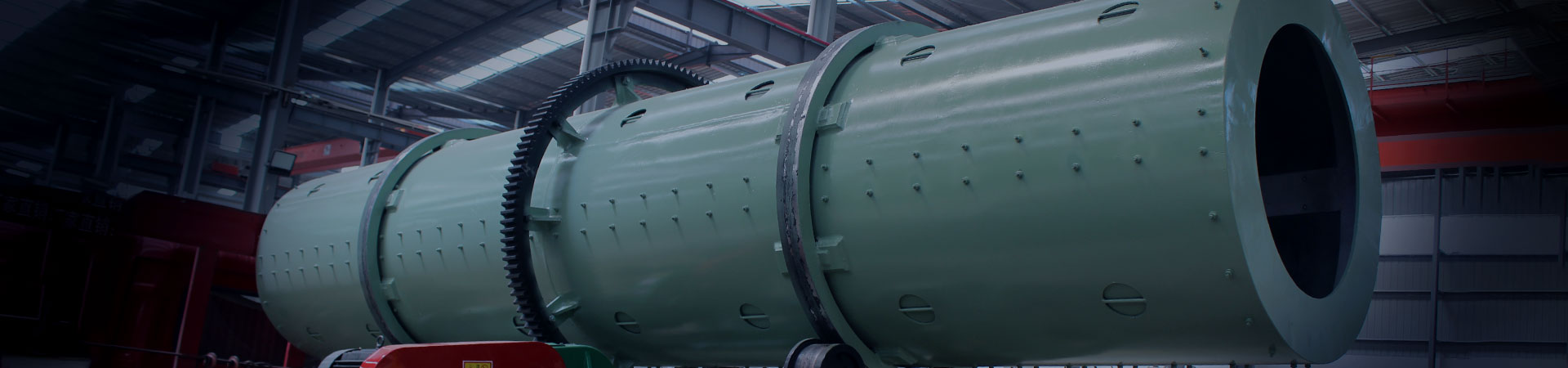
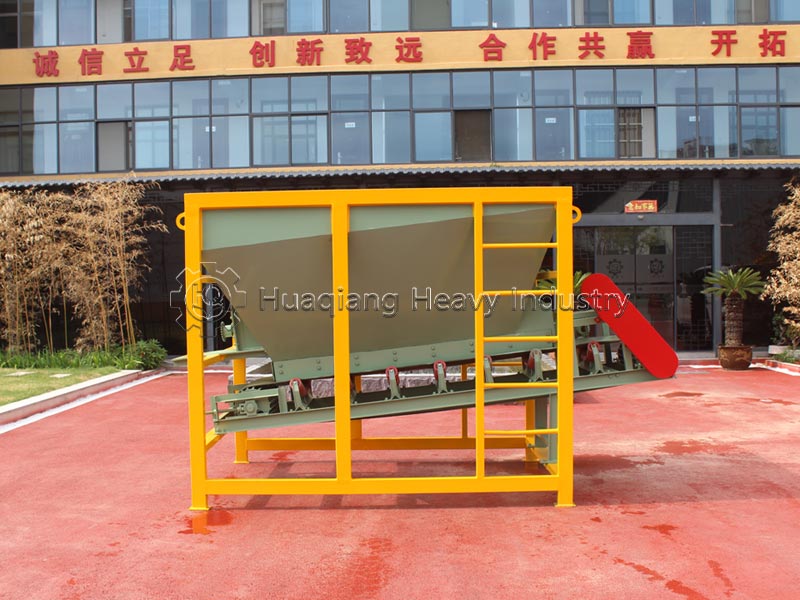
The core idea of a small-to-medium-sized organic fertilizer production line is “good enough, gradually upgrade.” Recommended configuration schemes are as follows: For the fermentation stage, use a wheeled compost turner in conjunction with windrow open-air composting, eliminating the need for fermentation tanks and factory buildings, resulting in minimal initial investment. For the crushing stage, configure a semi-wet material crusher to process the clumps after fermentation; a power of 15-22 kW is sufficient to meet the demand of 10 tons per day. For the granulation stage, a disc granulator is the preferred choice. This is the core equipment of a small-to-medium-sized production line, with a granulation rate of approximately 80%, simple operation, convenient maintenance, and an investment of only one-third that of a large granulator. For drying and cooling, small rotary dryers can be used, or, depending on local climate conditions, natural air drying in a sunroom to a safe moisture level can be employed, further reducing equipment investment. A single-layer vibrating screen is used for screening, and a semi-automatic metering and baling machine is used for packaging. The overall equipment investment is controlled within the range of 150,000-300,000 yuan.

Regarding the site, it is recommended to choose a suburban plot close to the farm or raw material production area for convenient raw material transportation. The fermentation area requires 300-500 square meters of hardened ground, and the production workshop only needs 100-200 square meters. In terms of electricity, the total installed power of the entire production line is approximately 50-80 kilowatts, requiring three-phase power access. It is recommended to equip the line with a capacitor compensation cabinet to reduce reactive power loss. Water consumption is low, mainly domestic water and a small amount of process water. Regarding raw materials, initially, one main raw material (such as chicken manure) can be selected combined with auxiliary materials (rice husks, sawdust) to simplify the mixing process. It is recommended to use commercially available specialized fermentation inoculants to ensure fermentation efficiency and maturity.
Small and medium-sized production lines require streamlined and efficient personnel configurations. The fermentation section requires one person to be responsible for raw material proportioning, pile building, and turning. A forklift is recommended for assistance. The production section requires two people to be responsible for crushing, granulation, screening, and packaging. One of these people can also perform equipment maintenance. If natural air drying is used, an additional person is needed for turning and collecting the materials. The total workforce should be controlled to 3-4 people. Technically, operators must master the method of adjusting the carbon-to-nitrogen ratio of raw materials (generally mixed at a volume ratio of 3:1 for manure and auxiliary materials), be familiar with fermentation temperature monitoring and the timing of turning, and be able to handle common problems such as uneven output from the granulator and temperature fluctuations in the dryer.
Small-to-medium-sized organic fertilizer production also needs to meet relevant national standards. Maturity is the primary indicator—the fermentation temperature must be maintained above 55℃ for at least 10 days. Maturity is indicated by a darkening of the pile color, the absence of odor, and the growth of white mycelium. Regarding moisture content, the finished organic fertilizer should be ≤30%, and the bio-organic fertilizer should be ≤20%, which can be controlled through drying or air drying. Heavy metal content is a key focus of market sampling inspections, and strict control must be exercised from the source of raw materials to avoid using livestock manure with high copper and zinc content. It is recommended that each batch of products be sent for third-party testing to obtain test reports to meet market access and customer requirements. In addition, registration with the local agricultural and rural affairs department and application for a fertilizer registration certificate are necessary.
Based on an annual production scale of 5,000 tons, the equipment investment is approximately 200,000 yuan, factory site investment (including rent) is approximately 100,000 yuan, raw material procurement and working capital is approximately 150,000 yuan, and start-up capital is approximately 450,000 yuan. With an ex-factory price of 800-1000 yuan/ton for organic fertilizer, the annual output value is 4-5 million yuan. After deducting raw material costs, labor, electricity, packaging, etc., the net profit margin is approximately 15%-20%, and the investment is expected to be recovered in 1.5-2 years. Regarding risk control, it is recommended to adopt a combination of order-based production and inventory stocking, prioritizing supply relationships with surrounding large-scale growers and cooperatives to reduce market fluctuation risks. For raw materials, long-term supply agreements should be signed with livestock farms to lock in costs and supply quantities.
The biggest advantage of small and medium-sized organic fertilizer production lines lies in their flexibility and adaptability, allowing for rapid adjustments to product categories based on market demand. Investors are advised to start small, accumulate experience, and then gradually increase equipment and expand production capacity, pursuing a steady and sustainable development path.
The low-cost configuration for a small to medium organic fertilizer line demonstrates how a disc granulator can be the core of a disc granulation production line, providing an accessible entry point for new investors. This approach focuses on essential fertilizer raw material processing machinery and equipment like a semi-wet material crusher and a disc granulator. While this streamlined line is perfect for producing high-quality organic fertilizer, producers may eventually consider expanding into compound products. This would involve integrating their organic output into a larger npk fertilizer line. In such a scenario, the organic granules would be precisely blended with mineral NPK using an npk blending machine before undergoing final processing. The resulting granules would be stabilized in a fertilizer dryer machine and fertilizer cooler machine, classified by a rotary drum screening machine, and finally bagged by a fertilizer packing machine. This modular approach—starting with a simple, cost-effective disc granulation production line for pure organic fertilizer and later expanding to a full npk fertilizer line—allows producers to scale their business step by step, matching investment with market growth and gradually building a comprehensive fertilizer manufacturing capability.