

What is a Small-Scale Organic Fertilizer Plant?
A small-scale organic fertilizer plant refers to a micro-industrial unit with an annual production capacity between 1,000 and 5,000 tons. It uses readily available local organic waste such as livestock manure, crop straw, and kitchen waste as raw materials, and produces commercial organic fertilizer through basic processes such as fermentation, crushing, mixing, granulation (optional), and packaging. In the Indian and African markets, these plants typically exist as cooperatives, farm-affiliated facilities, or small-scale entrepreneurial projects.
Land and Plant: Unique Variables in Emerging Markets
In rural India and suburban Africa, the method of land acquisition directly impacts initial investment. Under leasing, annual rent accounts for approximately 5% to 8% of total operating costs; while purchasing land, although requiring a higher upfront cost, can serve as collateral for equipment loans from local financial institutions. Regarding plant construction, compared to reinforced concrete structures, using steel-framed sheds with paved ground can reduce building area costs by approximately 40%. The core requirements are threefold: leak-proof treatment of the raw material storage area, rain shelter covering the fermentation tanks, and dry and well-ventilated finished product warehouses. A basic production line with an annual output of 2,000 tons typically requires a plant area of 300 to 500 square meters.
Equipment Configuration Options: Three Levels from Minimalist to Complete
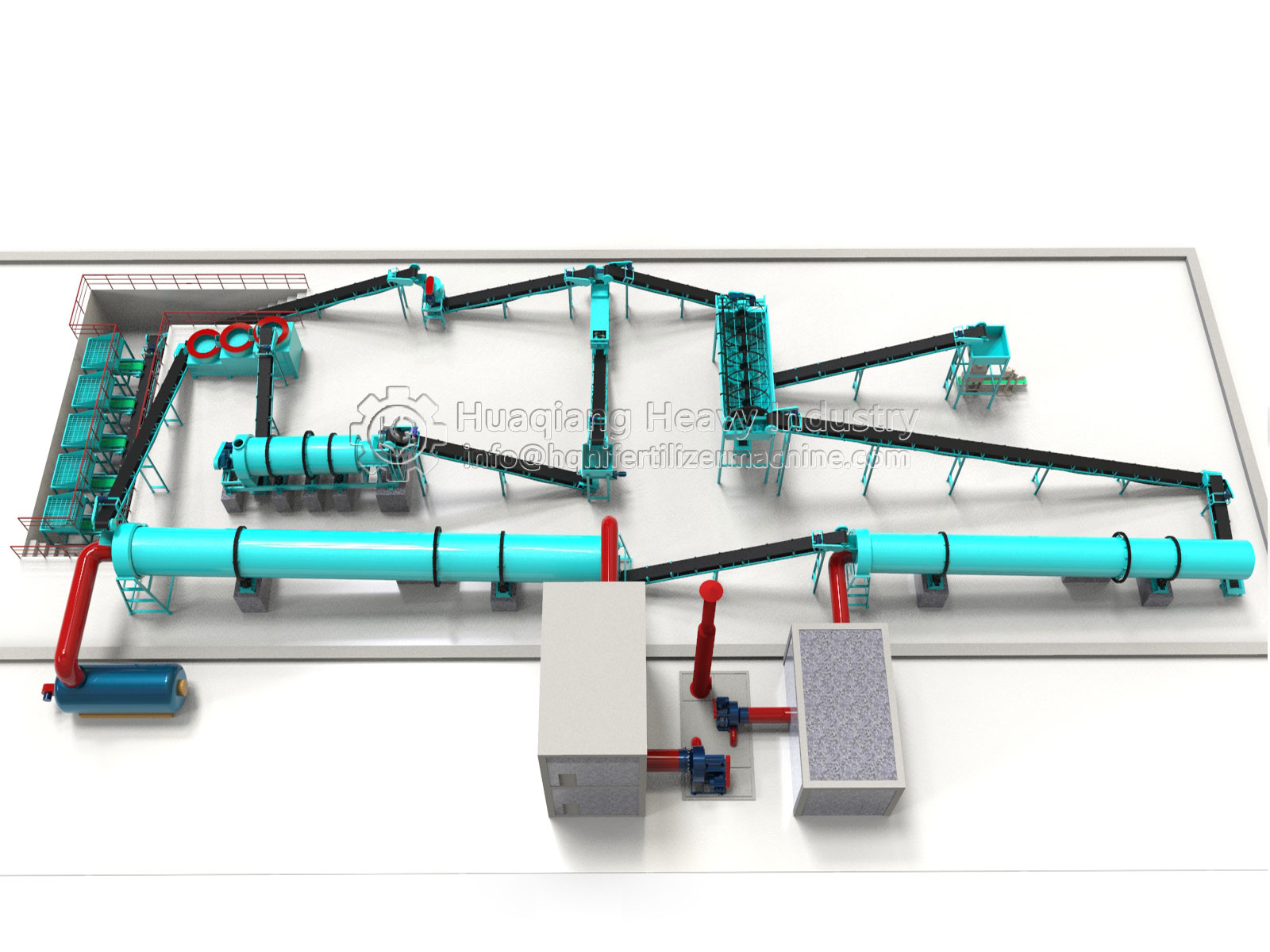
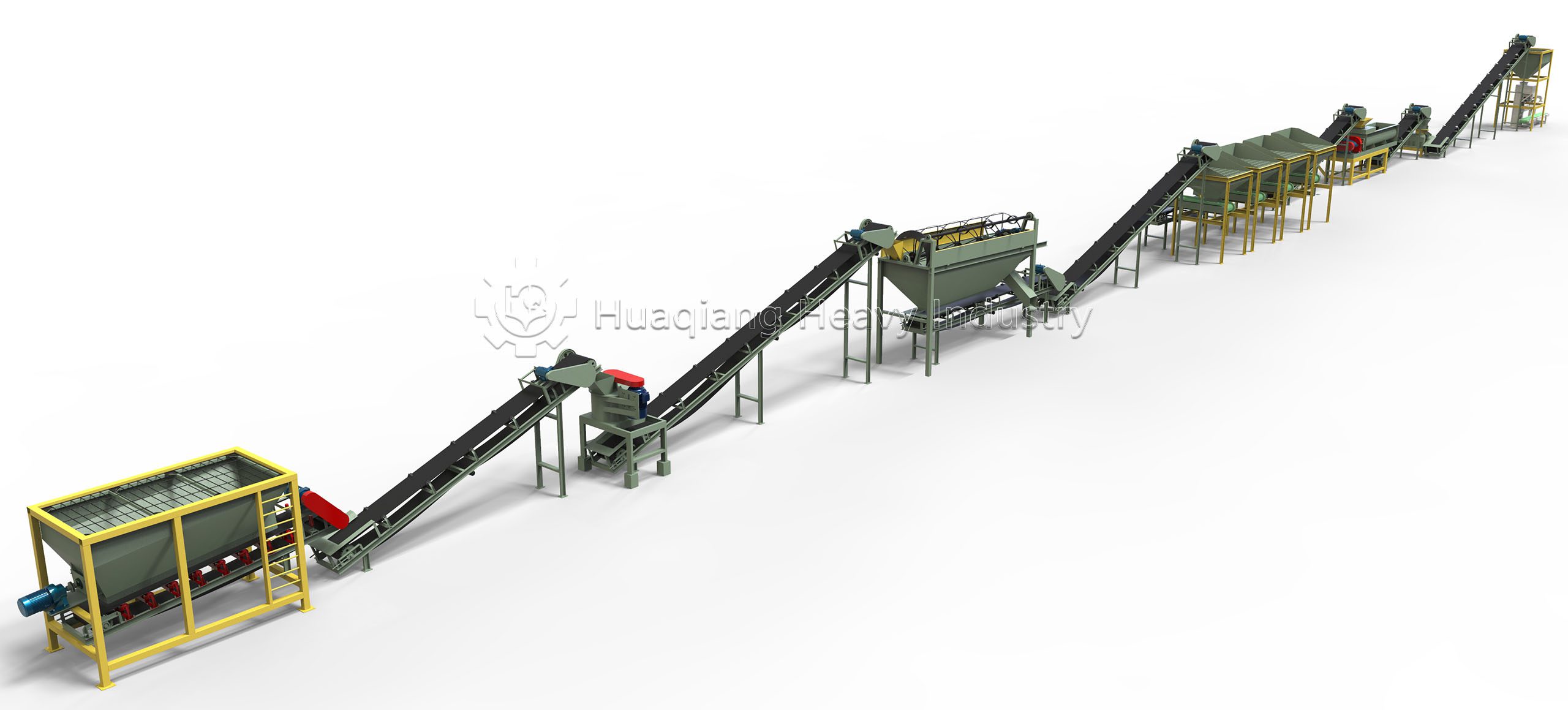
The minimalist option includes only a crushing and screening unit and packaging scales, omitting the granulation process and directly selling powdered organic fertilizer. This option still has a market in some parts of Africa, with equipment investment controlled between $3,000 and $5,000, but the product’s premium pricing power is weaker. The standard option adds a simple trough fermentation system and a forklift turning system, and includes a powder packaging line. The total equipment cost is approximately $8,000 to $15,000, and it is the mainstream choice for small farm subsidiary plants in India. The complete option includes a disc or extrusion granulator, a small drying drum, and an automatic packaging system, producing granular organic fertilizer. Equipment investment rises to $20,000 to $35,000, but the selling price of granular products can be 25% to 40% higher than that of powdered products.
III. A Detailed Breakdown of Regional Cost Differences The cost structures of the Indian and African markets differ significantly. India boasts a mature domestic fertilizer equipment manufacturing industry, where granulation units with equivalent configurations are 40-50% cheaper than imported equipment. Furthermore, a vibrant secondhand equipment market exists, with a complete secondhand granulation production line potentially costing only 30% of the price of new equipment. However, India’s electricity prices are relatively high and supply is unstable, requiring an additional budget of approximately $2,000 to $4,000 for backup diesel generators. The African market presents a contrasting picture—equipment is largely imported. Equipment from India or China, including shipping and tariffs, costs approximately 1.5 to 1.8 times the ex-factory price. However, labor costs are significantly lower, and biomass fuels (palm shells, coconut shells, cassava residue) are inexpensive, substantially reducing energy expenditures in the drying process.
Three Key Figures for Operational Launch
Based on market data from both parties, the equipment investment range for a standard 2,000-ton-per-year powdered organic fertilizer production line (including trough fermentation, crushing and screening, and simple packaging) is $6,000 to $10,000 in India and $10,000 to $18,000 in Africa (East Africa, for example). Upgrading to a pellet production line would cost $15,000 to $25,000 in India and $20,000 to $35,000 in Africa. In addition, it is recommended to reserve 20% to 30% of the investment for raw material procurement and market development during the three-month turnaround period.
Physical Assessment of Site Priority
In the Indian market, proximity to equipment supply hubs (such as Gujarat and Ludhiana) can significantly reduce transportation and after-sales costs. In the African market, proximity to target growing regions—such as Kenya’s flower-producing areas, Nigeria’s cassava belt, and Ghana’s cocoa-growing regions—is more important than proximity to ports because pellet fertilizer has a high transport density, with land transportation costs accounting for 15% to 20% of the final selling price. The best strategy is to start with powdered organic fertilizer, using the lowest possible equipment threshold to validate local raw material supply and farmers’ willingness to pay, and then reinvest the profits into the granulation unit.
Scaling Smart from Powder to Pellets
For emerging-market entrepreneurs, the prudent path to establishing a profitable organic fertilizer operation begins with validation, not granulation. Starting with a minimalist powder line—comprising essential fertilizer equipment such as a crusher, mixer, and automatic fertilizer packing machine—allows operators to test raw material consistency and local demand dynamics at the lowest capital threshold. Once market traction is confirmed, upgrading to a bio organic fertilizer production line or full organic fertilizer manufacturing plant introduces value-adding stages: a fertilizer granulator machine for pelletization, fertilizer dryer and cooler for moisture and temperature stabilization, and fertilizer screening equipment for size uniformity. While industrial fertilizer machine price varies sharply between Indian domestic sourcing and African import channels, modular deployment ensures that each expansion phase is funded by proven cash flow rather than speculative debt. By anchoring site selection near target growing regions and sequencing equipment investment from powder to pellet, small-scale operators transform localized waste abundance into a sustainable, margin-accretive agricultural input business.
We specialize in providing small-scale organic fertilizer plants in Asia and Africa with modular equipment solutions and localized financing support, ranging from minimalist powder lines to complete granulation lines, ensuring that every investment is precisely aligned with the most suitable starting point for production capacity.