
Anyone who has ever tried to shred a pile of fresh chicken manure or a heap of damp kitchen waste knows the frustration. It clings. It clumps. It wraps around blades like a stubborn child refusing to let go. Ordinary crushers choke, jam, or simply give up. But there’s a machine built for exactly this mess—the half wet material crusher.
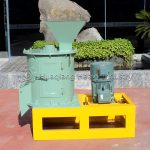
At first glance, it looks deceptively rugged: a steel housing, a spinning rotor, rows of heavy chain fertilizer crusher. But the genius lies in what you can’t see—the engineering that embraces moisture instead of fighting it. While conventional crushers rely on sharp blades that dull quickly and gum up with sticky residue, the half wet crusher uses impact. Chains flail, hammers pound, and materials collide with each other inside a chamber designed to handle moisture content as high as 40 or even 60 percent. Nothing wraps around the shaft. Nothing sticks for long. Instead, wet manure, fermented sludge, and damp crop residue exit the machine as fine, uniform particles—ready for the next stage of production.
Yet this machine never works in isolation. It belongs to a team, and its role is both essential and specific.
The story often begins with fermentation. Raw organic materials—chicken litter, cow manure, mushroom waste—spend weeks in a windrow or fermentation tank, where microbes begin breaking them down. But even after composting, these materials can retain significant moisture, clumping into sticky masses that no mixer or granulator can handle. Enter the half wet crusher. Positioned right after the compost turner or before the mixing stage, it transforms those stubborn clods into a free flowing powder.
Before the crusher does its work, a rotary screener or dewatering press might remove larger debris or reduce excess moisture. After the crusher, the fine material flows into a horizontal mixer, where it blends with binders, beneficial microbes, or additional nutrients. From there, a disc granulator or rotary drum granulator shapes the mixture into uniform pellets. A dryer and cooler lock in shape and stability, while a coating machine adds a final protective layer before automatic packers seal the finished organic fertilizer into bags.
Every machine in this line relies on the crusher to do one thing well: eliminate clumps. Without it,granulators produce misshapen pellets, dryers struggle with uneven moisture, and packers clog with oversized particles. With it, the entire process runs smoothly, efficiently, and without constant interruption.
But what makes the half wet material crusher truly remarkable is its forgiveness. It doesn’t demand perfectly dried input. It doesn’t require operators to babysit it through every sticky patch. It simply works—hour after hour, turning what would otherwise be a bottleneck into a seamless transition.
So why does this matter? Because organic fertilizer production is rarely neat. Fresh manure, fermented waste, high moisture byproducts—these are the raw materials that build healthy soil. The half wet crusher takes the mess out of the equation. It allows producers to use materials exactly as they come, without pre drying or endless adjustments. That means lower energy costs, faster processing, and less waste.
Isn’t it something—how a machine designed to handle the stickiest problems can make an entire production line flow like water? The half wet material crusher doesn’t just crush. It untangles, liberates, and prepares. And in a world where organic waste is too valuable to waste, that ability to handle the messy stuff might just be the most useful tool in the shed.