

The organic fertilizer industry is undergoing a technological revolution. In 2026, the mature application of new technologies such as intelligent control, low-temperature energy-saving processes, and multi-functional composite granulation is redefining the production methods of organic fertilizer. This article will introduce some of the most noteworthy cutting-edge technologies.
Intelligent Fermentation System: From Experience to Data
Traditional composting fermentation relies heavily on manual experience, frequently resulting in inaccurate temperature and humidity control and untimely turning. By 2026, intelligent fermentation technology will be widely adopted. The new generation of fermentation systems deploys multiple temperature sensors and oxygen concentration probes within the compost pile, uploading data to the central control system in real time. When the pile temperature exceeds the 70℃ safety threshold or the oxygen content falls below 8%, the system automatically activates the turning machine and aeration device to achieve precise oxygen supply and temperature control. The intelligent system can also automatically match the fermentation curve according to the characteristics of the raw materials—chicken manure heats up quickly and requires a high turning frequency, while cow manure heats up slowly and requires a longer heat preservation time; the system can automatically adjust operating parameters. Utilizing intelligent fermentation, the composting cycle is shortened from the traditional 30 days to 15-20 days, significantly improving composting uniformity and reducing labor costs by over 60%.
Low-Temperature Drying Technology: Protecting Nutrients and Viable Microorganisms
Temperature control during the drying process directly affects the quality of organic fertilizer. Traditional drying processes use high temperatures of 80-100℃, which, while efficient, leads to organic matter loss and inactivation of functional bacteria. By 2026, low-temperature segmented drying technology will become standard in high-end organic fertilizer production lines. This technology divides the drying process into two stages: the first stage uses 60-70℃ hot air to quickly remove surface moisture, and the second stage reduces the temperature to 40-50℃ for slow drying to a safe moisture content. Combined with a heat recovery system, waste heat from exhaust air is reused in the preheating stage, reducing overall energy consumption by over 20% compared to traditional processes. For bio-organic fertilizer, the survival rate of functional bacteria after low-temperature drying can increase from 60% to over 90%, ensuring a higher number of viable bacteria in the product.
Three-in-One Granulation Technology: Organic + Inorganic + Biological One-Step Forming
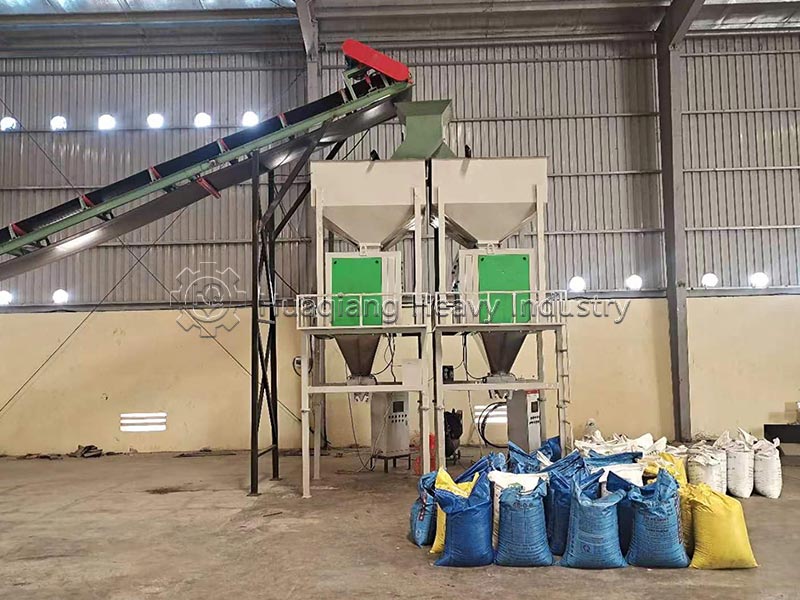
In the past, the production of organic-inorganic compound fertilizers or bio-organic fertilizers often required multiple processes and repeated additions. In 2026, the three-in-one granulation technology achieved one-step compound granulation of organic matter, inorganic nutrients, and functional bacteria. This technology uses roller extrusion granulation as its core. Before the material enters the granulator, an automatic batching system precisely measures the composted organic material, nitrogen, phosphorus, and potassium fertilizers, and functional bacteria. These three are fully mixed according to the formula ratio and then extruded at room temperature. The entire process does not involve high temperatures, and the survival rate of functional bacteria can reach over 95%. The granules have high density and high compressive strength, and slowly disintegrate and release nutrients upon contact with water, achieving a synergistic effect of nutrients and live bacteria. This technology is particularly suitable for producing high-value-added functional organic fertilizer products.
Closed-Loop Production and Intelligent Dust Removal
With increasingly stringent environmental protection requirements, closed-loop production has become a standard configuration for newly built production lines. In 2026, organic fertilizer production workshops generally adopted a fully enclosed negative pressure design, with fermentation, crushing, granulation, and drying zones independently isolated. Dust-laden gas was collected via pipelines and entered a three-stage dust removal system: a cyclone dust collector separated coarse particles, a gravity settling chamber collected medium-sized dust particles, and a pulse-jet bag filter treated fine particulate matter, resulting in emission concentrations far below national standards. For odor control, a combination of biological filters and chemical scrubbing processes increased ammonia and hydrogen sulfide removal rates to over 95%. The entire line was centrally controlled by PLC, allowing operators to monitor the operating status of all equipment from the control room, achieving “unmanned workshop” operation.
Equipment Upgrade Direction: High Stability and Remote Maintenance Adapting to new technological trends, organic fertilizer equipment is being upgraded towards higher stability and intelligence. Key components such as granulator rollers, crusher hammers, and conveyor rollers all use wear-resistant alloy materials and heat treatment processes, extending their service life by 30%-50%. The drive system uses first-class energy-efficient motors, reducing the overall energy consumption of the line by more than 15%. New-generation equipment is generally equipped with IoT modules, uploading operational data to a cloud platform in real time. Equipment manufacturers can remotely monitor for fault warnings and maintenance guidance, significantly reducing on-site repair time and costs.
The technological revolution in organic fertilizer production extends to the final finishing stages. After the three-in-one granulation process, the product undergoes a series of automated finishing steps to ensure its quality and stability. A rotary drum screening machine classifies the granules, ensuring only uniformly sized product moves forward. The screened granules are then stabilized in a fertilizer dryer machine and fertilizer cooler machine to achieve the optimal moisture and temperature for storage. Finally, the consistent, high-quality product is precisely weighed and hermetically sealed by a fertilizer packing machine, ready for the market. These integrated, intelligent post-processing systems are key to achieving the high throughput, consistent quality, and operational efficiency demanded by modern organic fertilizer production.
Technological Leadership Brings Product Advantages
Organic fertilizers produced using new technologies have significant advantages over ordinary products. They decompose more thoroughly—eliminating the risk of root burn and showing results faster after application to the soil; they are more nutrient-efficient—with less organic matter loss and higher activity of functional bacteria; and they have more stable quality—smaller batch-to-batch variations and reliable effects. For organic fertilizer producers, technological upgrades are not only necessary to meet environmental protection requirements but also essential for enhancing product competitiveness and brand value.
Want to know how new technologies can be applied to your production line? Contact us for upgrade solutions.