

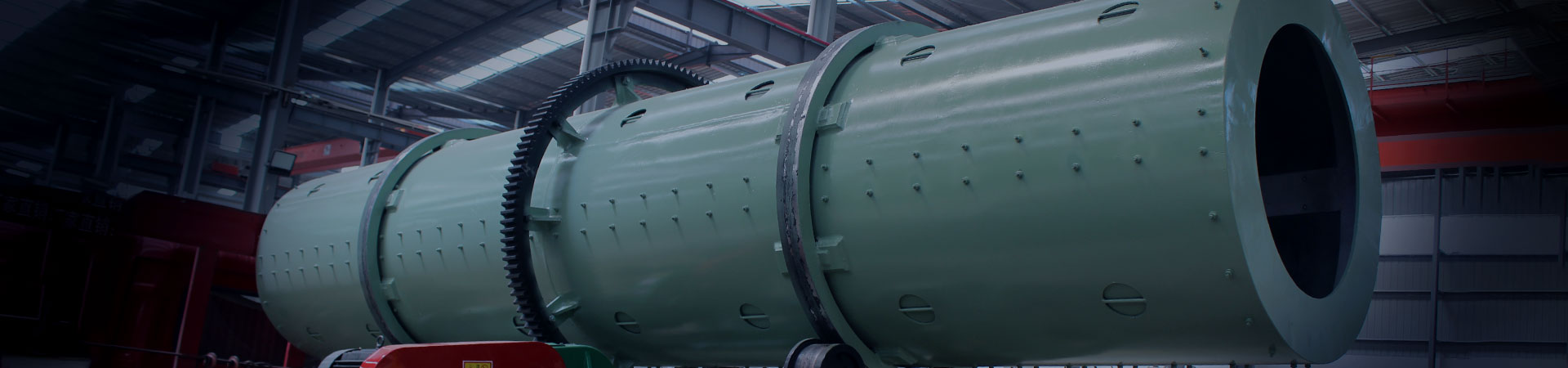
Many organic fertilizer producers face a frustrating dilemma when processing mixtures of rice husks and chicken manure: the material fails to form proper pellets, emerging from the double-roller press granulator, Organic Fertilizer Granulator, Organic Fertilizer Production granulator either as loose sand or crumbling at the slightest touch. This has led to a common industry misconception that “twin-roll machines can’t handle high-fiber materials.” However, this conclusion is premature. The real issue lies not in equipment compatibility, but in whether we truly understand the mechanics of how high-fiber materials form under high pressure and whether we employ the correct pretreatment methods. Once the underlying mechanisms and parameters are fully mastered, rice husk-chicken manure mixtures prove to be among the materials where double roller press granualtors excel.

First, let us clarify the fundamental physical process: twin-roll extrusion granulation is a purely dry, cold-pressing process. The linear pressure exerted by the two rolls—often reaching tens of tons—is sufficient to completely expel air from the gaps between powder particles, forcing the solid particles close enough for intermolecular forces to take effect. In the case of rice husk-chicken manure mixtures, the high pressure crushes and deforms the coarse fibers, inducing plastic flow and causing the fibers to interweave into a “mechanical interlocking” structure. Meanwhile, the organic colloids and humic acids abundant in the chicken manure act as a natural binding matrix, firmly “welding” the crushed fiber framework together. In other words, the coarse fibers are not an obstacle to granulation but rather the skeletal structure that provides compressive strength, while the stickiness of the chicken manure acts as the “cement” filling the gaps in that skeleton; the two complement each other perfectly under high pressure, and neither can do the job alone.
So, why do granulation failures still occur in actual production? The key lies in moisture control. Double roller press granualtors are classified as “dry-process” equipment because the input material must have very low moisture content—typically controlled between 12% and 15%, and certainly not exceeding 18%. If the moisture content exceeds this range, the material tends to adhere to the roll surfaces under high pressure—causing issues where the material fails to release properly or sticks to the rolls—which makes demolding difficult and results in loose, unstable pellets. Many manufacturers mistakenly believe that adding moisture increases adhesiveness, but the result is often counterproductive. The correct approach involves first fermenting and decomposing the mixture of rice husks and chicken manure, then reducing the moisture content to below 15% through air-drying or oven-drying, and finally grinding the material to a fineness of 80–100 mesh; at this stage, the material’s flowability and compressibility are optimized. The flakes produced after extrusion molding retain essentially the same moisture content as the feed material, featuring a dense internal structure and a smooth surface—eliminating the need for any additional drying step. This represents the most significant cost advantage of dry granulation over wet granulation.
Regarding the granulation rate, an objective perspective is required. The initial granulation rate of a roller press (i.e., the proportion of qualified granules produced directly from the rollers) typically ranges from 30% to 60%, with a large volume of material emerging as flakes or large chunks. However, this is not a defect but rather a standard part of the process: subsequent crushing and screening equipment breaks down and classifies the flakes; fine powder screened out is automatically returned to the feed inlet for re-extrusion, while qualified granules are sent directly for packaging. Through this closed-loop circulation system, the overall granule recovery rate of the entire production line can consistently exceed 95%. Consequently, instances where the material “fails to granulate” are usually due to the lack of a complete crushing, screening, and recycling system, or issues such as insufficient feed fineness or excessive moisture. These factors can cause the extruded sheets to become overly brittle or excessively soft and sticky, thereby impairing the efficiency of the subsequent crushing and screening stages.
In summary, rice husks and chicken manure are by no means the “nemesis” of roller press granulators; on the contrary, the combination of coarse fibers and chicken manure—under high-pressure dry processing conditions—can yield high-quality organic fertilizer granules that are structurally stable and require no drying. Provided that pre-treatment moisture is strictly controlled, grinding fineness is adequate, and a standard crushing-screening-recycling circuit is installed, this equipment can transform coarse fibers—once a source of headaches—into an asset that enhances granule strength. The core of granulation lies not in “stickiness,” but in achieving sufficient compaction and the correct formulation; once this is understood, the challenges associated with granulating rice husks and chicken manure can be readily resolved.