

What is Circular Agriculture?
Circular agriculture is an agricultural production model that organically links planting, animal husbandry, and processing industries. Its core concept is a closed-loop flow of “resources—products—recycled resources.” Simply put, it involves turning crop straw in the fields into feed for livestock, and then turning livestock manure back into fertilizer for the fields. This model is not a modern invention—the ancient Chinese agricultural civilization’s idea of ”constantly renewing and strengthening soil fertility” is the wisdom of circular agriculture.
The Central Document No. 1 clearly proposes “strengthening the resource utilization of livestock and poultry manure” and requires “vigorously developing green and specialty agricultural products,” promoting agriculture towards green and specialty directions. my country’s annual livestock and poultry manure production exceeds 4 billion tons, and the current comprehensive utilization rate is about 78%. The Ministry of Agriculture and Rural Affairs has clearly required that this rate reach over 85% by 2030. Transforming waste into resources is both a policy requirement and an industrial opportunity.
Closed-Loop Process of Circular Agriculture
A typical closed loop in circular agriculture comprises four stages:
Planting end: Straw production → Straw feed production: Wheat, corn, and other straw are shredded and processed into roughage, supplied to livestock farms.
Livestock end: Feed consumption and manure production → Manure fertilizer production: Livestock manure is collected and transported to an organic fertilizer plant, mixed with some straw, and fermented at high temperature and aerobic conditions to produce organic fertilizer.
Organic fertilizer application to the field → Soil improvement: The decomposed organic fertilizer is evenly applied to the field using fertilizer spreaders, replacing some chemical fertilizers.
Improved soil fertility → Increased crop yield and quality: With increased soil organic matter, crop yield and quality improve simultaneously.
Taking Hongliushu Village in Xiaoxian County, Anhui Province as an example, approximately 6,000 mu (about 400 hectares) of wheat straw can provide feed for 3,000 head of beef cattle annually, producing 22,000 tons of cattle manure. After composting with 9,000 tons of straw, approximately 10,000 tons of organic fertilizer can be produced. This chain not only saves livestock farms over 800,000 yuan annually in feed costs and increases their organic fertilizer sales revenue by nearly 800,000 yuan, but also increases farmers’ income per mu by over 300 yuan.
III. Fertilizer Machinery: The Key Force in Opening the Circular Chain
In the entire closed loop, fertilizer machinery is the converter connecting “waste” and “resources.”
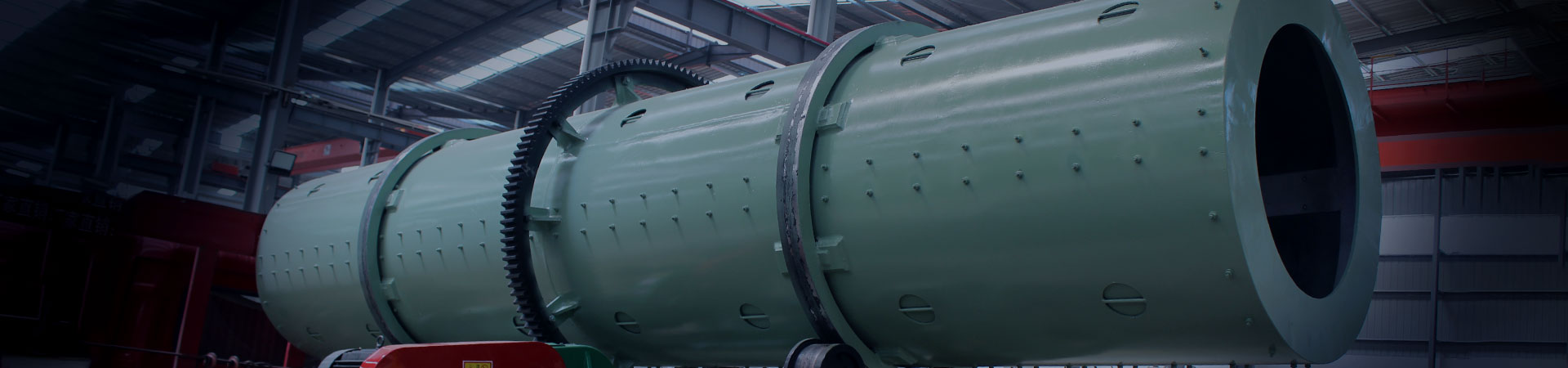
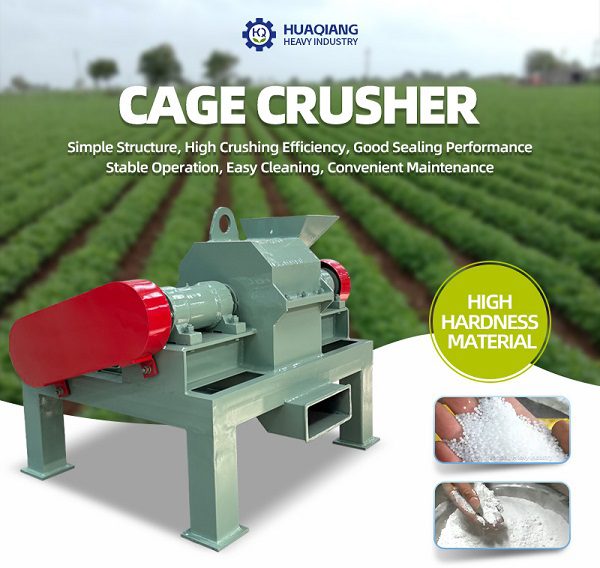
Fermentation Stage: The compost turner is the core equipment for aerobic fermentation. Trough-type compost turners operate along fixed tracks, suitable for standardized fermentation workshops; tracked compost turners are more mobile and suitable for open-air windrow fermentation. The turner periodically turns the material, introducing oxygen into the compost pile and providing a suitable environment for aerobic microorganisms. The crusher breaks down straw and large pieces of material to a suitable fineness, creating conditions for subsequent mixed fermentation.
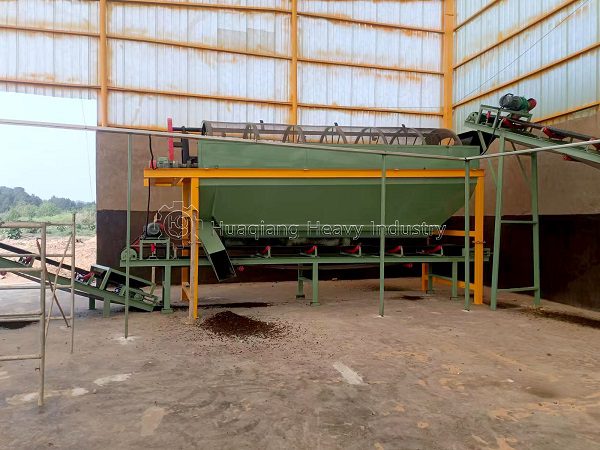
Processing Stage: The matured material is evenly mixed by a mixer, then granulated into granular commercial organic fertilizer by a granulator, facilitating storage, transportation, and mechanized application. A screening machine removes substandard particles, and a packaging machine completes the final sealing.
Returning fertilizer to the field: Fertilizer spreaders evenly apply organic fertilizer to the field, achieving mechanized and precise return. Compared to manual fertilization, mechanical spreading not only saves time and costs but also allows for more precise control of the amount of fertilizer applied.
In the circular agriculture system, fertilizer machinery is the essential converter that transforms agricultural waste into valuable resources. The complete equipment train – from the fertilizer crusher and mixer that prepares raw materials, to the organic fertilizer disc granulator or other fertilizer granulator machine that shapes uniform pellets, and the fertilizer dryer and cooler that ensures product stability – forms the core of the processing line. Intermediate fertilizer screening equipment guarantees consistent particle size, while the automatic fertilizer packing machine delivers dust‑free, precise bagging. Although the industrial fertilizer machine price for a complete line represents a significant upfront investment, the long‑term benefits are compelling: reduced chemical fertilizer costs, increased crop yields, and new revenue streams from organic fertilizer sales. Moreover, the integration of these fertilizer equipment systems enables closed‑loop nutrient cycling – turning manure and straw into premium soil conditioners that improve soil health and reduce environmental pollution. As policy targets push for higher manure utilization rates, investing in modern fertilizer machinery is no longer an option but a necessity for farms and cooperatives seeking sustainable growth. By embracing this technology, circular agriculture becomes not only an ecological ideal but a practical, profitable reality – where waste is truly the beginning of wealth.
Expert Advice (FAQ)
Q: What are the practical benefits of circular agriculture for farmers?
A: First, it reduces chemical fertilizer input—returning manure to the field can replace 20%-30% of chemical fertilizers; second, it increases crop yield—the average crop yield increased by 7.8% in pilot areas; third, it provides additional income—farmers can obtain stable income by selling straw.
Q: What equipment is needed to build an organic fertilizer production line?
A: The basic configuration includes a compost turner (fermentation), crusher, mixer, granulator, dryer, cooler, screening machine, and packaging machine. These can be flexibly combined according to the final product form (powder or granules).
Summary: Circular agriculture transforms “waste” from a burden into the starting point of “resources.” Fertilizer machinery—from composting and crushing to granulation and spreading—is the backbone of turning this concept into reality.