

What is Integrated Water and Fertilizer Management?
Integrated water and fertilizer management is a modern agricultural technology that dissolves fertilizer in irrigation water and uses drip irrigation, sprinkler irrigation, and other systems to achieve “synchronous and precise supply of water and fertilizer.” It changes the traditional extensive “large-scale water and fertilizer” model, allowing nutrients to be directly delivered to the crop roots, increasing utilization by 30%-50%. However, this technology places stringent requirements on the supporting fertilizers—not all compound fertilizers are suitable for integrated water and fertilizer management. Microgranular fertilizers (1-2mm in diameter) are ideal for integrated water and fertilizer management due to their easy solubility, non-clogging nature, and stable delivery. Producing this specialized fertilizer requires overcoming three major hurdles: solubility, particle size, and compressive strength.
Solubility Requirements: Completely Soluble with No Residue
The core problem of integrated water and fertilizer management systems is clogging of the drippers. Any insoluble matter will cause the entire irrigation tape to fail.
Water Solubility Indicator: Granular fertilizers used in integrated water and fertilizer management must achieve a water solubility of over 99.5% (stirred in 20℃ water for 2 minutes). The residual insoluble matter should be less than 0.5g/100g, and the particle size should be <0.05mm.
Raw material selection: Urea, ammonium nitrate, and potassium nitrate are suitable nitrogen sources; potassium dihydrogen phosphate or ammonium polyphosphate are preferred phosphorus sources (avoid calcium phosphate insolubles); potassium nitrate or potassium sulfate are suitable potassium sources. Formulas containing bentonite, clay, or other insoluble binders are strictly prohibited.
Chelation treatment: Trace elements (iron, zinc, copper, etc.) must be pre-chelated (EDTA or EDDHA), otherwise they will easily precipitate in irrigation water.
Detection method: Dissolve 10g of fertilizer in 90mL of deionized water, let stand for 30 minutes, and then filter through a 300-mesh filter. Dry the filter residue and weigh it; it should be ≤0.05g.
III. Particle size control: 1-2mm microparticles. The flow channel diameter of drip irrigation pipes or drippers is usually 0.5-1.5mm. Fertilizer particles that are too large not only dissolve slowly but may also get stuck in filters or valves.
Optimal particle size range: 1-2mm. Fine powder smaller than 1mm is prone to clumping during dissolution (forming “fish eyes”), while particles larger than 2mm take longer to dissolve and may clog the filter screen.
Granulation process selection: Roller extrusion granulation or fluidized bed granulation is recommended. Disc granulation and drum granulation are not easy to stably control 1-2mm micro-particles. After extrusion, pass through a double-stage sieve (2mm upper layer, 1mm lower layer) to retain qualified products.
Sieving control: If the qualified rate is lower than 70%, the gap between the extrusion rollers or the granulator speed should be adjusted. A granulator can be added after sieving to gently crush particles slightly larger than 2mm and re-sieve.
Compressive strength: Resistant to conveying without breakage. Micro-particles are subjected to compression and friction during packaging, transportation, and fertilizer applicator hoppers. Insufficient strength will lead to pulverization, which in turn causes clumping and pipe blockage during dissolution.
Strength standard: The compressive strength of a single 1-2mm micro-particle should be ≥12N. Ordinary 3-5mm compound fertilizer requires 10-15N, but due to the smaller size of micro-particles and their relatively greater stress, the strength requirement is actually higher for the same material.
Strength Enhancement Measures:
Control moisture content below 2% (ensuring thorough drying).
Add 0.5%-1% binding enhancer (such as lignin sulfonate or pregelatinized starch).
Increase linear pressure (25-35 kN/cm) during roller extrusion granulation.
Simulation Test: Place a 200g sample into a rotating cylinder (50 rpm) and roll for 10 minutes. Sieve and weigh the resulting fine powder (<0.5mm). The powdering rate should be ≤3%.
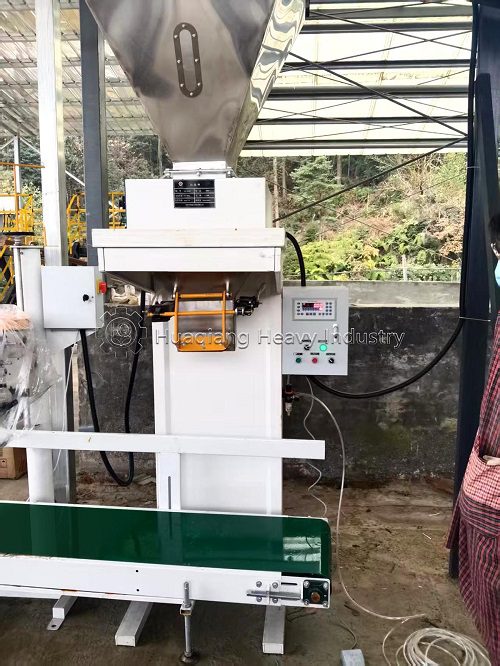
Packaging and Storage Precautions: Micro-particles have a large specific surface area and are easily hygroscopic. Use aluminum foil bags or film-coated woven bags lined with desiccant. Use as soon as possible after opening. The water solubility should be checked quarterly during the product’s shelf life to prevent moisture absorption and clumping.
Producing high‑quality microgranular fertilizer (1‑2 mm) for integrated water‑fertility management requires a carefully engineered production train, where each piece of fertilizer equipment plays a critical role. The process starts with a fertilizer crusher and mixer to homogenize highly soluble raw materials, followed by a precision fertilizer granulator machine—preferably a roller press or fluid‑bed system, as an organic fertilizer disc granulator is less suitable for such fine, uniform particles. After granulation, fertilizer screening equipment (double‑deck with 1‑mm and 2‑mm meshes) ensures narrow size distribution, while a fertilizer dryer and cooler brings moisture below 2% to guarantee strength (≥12N) and prevent caking. Finally, an automatic fertilizer packing machine with moisture‑proof bags and desiccant seals preserves solubility during storage. Although the industrial fertilizer machine price for a dedicated microgranular line may be slightly higher than conventional NPK plants, the investment pays off quickly through reduced clogging, improved fertigation efficiency, and premium market prices for specialty fertilizers. By integrating these machines with strict process control—solubility ≥99.5%, particle size 1‑2 mm, and crushing strength ≥12N—manufacturers can produce a fertilizer that dissolves instantly, flows freely, and delivers nutrients precisely to crop roots, making water‑fertilizer integration truly effective and profitable.
In summary, fertigation is an inevitable trend, and the production of supporting microgranular fertilizers must adhere to three core indicators: high solubility (≥99.5%), small particle size (1-2mm), and strong compressive strength (≥12N). Only by meeting these process requirements can fertilizers be truly integrated into intelligent irrigation systems, achieving the goals of water and fertilizer conservation, high yield, and high quality.