


In the complete value chain of straw resource utilization, the quality of the finished product from the granulation stage is often attributed to the performance parameters of the pellet mill itself; however, a more fundamental and decisive factor is frequently overlooked: the fineness of the ground straw. In reality, the particle size of the material output from the grinding process serves as the “process language” linking pre-treatment equipment with granulation equipment; it directly determines the material’s flowability, compression-molding behavior, and the physical quality of the final pellets during the subsequent granulation process. Whether producing feed pellets or biomass fuel pellets, core indicators—such as density, pellet formation rate, and fines generation rate—are profoundly shaped by the grinder’s screen aperture and crushing method before the material even enters the pellet mill’s die chamber.
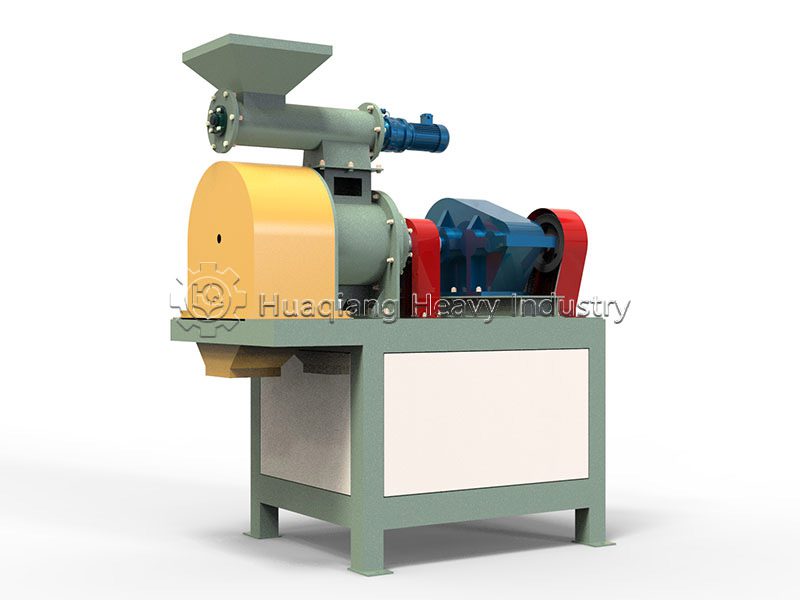
From the perspective of equipment synergy, the impact of grinding fineness on granulation quality is first evident in the compatibility between the material and the pellet mill’s ring die. As the core granulation equipment, the ring-die pellet machine operates with fixed process parameters regarding die-hole diameter and compression ratio; the material’s particle size distribution must align precisely with these parameters. If the material output from the grinder is too coarse—exceeding 5 mm, for instance—large fibrous particles fail to compact fully within the ring die’s compression zone. This results in internal voids, making the pellets highly prone to crumbling. More seriously, excessively coarse material accelerates abnormal wear between the ring die and the press rollers, shortening die lifespan and increasing maintenance costs. Conversely, if the material is ground too finely—approaching a dust-like state—the specific surface area increases dramatically, yet the lack of necessary structural support during granulation leads to insufficient compressive strength in the pellets. Furthermore, excessively fine powder creates high flow resistance within the die holes, easily causing blockages that force the pellet mill to shut down for cleaning.
Straw grinding fineness is by no means a pre-treatment parameter to be treated casually; rather, it is a critical process variable that bridges grinding and granulation equipment and determines the quality of the finished pellets. The particle size of the material discharged from the pulverizer ultimately determines pellet density, formation rate, and resistance to crumbling by influencing material flow resistance within the ring die, compression-molding behavior, and the internal structure of the pellets.