
Ever wondered how those bags labeled 15-15-15 go from dusty piles of nitrogen, phosphorus, and potassium powders to perfectly round, uniform pellets? The magic happens inside an NPK fertilizer production line—a flowing chemical kitchen where ingredients like urea, ammonium chloride, MAP, and potassium chloride are precisely measured, crushed, mixed, granulated, dried, cooled, screened, and finally packed into meals ready for the field.
It all starts with the automatic batching system. A multi head electronic scale, controlled by computer, weighs each raw material according to the formula with an accuracy error below 0.5%. The blended materials then enter a cage mill, which pulverizes lumps into fine powder, ensuring intimate mixing later.
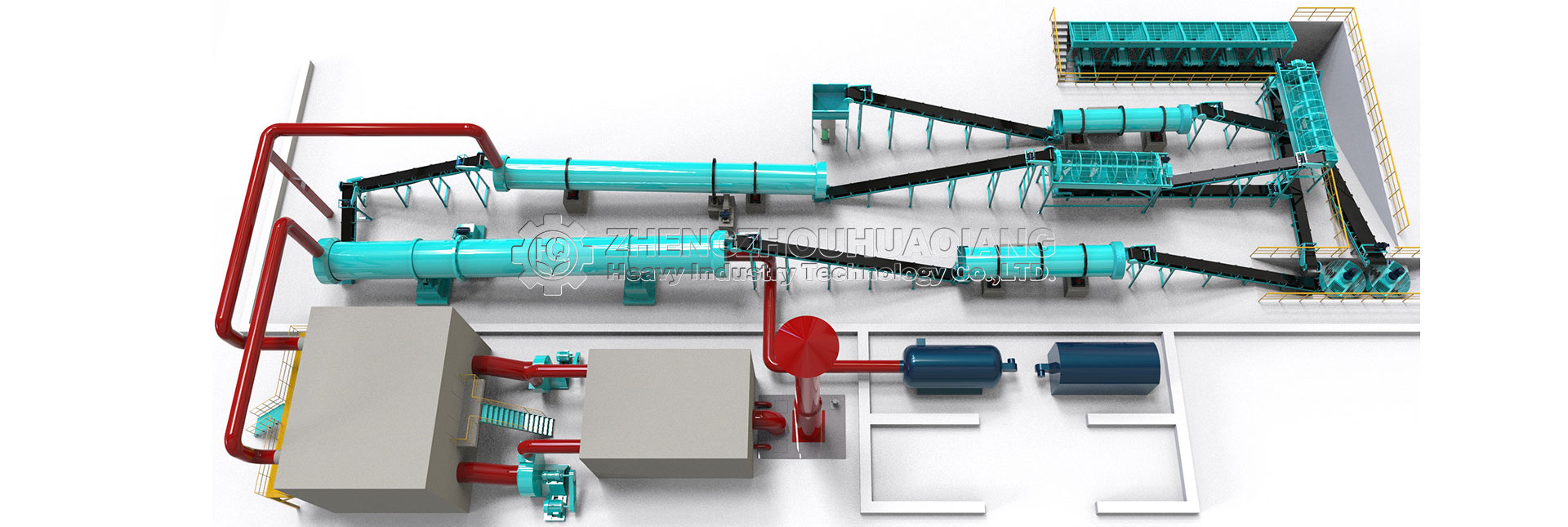
Core Process Flow:
Batching → Crushing → Mixing → Granulation → Drying → Cooling → Screening → Coating → Packing
The homogenized powder moves to the heart of the line: granulation. The mainstream process uses either a rotary drum granulator or a double roller press granulator. In the drum granulator, steam and ammonia are injected; as the drum rotates, the powder gradually nucleates into balls, with a granulation rate exceeding 90%. For dry processes, the roller press compacts powder into sheets, which are then crushed and screened—no drying needed, cutting energy consumption by up to 70%.
Auto batching Cage mill Horizontal mixer Drum granulator Rotary dryer Rotary cooler Rotary screen Coating drum
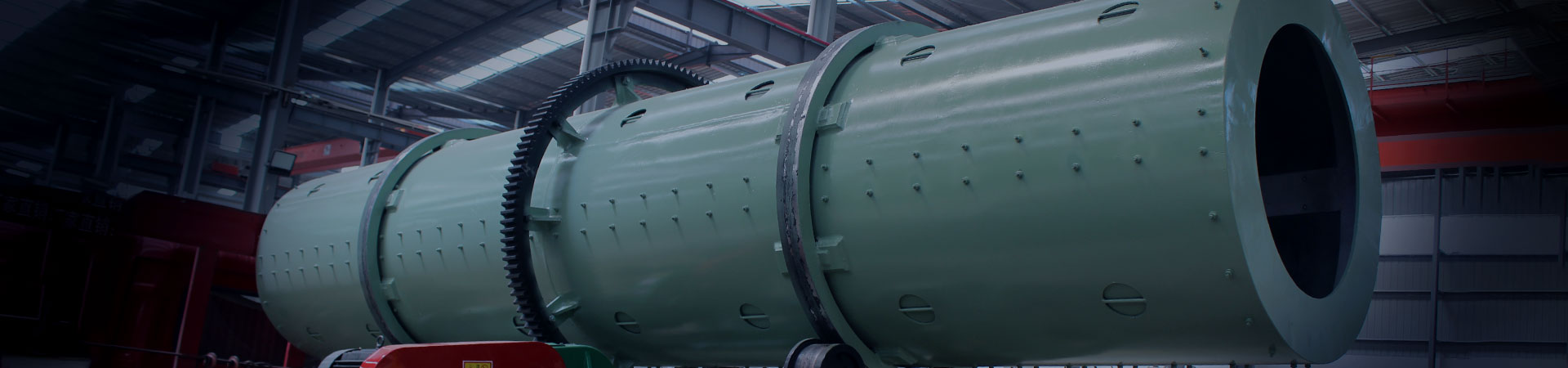
Fresh granules from the granulator contain excess moisture and must pass through a rotary dryer, where hot air removes water to prevent caking during storage. Next, a rotary cooler brings down the temperature, hardening the pellets. They then enter a rotary screener machine—on-size particles (usually 1–4.75mm) proceed, fines are recycled back to granulation, and oversize chunks go to the crusher.
The final touch is coating and polishing. In the coating drum, an anti caking agent or coating oil is sprayed onto the granules, forming a protective film that prevents moisture absorption and gives them a glossy finish. The finished product is then weighed and packed by an automatic bagging scale, ready for shipment.
“This line is like a symphony orchestra,” a Thai fertilizer plant owner once said. “Every machine plays its part, turning powder into golden notes.”
From 5,000 ton annual capacity mini lines to 200,000 ton industrial complexes, NPK production lines can flexibly produce high, medium, or low-concentration compound fertilizers, and even organic inorganic blends. Standing at the end of the line, watching bags stamped 15-15-15 roll off the conveyor, you realize: the foundation of a good harvest is forged right here, in this symphony of steel.