

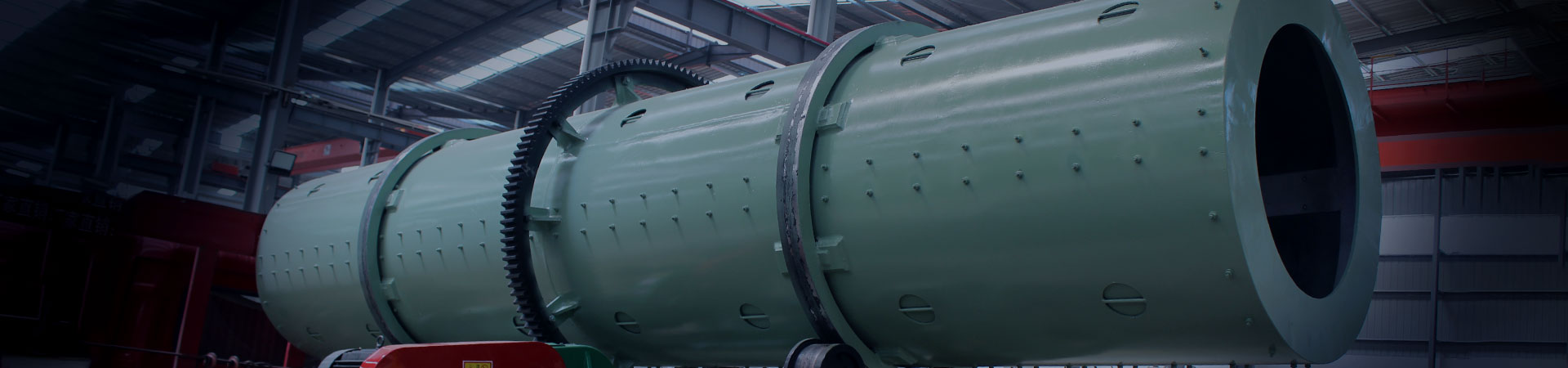
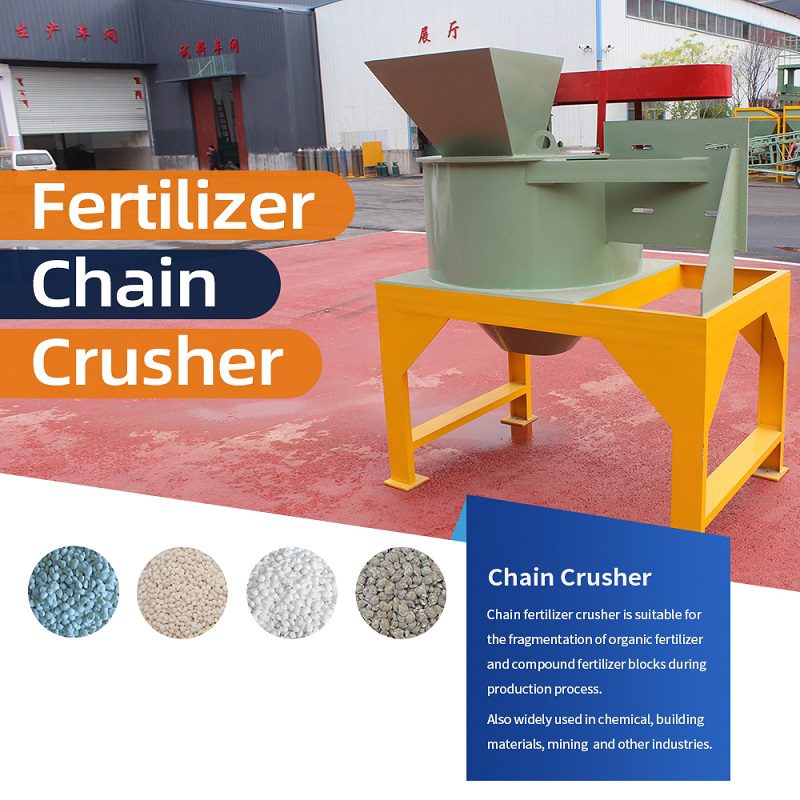
The chain crusher is a mainstay in fertilizer raw material processing machinery. Renowned for its simple structure, convenient operation, low investment cost, and reliable performance, it has become the preferred equipment for crushing dry materials in organic fertilizer production. Whether processing straw powder, dried mushroom residue, oilseed meal, or well-rotted dry compost, this versatile machine can meet the needs of small organic fertilizer enterprises and family farms, and can even serve as auxiliary equipment for medium and large-scale production lines. Understanding its application characteristics and mastering maintenance techniques can significantly improve operating efficiency and minimize downtime.
Core Application Characteristics
The widespread application of the chain crusher stems from its excellent adaptability and operational flexibility. Its core lies in the high-speed rotating high-quality manganese steel chain, which enhances the crushing effect by impacting and crushing the internal liner. By selecting different screen sizes, the crushed particle size can be freely adjusted within the range of 1-5 mm to meet various fineness requirements of subsequent granulation processes.
The machine adopts a sealed body design, which effectively prevents dust from spreading during operation, thus supporting production that meets environmental standards. The feed inlet can be fed continuously and automatically using a simple conveyor, or manually in batches, seamlessly adapting to different production scales. The chain crusher has a compact structure and relatively light weight, allowing for flexible placement in different positions on the production line, and can even be configured as a mobile unit.
Installation Guidelines
Proper installation should follow the principles of “stability and levelness.” The equipment requires no complex foundation—simply use anchor bolts to secure it to a level, solid concrete surface to prevent movement due to vibration during operation.
When integrating with upstream and downstream equipment, ensure smooth material flow in and out of the crusher, preventing material accumulation at the feed or discharge inlet. After installation, a no-load test run should be conducted to verify the correct rotation direction of the chain and check for any abnormal noise. Production should only commence after the machine is running smoothly.
III. Daily Maintenance
Continuous maintenance is key to extending the service life of the chain crusher and should follow the principles of “daily cleaning, regular inspection, and timely replacement.”
Daily: After each production shift, thoroughly remove any residual material from the machine’s interior. Accumulated material can harden, causing difficulty in subsequent startups or damaging the machine.
Weekly: Check chain wear. If the chain is loose, deformed, or broken, adjust the tension or replace it immediately. Check for screen damage—a damaged screen allows excessively large particles to pass through, affecting the quality of downstream granulation.
Monthly: Monitor bearing temperature and lubricating oil level. Replenish with high-temperature grease as needed to prevent bearing overheating and failure.
Yearly: Conduct a comprehensive equipment inspection. Check for levelness, inspect welds for cracks, and assess the overall condition of the machine to ensure continued reliable operation.
Common Problems and Solutions
The chain crusher’s simple design means that most malfunctions can be resolved by operators with basic training, minimizing reliance on specialized technicians.
Material blockage: Usually caused by excessive feed rate or foreign objects entering the crushing chamber. Solution: Reduce the feed rate and install a magnetic separator at the inlet to remove metal contaminants.
Uneven particle size: Usually indicates chain wear or screen damage. Solutions: Replace worn chains and damaged screens promptly.
Bearing overheating: Caused by insufficient lubrication or bearing aging. Solution: Add grease or replace bearings as needed.
The chain crusher demonstrates the value of a simple and robust design in organic fertilizer production. By understanding its application advantages and implementing systematic maintenance, operators can ensure this reliable machine operates stably for many years, producing materials with consistent particle size, thus achieving efficient downstream processing. Its low maintenance requirements and simple troubleshooting make it an ideal choice that balances economy and high performance.
The reliable chain crusher, with its simple maintenance and robust performance, is often the unsung hero at the start of a fertilizer production line. By consistently reducing dry materials to the optimal particle size, it ensures a uniform and reliable feedstock for all subsequent processes. This prepared material then flows into the heart of the operation. In a typical npk fertilizer line, after granulation, the material must undergo a series of critical finishing steps. The granules, still warm and moist from the granulator, are fed into a fertilizer dryer machine to reduce their moisture content to the target level for safe storage. They then pass through a fertilizer cooler machine to bring them down to ambient temperature, a crucial step to prevent caking in the bags. Next, a rotary drum screening machine classifies the granules, ensuring only uniformly sized, high-quality product moves forward. Finally, the consistent, dry, and cool granules are precisely weighed and sealed into bags by a fertilizer packing machine. The dependable performance of the initial chain crusher directly impacts the efficiency of these downstream processes, ensuring that the entire npk fertilizer line operates smoothly and produces a final product that meets the highest market standards.