

The core of controlled-release fertilizer lies in a functional coating layer—like a “smart coat” for the fertilizer granules, it controls the nutrient release rhythm by regulating the rate of water penetration. Understanding the coating process principles and coating quality testing techniques is crucial to ensuring the controlled-release performance of the product. This article elaborates on this from two dimensions: membrane material spraying process and coating uniformity testing.
Membrane Material Spraying Process: Film Formation Mechanism and Key Parameters
Controlled-release fertilizer coating materials are mainly divided into three categories: polymer-based (polyethylene, polyurethane, etc.), sulfur-based, and resin-based materials. In recent years, bio-based biodegradable membrane materials (such as modified vegetable oils and straw liquefaction products) have become an important development direction.
Spraying is currently the mainstream coating method—liquid membrane material is evenly sprayed onto the surface of tumbling fertilizer granules through an atomizing nozzle; after the solvent evaporates, a dense solid film layer is formed. Taking polyethylene coating as an example, scanning electron microscopy observation shows that the controlled-release membrane layer prepared by the spraying method has a smooth, flat, and uniform outer surface, with a membrane thickness of approximately 60–100 μm. A small number of pores, mainly distributed in the 1000–50 nm range, exist within the membrane layer. These pores are the main channels for water and nutrients to enter and exit the membrane layer, directly determining the release rate.
Process parameter control directly affects the film quality. Key control points include: membrane material spraying temperature (affecting atomized particle size and leveling properties), spraying pressure (determining droplet size distribution), fertilizer granule preheating temperature (affecting membrane adhesion strength), and the relationship between spraying time and coating thickness. Advanced processes have achieved highly efficient atomized coating of high-viscosity membrane materials, improving coating uniformity by more than 2 times and reducing particle adhesion rate from 3% to 0.2%.
Coating Uniformity Testing: Three Technical Approaches for Quantitative Evaluation
Coating uniformity is a core indicator determining the quality of controlled-release fertilizers—a thin coating results in insufficient controlled-release period, while an excessively thick coating increases costs and delays release. Industry standards require a coefficient of variation (CV) of coating thickness uniformity ≤12%. Currently, mainstream testing technologies include the following three categories:
Scanning Electron Microscopy (SEM): This method directly observes the thickness distribution and surface morphology of the coating cross-section through high-resolution imaging, quantitatively measuring coating thickness uniformity and pore structure parameters. This method can accurately identify local defects and pore size distribution, but the equipment is expensive and the testing cycle is long.
Chemical Dissolution Method: The coated fertilizer is immersed in constant-temperature deionized water. By periodically measuring the cumulative nutrient release rate in the solution, the integrity and uniformity of the coating are indirectly reflected. This method is simple to operate, low in cost, and can simulate release behavior in actual soil environments, but it cannot directly provide data on coating thickness distribution.
X-ray Imaging and Micro-CT Scanning: This method enables three-dimensional non-destructive testing of the coating layer, quantifying the coating thickness distribution and internal porosity. Combined with image analysis software, statistical distribution maps of film thickness uniformity can be generated, suitable for production line sampling and process debugging.
III. Equipment Innovation Directions: Intelligentization and Continuous Production
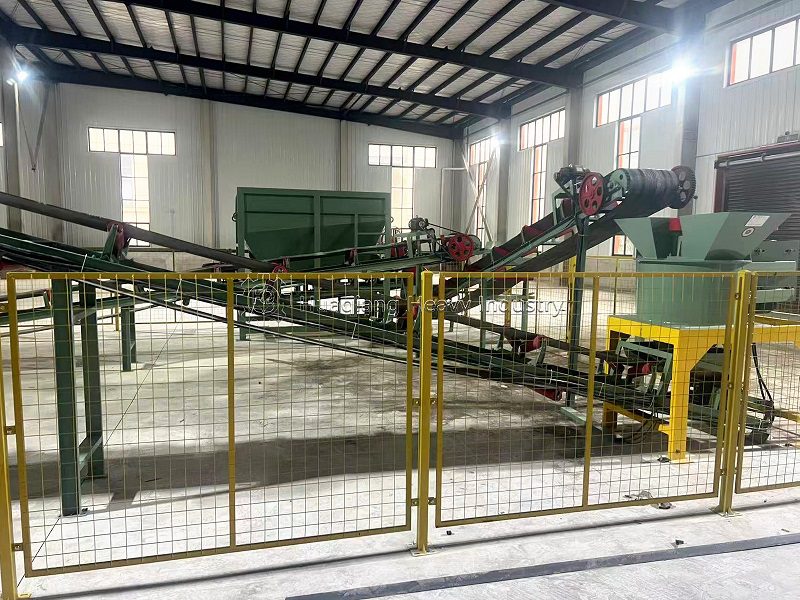
Current coating equipment is evolving towards automation and precision. New spraying systems integrate precise control of film material ratios, automatic monitoring of the production process, and real-time adjustment functions; continuous production lines can achieve fully automated control from feeding, preheating, spraying to cooling and discharging. Innovative achievements such as specialized coating equipment for bio-based membrane materials and solvent-free reaction coating technology are driving the controlled-release fertilizer industry towards continuous upgrading towards green and efficient production.
Understanding the microscopic film-forming mechanism of the spraying process and mastering quantitative detection methods for coating uniformity are the technological cornerstones for ensuring the quality of controlled-release fertilizer products and achieving precise controlled release. We focus on the R&D and manufacturing of complete sets of controlled-release fertilizer coating equipment, providing integrated solutions for film material spraying, uniformity detection, and intelligent continuous production lines—from film-forming mechanisms to quantitative evaluation, helping you achieve precise controlled release, green, and efficient high-end fertilizer production.
Mastering the coating process – from spray atomization and film formation to uniformity testing – is the key to producing reliable controlled‑release fertilizers that match nutrient release to crop demand. However, the coating unit does not operate in isolation; it is the final precision step in a complete production train that begins with a fertilizer crusher and mixer to prepare homogeneous raw materials, followed by a fertilizer granulator machine (drum, disc, or extrusion) to form uniform base granules. These granules are then dried and cooled in a fertilizer dryer and cooler to the optimal temperature (≤45°C) before entering the fertilizer coating machine, where the functional membrane is applied. After coating, the finished product is weighed and sealed by an automatic fertilizer packing machine, ensuring that every bag meets the specified controlled‑release performance. The entire sequence – crushing, mixing, granulation, drying, coating, and packaging – must be precisely coordinated, because any variation in granule size, moisture, or temperature directly affects coating adhesion, thickness uniformity, and release kinetics. By integrating advanced spraying systems, online uniformity monitoring (SEM, dissolution, or X‑ray), and intelligent process control, manufacturers can consistently produce coated fertilizers with a thickness CV ≤12%, release periods tailored from 30 to 180 days, and minimal dust or caking. Ultimately, the coating process is the value‑added gateway that transforms standard granules into premium controlled‑release products – a strategic capability that enhances crop efficiency, reduces nutrient losses, and supports sustainable agriculture worldwide.