
In the process of agricultural modernization, compound fertilizers, due to their comprehensive nutrients and ease of application, have become the mainstream fertilizer for ensuring the yield of grain and cash crops. For medium and large-sized agricultural input plants and fertilizer production enterprises, building a large-scale production line of 10-40 tons/hour is not only the foundation for meeting market demand but also the key to achieving stable profitability. The core of this production line lies in “precise ingredient formulation, efficient linkage, and stable fertilizer effect”—from raw material crushing to finished product packaging, every link requires precise coordination. This article will provide you with a detailed breakdown of the equipment configuration, key processes, and site planning for a large-scale compound fertilizer production line.
A complete 10-40 tons/hour compound fertilizer production line consists of the following core equipment, achieving full automation from raw materials to finished products:
Chain Crusher: Crushes large-particle raw materials such as urea, ammonium phosphate, and potassium salts to a fineness of 80 mesh or higher, laying the foundation for subsequent precise ingredient formulation and uniform mixing.
Multi-bin Precision Ingredient Formulation Machine: The “brain” of the production line. It can simultaneously control the feeding amount of 4-8 raw materials, automatically completing weighing and batching according to the set NPK ratio (e.g., 15-15-15 or 18-18-18), with dynamic batching error controlled within ±0.5%.
Twin-shaft horizontal mixer: Quickly and evenly mixes multiple proportioned raw materials. The twin-shaft counter-rotating structure ensures that the material achieves a mixing uniformity of over 95% within 1-2 minutes, with no dead corner residue.
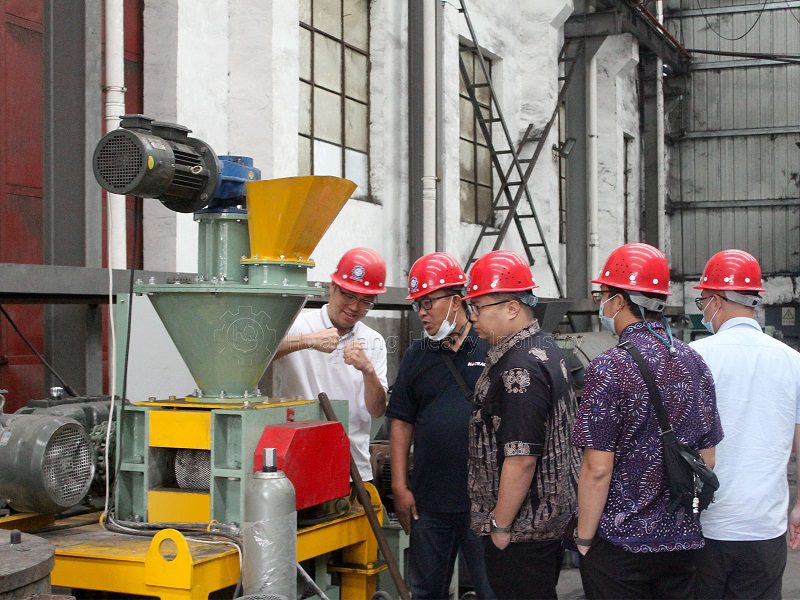
Roller granulator: The core granulation equipment for large-scale production. It uses steam or water mist to agglomerate materials into spheres during rolling. A single machine can achieve an hourly output of 10-40 tons, producing high-strength, highly uniform granules.
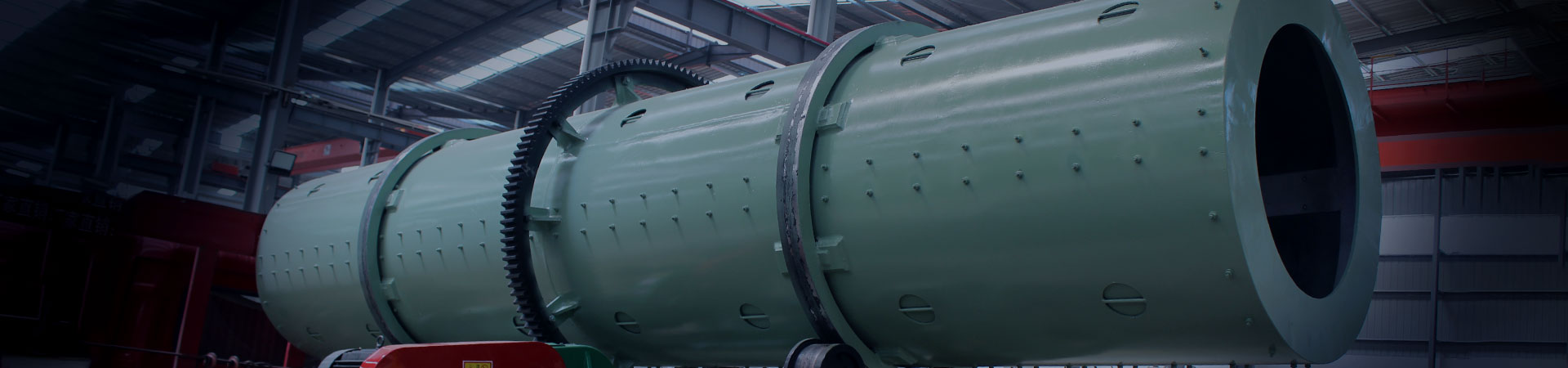
Roller dryer: Wet granules with a moisture content of 20%-30% must be dried to below 10% for safe storage. The dryer cylinder diameter and length are matched according to production capacity, and the hot air temperature is precisely controlled to avoid nutrient loss.
Roller cooler: The high-temperature granules after drying must be immediately cooled to within room temperature +5℃ to prevent moisture re-absorption and clumping after packaging. Fully Automatic Packaging Machine: Matched to front-end production capacity, it completes the entire process of weighing, filling, and sewing bags, with a packaging accuracy of ±0.2 kg/bag and a speed of 600-1200 bags per hour.
Step 1: Raw Material Crushing. Various basic raw materials are crushed to a fineness of 80 mesh or higher to ensure uniform mixing and granulation. Insufficient crushing fineness will lead to uneven nutrient distribution in the granules.
Step 2: Precise Batching. The target formula is input on the control panel, and the batching machine automatically completes the simultaneous weighing and feeding of multiple raw materials. Huaqiang equipment is equipped with high-precision sensors, with a dynamic batching error of ±0.5%, ensuring stable nutrient content in each batch.
Step 3: Uniform Mixing. The batched raw materials enter a twin-shaft mixer, achieving thorough mixing within 1-2 minutes to ensure that the nitrogen, phosphorus, and potassium ratio in each fertilizer granule matches the formula.
Step 4: Wet Granulation. The mixture enters a drum granulator, where steam regulates temperature and humidity, causing the material to agglomerate into granules during rolling. Operators can control the granule size by adjusting the rotation speed, tilt angle, and water spray volume. Step 5: Drying and Cooling. Wet granules are conveyed into the dryer and rapidly dehydrated to below 10% moisture content in 120-180℃ hot air. They then enter the cooler and are cooled to room temperature with ambient air.
Step 6: Screening and Packaging. The cooled granules are graded by a vibrating screen. Qualified granules are bagged in a packaging machine, while oversized granules and fine powder are returned to the previous stage for reuse. The entire production line requires only 4-6 operators and is highly automated.
A 10-40 ton/hour production line is recommended to occupy 800-2000 square meters, divided into functional areas:
Raw Material Area: Stores various basic raw materials, close to the crusher and batching machine to reduce handling distances. The floor needs to be hardened and moisture-proof. Different raw materials should be stacked separately with clear labeling.
Batching Area: Constructs the batching machine and mixer, requiring reserved maintenance access and operating space. A feeding platform can be installed above the batching machine for easy forklift or manual feeding.
Granulation Area: The rotary granulator, dryer, and cooler are arranged sequentially, taking into account the cylinder length and maintenance space. The equipment is connected by conveyor belts to form an assembly line.
Finished Product Area: The packaging machine outlet connects to a finished product conveyor belt, directly sending the product to the warehouse for palletizing. The warehouse must be kept dry and well-ventilated, and the floor must be properly moisture-proofed.
Environmental Protection: Dust generated during crushing, screening, and packaging requires pulse jet bag filters; drying flue gas must undergo cyclone dust removal + water curtain dust removal before being discharged in compliance with standards.
Huaqiang Heavy Industry offers a series of compound fertilizer production lines, which can be customized to meet specific needs:
10-ton/hour production line: Suitable for medium-sized agricultural input plants, with an annual output of approximately 30,000 tons. Moderate investment and short payback period.
20-ton/hour production line: The mainstream configuration in the market, with an annual output of 60,000 tons, balancing scale and flexibility, offering the highest cost-effectiveness.
40-ton/hour production line: Standard configuration for large-scale fertilizer production bases, with an annual output of over 120,000 tons. High degree of automation and lowest cost per ton of product.
Regardless of the chosen production capacity, equipment parameters can be adjusted according to the formula—high-nitrogen formulas require enhanced corrosion protection, while high-phosphorus formulas require optimized grinding fineness. Huaqiang Heavy Industry provides a one-stop service from equipment selection and process design to installation and commissioning.
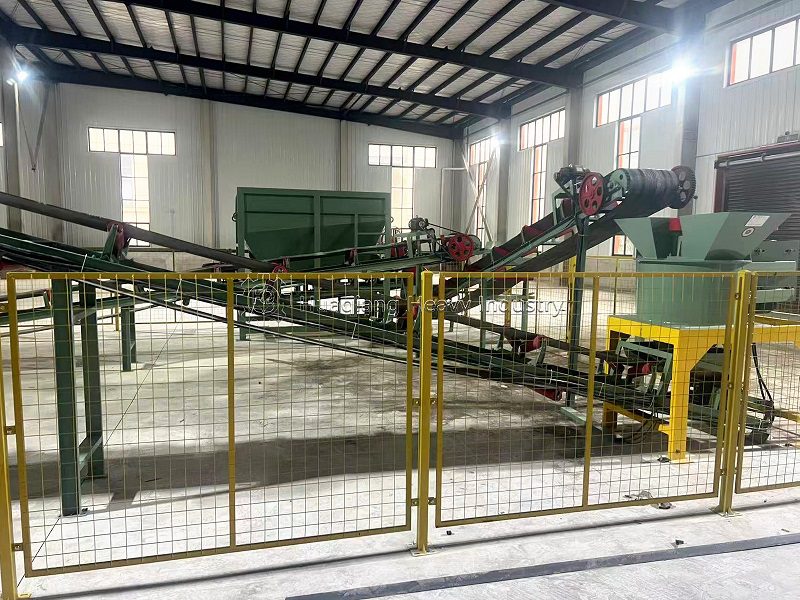
A certain agricultural input factory in Shandong Province previously had a 10-ton/hour compound fertilizer line, but demand exceeded supply. After introducing Huaqiang’s 20-ton/hour NPK compound fertilizer production line, the factory’s capacity doubled, reaching 60,000 tons of compound fertilizer annually. Thanks to precise ingredient control and stable granulation technology, the product qualification rate reached 99%, with round and uniform granules and stable nutrient content, earning a good reputation in the surrounding market. In the second year of operation, the factory recouped its entire investment and became a benchmark enterprise in the local compound fertilizer market.
From the first grinding stage in the pulverizer to the final sealing of the packaging machine, the large-scale compound fertilizer production line, through precise coordination, transforms basic raw materials into uniform and efficient compound fertilizer. Huaqiang Heavy Industry’s comprehensive equipment system and professional design services can help you build a stable, efficient, and adaptable production line, enabling you to win farmers’ trust with consistent quality in the fierce market competition.
The integrated 10-40 tons/hour npk fertilizer line is a symphony of precision equipment. After the granules are formed and dried, they must be precisely classified to ensure final product uniformity. This is the role of the rotary drum screening machine, which efficiently separates oversized and undersized material for recycling. Following screening, the consistent, high-quality granules are stabilized in a fertilizer dryer machine and fertilizer cooler machine to achieve the optimal moisture and temperature for storage. Finally, the finished product is precisely weighed and hermetically sealed by a high-speed fertilizer packing machine, ready for distribution to the fields. The seamless integration of these core components—from the initial crusher to the final packer—is the hallmark of a modern, efficient, and reliable fertilizer manufacturing operation.